Citation
Overview
PhD research co-supervised by BTO devises a framework for how to undertake citizen science effectively and respectively in marginalised communities.
In more detail
Bioacoustics is increasingly used in conservation, with powerful tools like the BTO Acoustic Pipeline which is now being used worldwide. However, with conservation’s colonial history, Indigenous and local communities (and the invaluable knowledge they possess) can be mistrustful of such new technologies, and can be excluded from conservation research, or feel reluctant to engage because of past grievances. When it comes to citizen science, there is a lack of culturally appropriate, remedial, and politically-engaged methods to build trust and therefore execute effective studies.
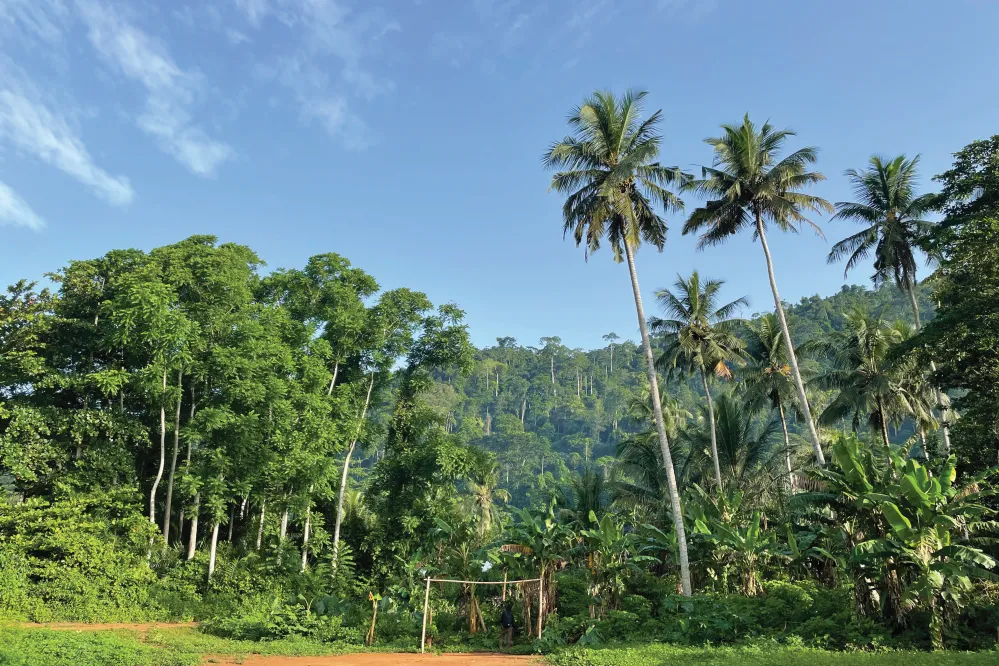
In this research carried out in Asante, Ghana, local people expressed significant concerns about passive acoustic monitoring. Specifically, they were worried about surveillance, law enforcement and privacy, and the ways in which the research (and researchers) could enable community exploitation. To address this, the researchers came up with a process of ‘dynamic consent’. The researchers responded to questions and concerns prioritising trust and relationship building before beginning any technical monitoring work. This addressed the power dynamics that can often lead to communities feeling compelled to consent. Such methods can ensure that tools such as passive acoustic monitoring are used to work toward more ethical and just conservation practices and outcomes.
Abstract
There exists a growing suite of technologies that support significant and exciting progress in biodiversity conservation and research. Citizen scientist participation is common in this research and often focuses on data collection and labeling. Yet, ongoing challenges exist concerning trust in participatory monitoring projects engaging Indigenous Peoples or local communities. These challenges are rooted in the proliferation of Western-centric approaches to engagement and uneven power dynamics between researchers and participants. Using passive acoustic monitoring (PAM) as a model, we explored how researchers can build trust in participatory research with conservation technologies. Working closely with 12 members of a forest fringe community in Ghana, we conducted semistructured interviews investigating community members’ perceptions of and concerns with ecoacoustic technologies and a series of participatory workshops exploring ecoacoustic data practices. Through our interviews, we found that 4 key themes—questioning, agency, proof, and knowledge—shaped community members’ sense of trust when engaging with conservation and technology systems or practices. Our engagements highlighted a need for a dynamic consent process, which entails a set of engagements and activities tailored to community members’ needs, to ensure they could make informed decisions on their involvement in research projects. To facilitate more ethical and just community engagements that result in higher quality data and more successful conservation outcomes, we recommend that researchers working with conservation technologies and marginalized communities respond to suspicion, address agency, center community knowledge, and demonstrate data practices.
Staff author(s)

J.L.’s research is funded through the UKRI AI for Environmental Risk (AI4ER) CDT and the Evolution Education Trust (EET) through the Knowledge Studentship awarded by the Cambridge Conservation Initiative (CCI). Contributions to this paper by J.G. were supported by funding from the European Research Council (ERC) under the European Union's Horizon 2020 research and innovation program (grant agreement 866006).