A major increase in the number of volunteers taking part in the long-standing BTO/JNCC/RSPB Breeding Bird Survey (BBS), has resulted in greater coverage across Wales than ever before. The results show that it is not just numbers of volunteers on the up, as some bird species too are on the rise.
However, the new report highlighting the results of the survey, published this week, shows there are also continued declines for many species.
BBS is the main scheme for monitoring the population changes of the UK’s common and widespread breeding birds, producing population trends for 60 species in Wales.
Thanks to the efforts of hundreds of volunteers, the greatest number of sites in the history of the scheme was surveyed during the 2025 breeding season, providing invaluable data for many of Wales’s breeding birds. The records collated combine to provide the most in-depth assessment of the state of the country’s birds during the nesting season.
Among the species with an upward trend is the Robin. This very familiar and much-loved bird has increased in Wales by 22% in the last 10 years. Two species more often in the headlines for losses, appear to be turning a corner, as Skylark and Song Thrush numbers continue to show signs of recovery. The birds, famed for their vocal virtuosity, have increased by 24% and 27% respectively, in just the last five years.
Nuthatch, a distinctive bird of woodlands, parks and gardens, maintains its impressive upward trajectory and numbers have increased by 55% in Wales since the mid 1990s.
However, it’s not all good news, and Swifts once again show little sign of recovery. These distinctive birds, once a familiar sight and sound in the summer skies above many Welsh towns and cities, have declined here by 76% since 1995.
Similarly, the Curlew, Europe’s largest wader, has been lost as a breeding bird throughout much of the country. The species has seen decreases of 74% since 1995 and 38% in the last 10 years alone.
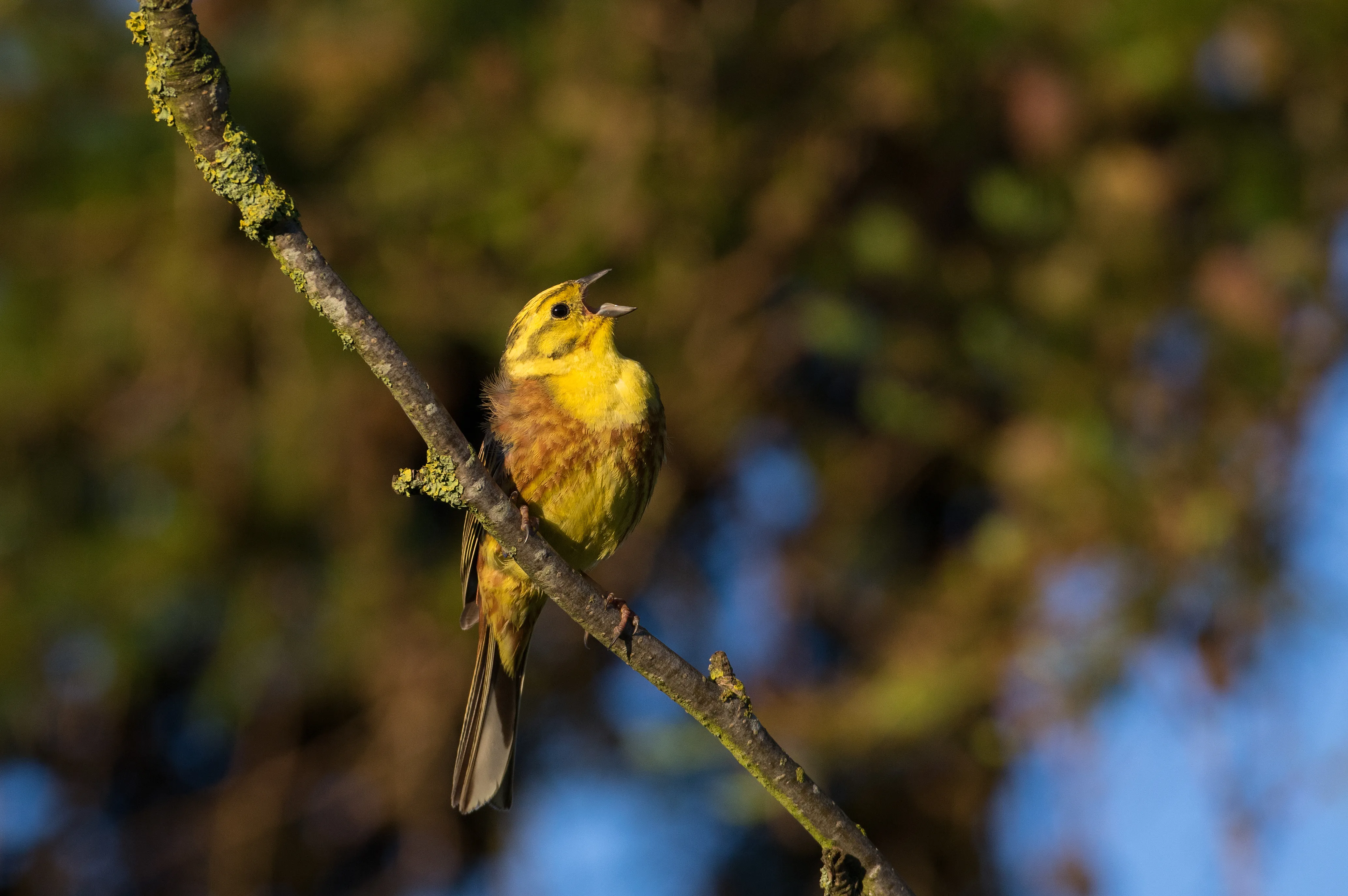
Meanwhile the Yellowhammer, an attractive bird of farmland and coastal scrub, continues to struggle and is down by 75% in Wales since 1995. This compares to a 45% decline in England during the same period, and a 25% decline in Scotland’s Yellowhammers between 2014 – 2024.
Greatest declines and increases across Wales between 1995 and 2024.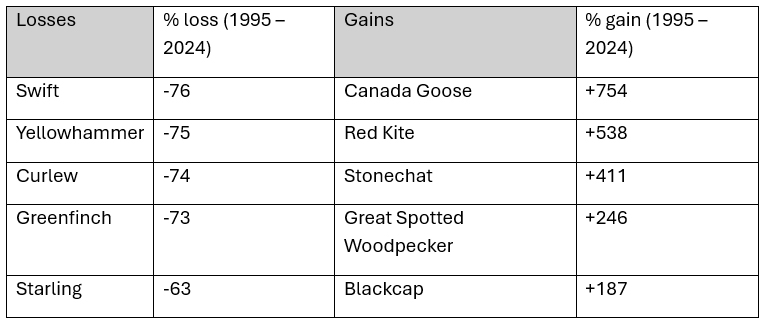
James Heywood, BBS National Organiser, said “We are always extremely grateful to the many hundreds of volunteers who contribute to BBS every year and this year is no different. Indeed, 2025 was a really special year for the survey in Wales, with record numbers of survey squares covered. With nearly a fifth of this year’s BBS volunteers in Wales being new to the survey, we very much hope that they will continue. The results of their efforts highlight the declines of some of the most iconic birds of Welsh farmland. With a new farming scheme in place in Wales, it is more important than ever to provide robust evidence for the effects of land-use on our wildlife. The Breeding Bird Survey provides one of the best sources of that evidence”.
Julian Hughes, Head of Species, RSPB Cymru, said “Many once-familiar sounds of our countryside are more muted than in the 1990s: the cry of Curlews, the screech of Swifts and the “little bit of bread and no cheese” of Yellowhammers are fading away. The recovery in Song Thrush, and positive signs for Skylark, show the important role that farming plays in the fortunes of nature in Wales. The BBS trends should be high on the mind of the next Government in setting its policies to achieve nature recovery”.
Ethan Workman, Joint Nature Conservation Committee, said “Continued increases in cherished woodland species, such as Great Spotted Woodpecker and Song Thrush, are a welcome sight in Wales. However, it mustn’t distract from the generally worrying picture of Welsh birds. Many woodland species are not seeing the same success, and farmland species like Yellowhammer continue to fare poorly. Monitoring of birds in Wales has never been more important, with the introduction of the new Welsh Sustainable Farming Scheme. This is underlined by a record level of coverage across BBS squares, thanks to a huge number of new volunteers, who will hopefully continue to contribute to our growing understanding of birds in Wales.”
The full report can be read here.