Results of the 2025 Heathland Birds Survey, revealed this week, show a welcome upturn in fortunes for three charismatic species.
Last summer, more than 1,200 volunteer birdwatchers across the UK, headed out in search of three incredibly special birds. The trio of species inhabit very specific habitats, and scientists were keen to discover how these birds are faring and whether the places where they live are in good enough shape to support sustainable populations.
The birds in question were Nightjar, Woodlark and Dartford Warbler, and they were the primary targets of the Heathland Bird Survey, which was delivered by the British Trust for Ornithology (BTO) and the RSPB, and funded by Natural England and Defra. The last national survey of these species took place almost 20 years ago, and researchers aimed to identify any changes in the birds’ fortunes in the intervening period.
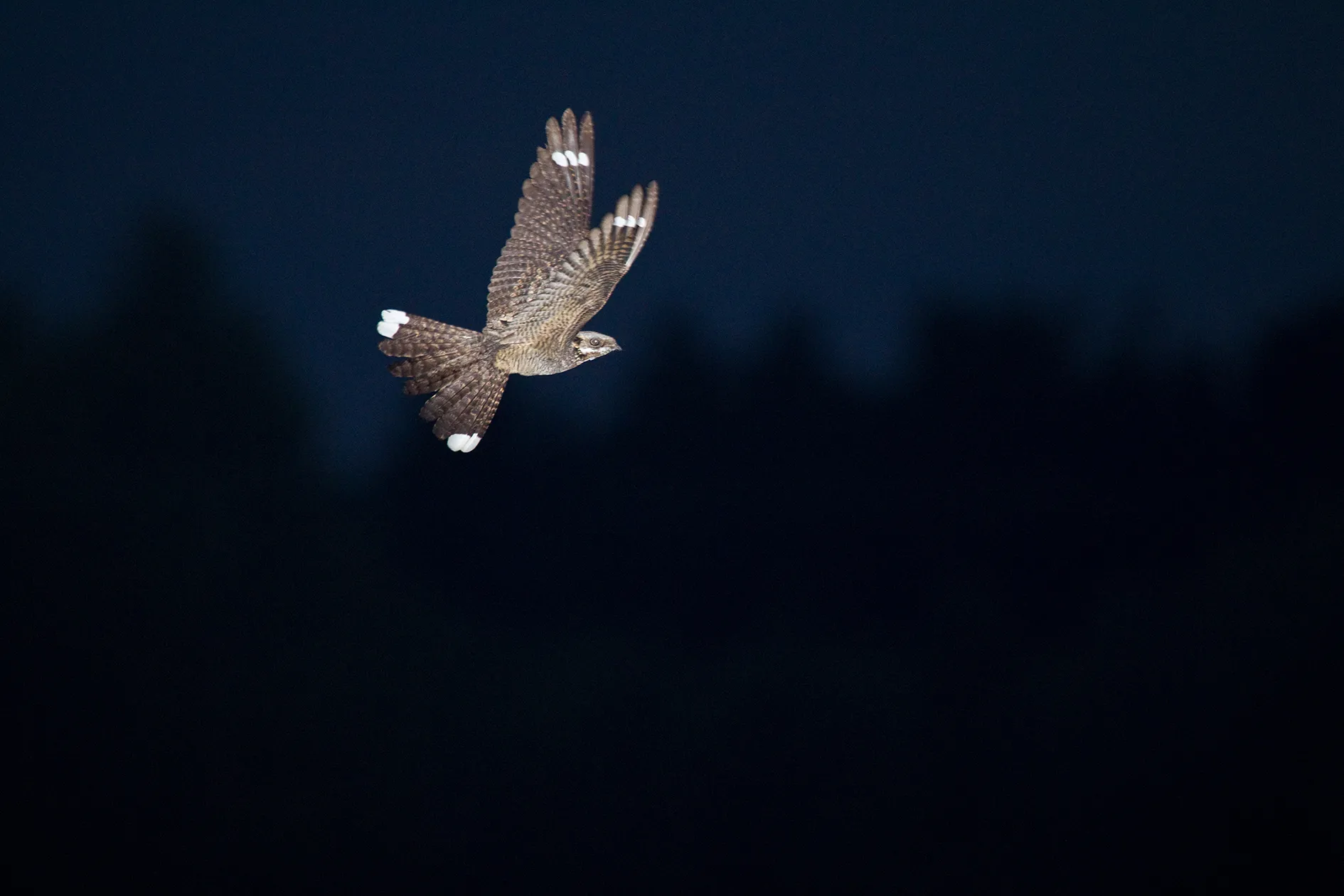
Nightjar: A secretive nocturnal bird, known for its eerie ‘churring’ song, most often heard at dusk. These cryptically camouflaged summer migrants arrive in the UK in spring having spent the winter in and around the Congo Basin. Nightjars experienced significant population declines in the UK during the 1970s and 1980s.
Listen to a Nightjar churring.
Woodlark: Less familiar than its commoner cousin the Skylark, Woodlarks are restricted to southern and eastern England. These understated birds of wooded heathland and farmland edges are also famed for their distinctive, lilting song. Woodlarks also underwent considerable population declines in the 1970s and 1980s.
Listen to a Woodlark song.
Dartford Warbler: Unlike many warblers, this species is resident in the UK and has benefited in recent decades from milder winters and targeted and effective habitat management. The scratchy sound of the dainty Dartford Warbler’s song can be heard in southern and eastern England, southern Wales, and the Channel Islands.
Listen to a singing Dartford Warbler.
The main purpose of the 2025 survey was to determine not just how well these birds are currently doing, but also how much they depend on designated Sites of Special Scientific Interest (SSSIs) and Special Protection Areas (SPAs). By understanding the distribution and populations of such key species, all of which are important features of the site designations, land managers can ensure that these important sites and the habitats they contain are maintained to best support these birds.
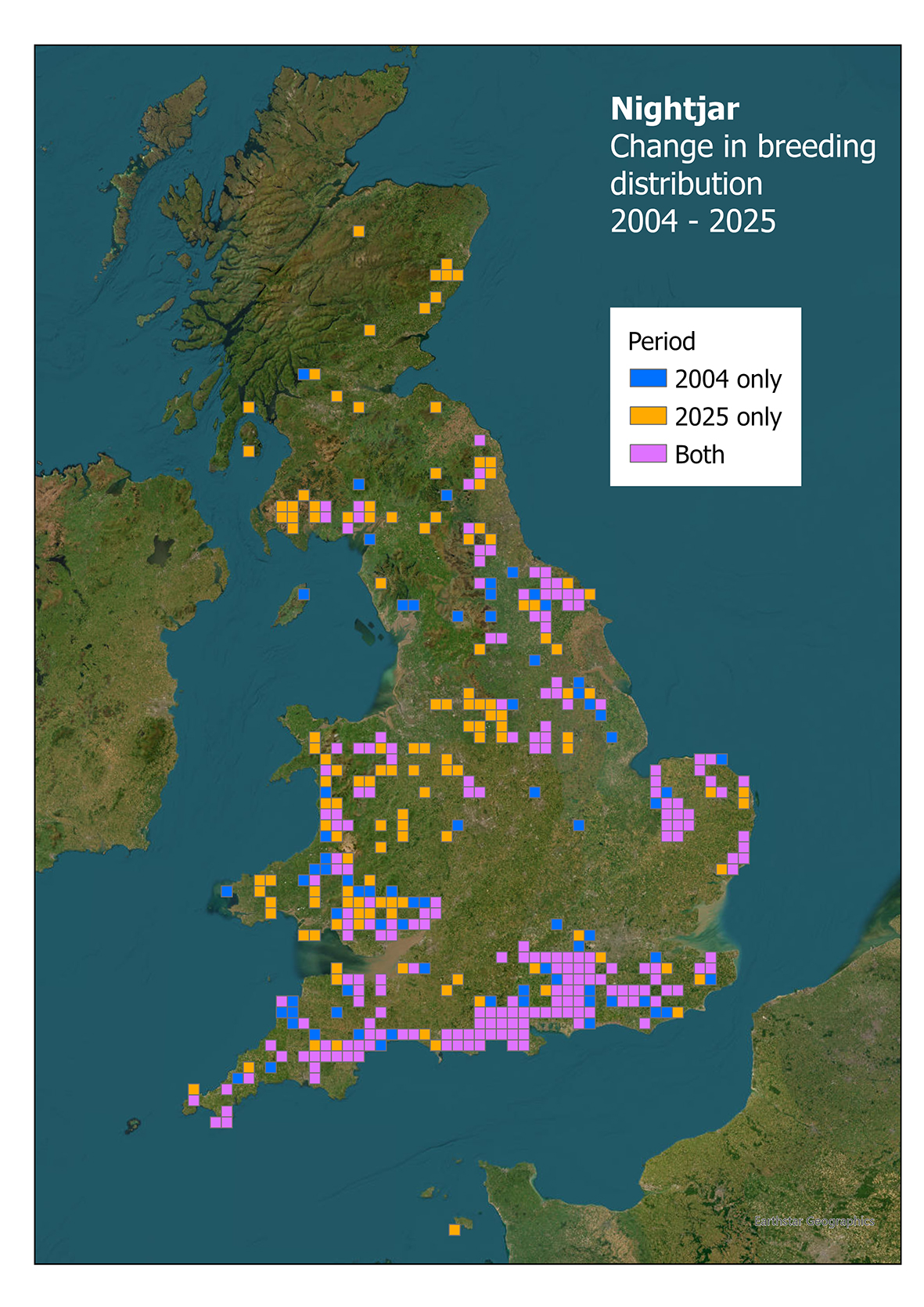
The good news is that all three species have experienced notable increases in population since the last survey. In the case of Woodlark and Nightjar there has been significant range expansion, with the latter species now breeding in Scotland in increasing numbers. BTO data show that Woodlark and Nightjar saw increases of 29% and 20% in territories counted respectively, while the RSPB reported that Dartford Warbler has increased by around 27% in the UK.
The ranges of all three species are predicted to continue shifting northwards due to climate change. In the UK, at the northern edge of their ranges, Dartford Warbler and Woodlark have both recently benefited from milder winters. A warming climate is predicted to benefit these UK populations, though this is dependent on available habitat. However, for Dartford Warbler, more than 60% of its current range is projected to become unsuitable by the late 21st century, particularly in Spain and Portugal where most of the global population occurs. Overall, the species has declined by more than 50% across Europe since the late 1990s.
Notably, fewer sites were covered during in 2025 than during the previous national surveys, yet researchers found substantial population increases, indicating that the actual growth in numbers and distribution is likely to be even higher than reported.
These birds are reliant on particular habitats and conditions, and the results of the survey demonstrate just how critical well-managed heathland and forest environments are to the long-term future of these three species, and other scarce plants and animals that inhabit these vital landscapes.
In the past decade, many protected sites have increasingly experienced extensive fire damage, often during the breeding season, causing direct impacts upon nesting birds and many other important species, as well as destroying large areas of prime habitat. It is important that high levels of protection and management are implemented in these existing areas, as well as continuing to create improved habitat elsewhere.
Dr Greg Conway, Senior Research Ecologist with BTO, said, “It is encouraging to see that these habitat-dependent specialists are doing well in the sites that are specially protected and managed for them. Most pleasing is to see the re-colonisation of their former range, demonstrating that they have the capability to return where heathland is both reinstated and well managed. This is why it is essential that we monitor any changes so that adequate provision and protection of optimum habitats allow for continued expansion.”
Andrew Stanbury, RSPB Conservation Scientist, said, “The survey results are very promising for these heathland species and demonstrate effective collaboration with other organisations and volunteers. Whilst the restoration of heathland across RSPB nature reserves has been on a truly landscape scale and helping Dartford Warblers to thrive, it’s vital that we continue working together to support species recovery across the UK. Helping to maintain then increase numbers, and reverse population declines of species like the Dartford Warbler is very rewarding.”
Alison Giacomelli, Senior Ornithologist at Natural England, said, “We were pleased to work with the BTO and RSPB on the Heathland Bird Survey last year and are very grateful to all the surveyors and volunteers that took part. It’s fantastic to see that numbers of all three species have increased, which is thanks to the collaborative conservation efforts of our partners.”