A look at bird migration in early September 2025.
After a very hot and dry summer it’s fair to say the weather has changed in the past week, with much more unsettled conditions and some much-needed rain as westerly winds from the Atlantic dominate. While these conditions are not what birders on the east coast hope for, they have created some good conditions for seawatching in western Britain and Ireland. The Bridges of Ross in Co. Clare is a legendary site for seabirds and has certainly been at its best recently, with high counts of sought after species such as Sabine’s Gull, Long-tailed Skua and Wilson’s Storm Petrel. ‘Large shearwaters’ have also been seen in excellent numbers, including an exceptional count of 15,000 Cory’s Shearwater past Galley Head in Co. Cork on 31 August. Seawatchers in south-west England and Wales have also got in on the action, while a few storm-blown Grey Phalaropes have even turned up at inland sites in England.
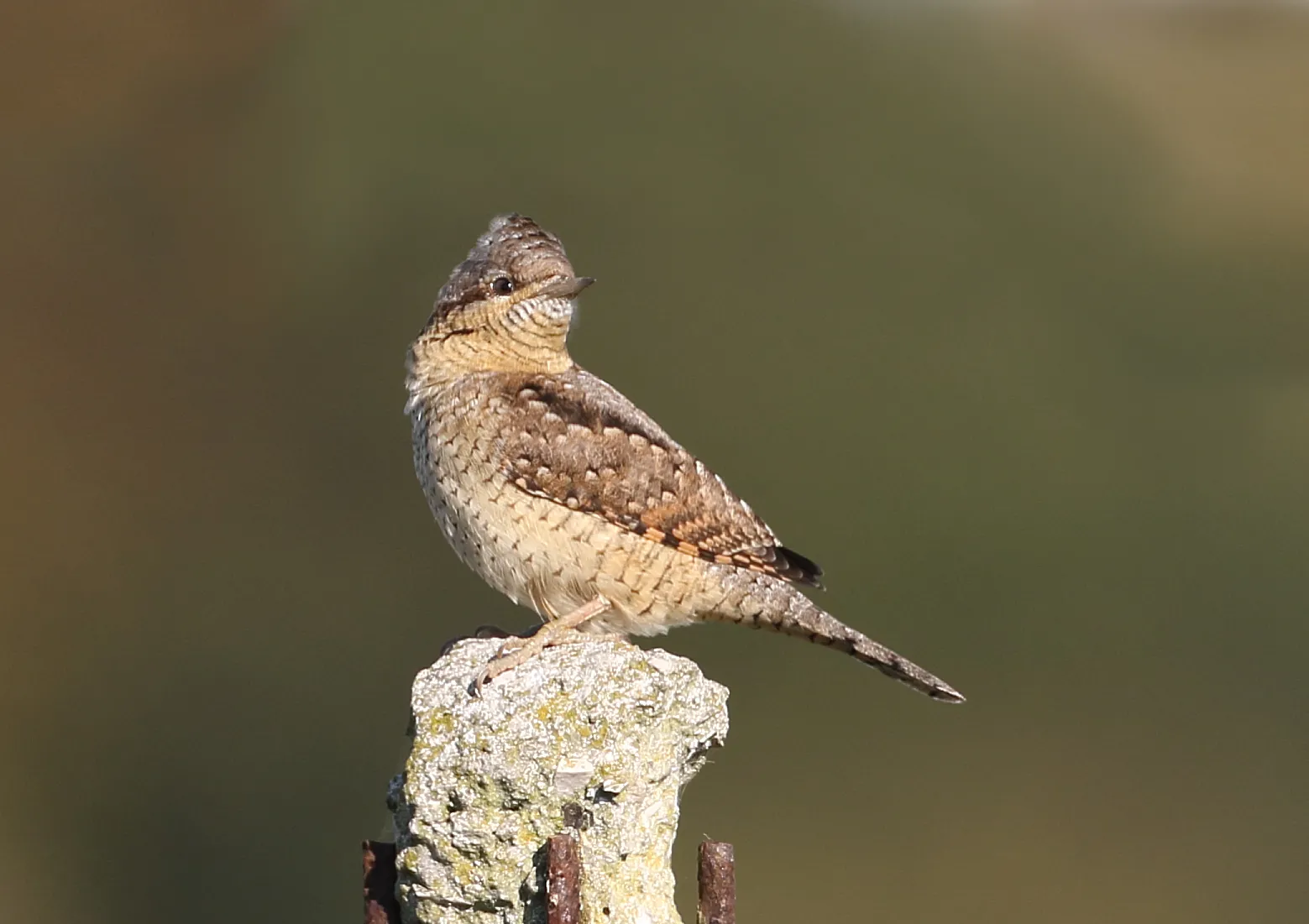
Drift migrants from Europe have generally been in short supply, but there were a few brief periods of easterly winds in the third week of August and there has been a scattering of records of typical scarcities such as Wryneck, Red-backed Shrike, Icterine Warbler and Barred Warbler. On average around 360 Wrynecks are seen each year in Britain, with the majority occurring in September, so there is still a good amount of time for arrivals to occur if conditions are right.
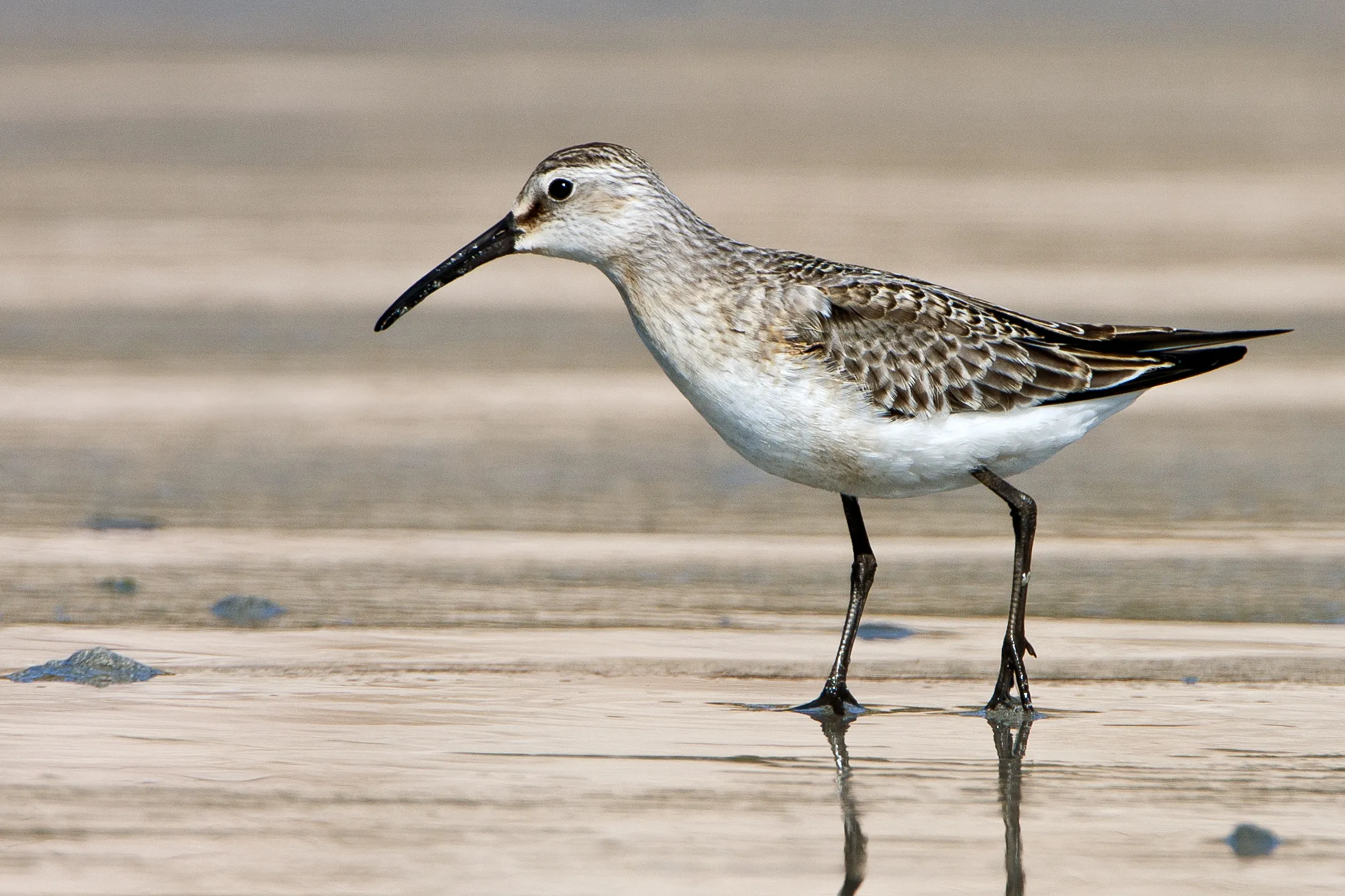
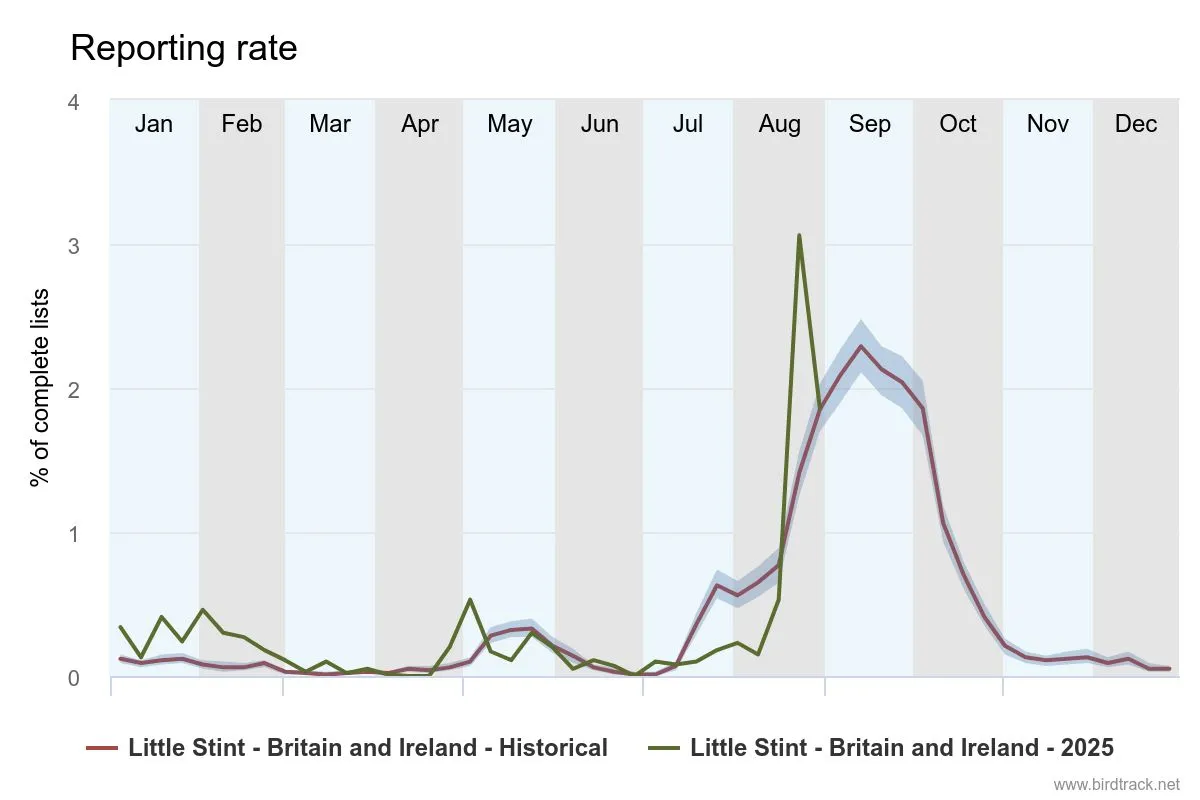
As is expected in August, waders were also on the move. Wader migration in the autumn can have multiple peaks, as adults move through earlier in the autumn before a later wave of juvenile birds. For some species where we in the UK are at the edge of their migration route, it’s the wave of juveniles that typically sees much higher numbers of birds. Two good examples of this phenomenon are Curlew Sandpiper and Little Stint. The numbers of each passing through Britain and Ireland in autumn are highly variable from year to year, with breeding success in their Arctic breeding grounds a key factor in this, as well as weather conditions during the migration period. In the third week of August, there was a strong arrival of juvenile Little Stints, mostly on the east coast, with the BirdTrack reporting rate more than double the average for the time of year. In the following week there was a big increase in reports of Curlew Sandpipers, although the reporting rate was only marginally higher than average for the time of year.
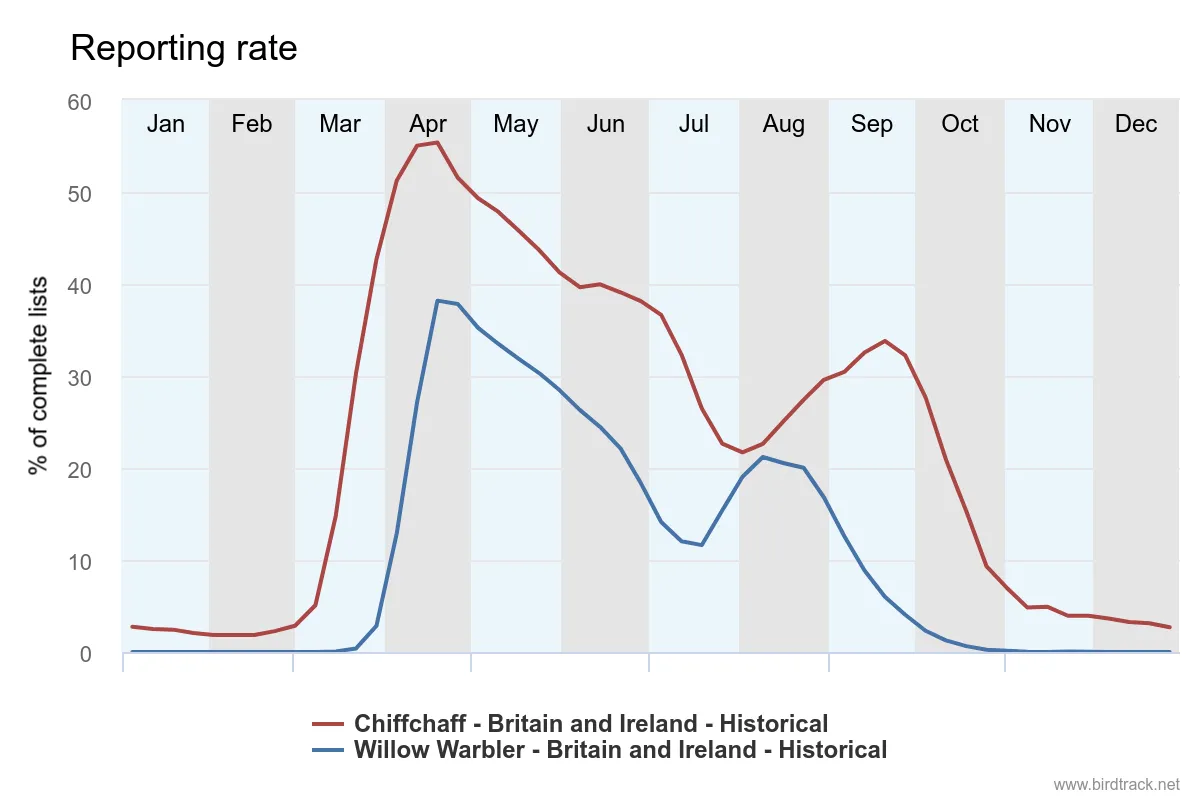
We are also in the midst of the peak period of southbound passage for many of our summer visitors. The autumn reporting rate for some, like Redstart, Spotted Flycatcher, Yellow Wagtail and Tree Pipit, peaks in late August, while others like Whinchat and Wheatear peak a bit later in early to mid September. Chiffchaffs won’t peak until the second half of September, whereas most Willow Warblers have already departed our shores. All of these species can turn up at a wide range of sites, on nature reserves, the wider countryside and even in urban parks, so look out for them wherever your patch is.
With westerly winds looking set to dominate for the time being, the most likely rarities to be found over the coming week will be American waders – Baird’s Sandpiper, Semipalmated Sandpiper, Stilt Sandpiper and Wilson’s Phalarope have already turned up in recent days, mostly in Ireland. However, it looks like there could also be some south-easterly winds from the Continent over the weekend, which could also drop some migrants on the east coast. There may well be some records of Wrynecks and Red-backed Shrikes in eastern England, while further north Orkney and Shetland could see nice falls of migrants.
Wherever you are, there is always something to see at this time of year, so good luck and don’t forget to enter your sightings to BirdTrack.
Add your sightings to BirdTrack
Help us track the departures and arrivals of migrating birds by adding your sightings to BirdTrack. It’s free, quick and easy, and signing up also allows you to explore trends, reports and recent records in your area.
Author(s)

Tom Jordan