Mr Conkers

Mr Conkers

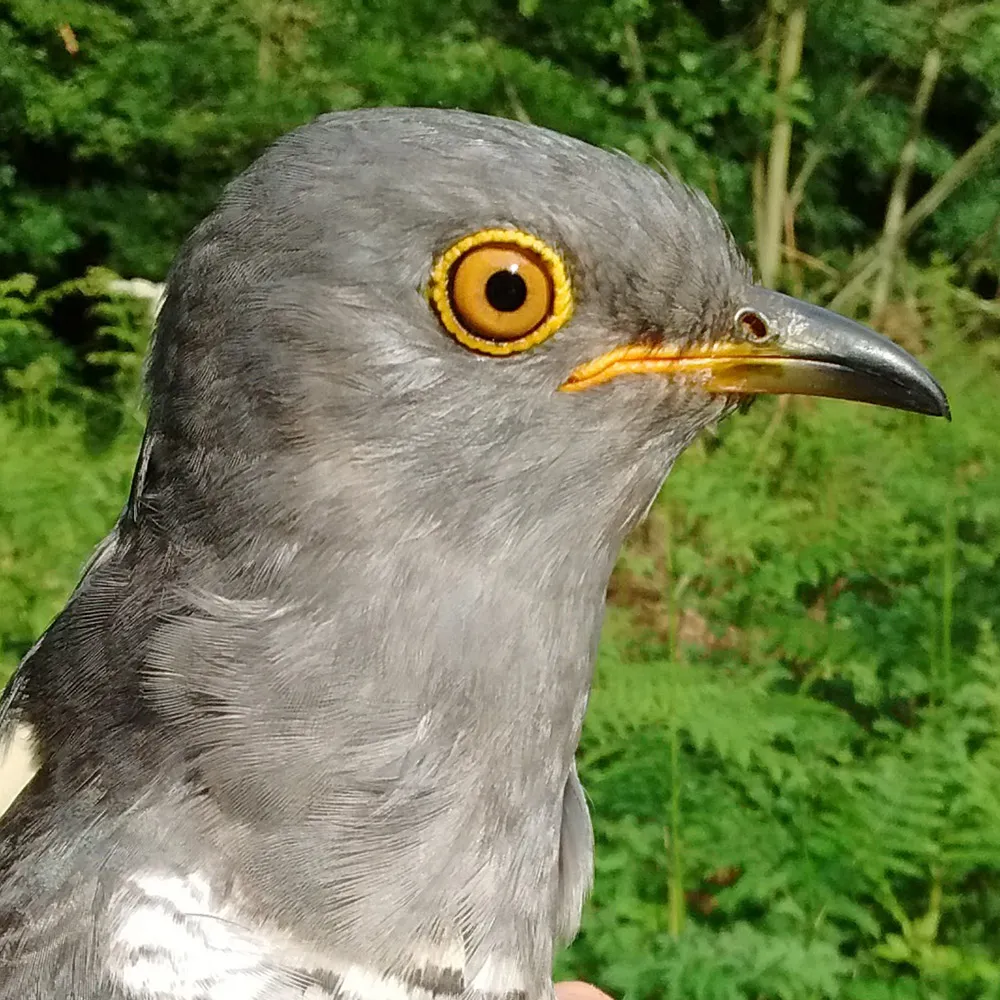
Mr Conkers has been named by Yolobirder and followers on twitter via a twitter poll.
Status : unknown
Tagged : Fri, June 02, 2017 - 08:12
Age when found : Adult
Tagging Location : Sherwood Forest, Nottingham
Satellite Tag No. : 170433
Wing Length (mm) : 220
Sex : Male

Mr Conkers's journey from 2nd June 2017 to 6th October 2017

Updates on Mr Conkers 's movements

No further news from Mr Conkers

06 Apr 2018
Unfortunately, we have received no further locations for Mr Conkers. We are unable to draw any conclusions as to what might have happened. The new 2g tags have not worked well on the Cuckoos and his loss could well be down to tag failure but we don't really know. We are unlikely to hear from him again, even though we have occasionally lost Cuckoos for several months for them to pop-up again when they begin to move. Mr Conkers should now be in an area where the tag should be getting plenty of sunlight to charge the battery. If the tag was going to burst into life it really should have done by now.

Cuckoo class of 2017

15 Nov 2017

In 2017, we have been trialling the very latest satellite tracking technology - this year’s cohort were tagged with 2g tags from Microwave Telemetry.

We have, unfortunately, ‘lost’ contact with most of them already. It would seem that the smaller size of the new tag allows the solar panel, used to recharge the tiny battery, to become shaded by feathers, resulting in much less efficient charging of the battery, and consequently lower contact with the tag. Although some may have died, the lack of transmissions from the tags makes it impossible to assess this and in all cases, there were no indications that the birds were in trouble when we last heard from their tags.

This is exacerbated during the winter months by the birds spending more time under the canopy in the Congo rainforest. We don’t know how the batteries will fare when the birds begin their northward migration back to the UK. On leaving the rainforest the tags should receive more sunlight which might be enough to overcome feather shading, and if this happens some of the ‘lost birds’ could pop-up again in February or March, but it is possible that the prolonged shading will have caused irreversible damage to the much smaller batteries in the 2g model. We all have our fingers crossed.

As we move forward we are continuously looking for effective ways to continue gathering this important data for Cuckoos, and other species, to benefit our knowledge and ultimately wildlife conservation. We hope that next year we will be able to track a cohort of cuckoos without these issues arising. 
Mr Conkers on Nigeria/Cameroon border

10 Oct 2017
From Mali, Mr Conkers has flown 915km (570 miles) south east, to a location within in the Kashimbila National Park where Nigeria borders Cameroon. He is now not far from the Congo Basin area. 

Mr Conkers heads east

20 Sep 2017
Mr Conkers has headed eastwards to Guinea and on to Mali.

Mr Conkers continues south

29 Aug 2017
Mr Conkers left the Ferlo Nord National Park and a new transmission placed him 170km (105 miles) further south within Senegal, just south of Guida.  

Mr Conkers crosses the desert!

15 Aug 2017
A transmission on the morning of the 14 August revealed that Mr Conkers had left Morocco and sucessfully crossed the desert. He covered 1660km (1030 miles) south to reach the Ferlo Nord Wildlife Reserve in Senegal. He has taken a more westerly route than any of the other Cuckoos this year. 

Mr Conkers in Morocco

01 Aug 2017
Mr Conkers tag has recently signals from the Anti Atlas Mountains in Central Morocco. Will he be the next Cuckoo to make the desert crossing? 

Cutting edge technology 2g tags

13 Jul 2017
In spring we fitted our six new recruits to the UK Cuckoo Tracking Project with 2g satellite tags for the first time. Whilst these are similar in design to the 5g tags previously used, the lighter, smaller tags mean we are able to fit them to lighter and smaller birds, opening up opportunities for future tracking projects. The benefit of using a smaller tag does come with costs, however. The 2g tag has a lower power output than the larger tag and, because it is physically smaller we are finding that the solar panels are being covered to a greater extent by the bird’s feathers. This results in fewer and poorer quality locations, especially when the bird is under cover within its habitat. As a consequence the journeys of these new birds might not always be quite as easy to follow and some erroneous positions may be plotted on the maps. We still expect to get enough to enable us to see their migrations unfold and add to the wealth of information that we already have so stay tuned! 

170433 receives a name

12 Jul 2017

Cuckoo 170433 has been named by Yolobirder and followers on Twitter after a poll of 4 choices. Mr Conkers won with 34% beating second place Frazzles at 27%.

170433 in Spain

07 Jul 2017
Since we last heard from Cuckoo 170433 he has continued his journey south and has crossed the Pyrenees into Spain. He is currently in wooded habitat on the banks fo the river Salazar and close to the town of Rocaforte, 39km (24 miles) southeast of Pamplona.

170433 in France

22 Jun 2017
One of our newly tagged Cuckoos is already off and on their journey south. Having received signals from the Nord-Pas-De-Calais region on 11 June, Cuckoo 170433 was 475km (just under 300 miles) further south near Limoges, in southwest-central France when signals were received on 21 June.

170433 and 170435 tagged in Sherwood

22 Jun 2017
170433 and 170435 are our two newly tagged Cuckoos from Sherwood Forest. They join Selborne, who was tagged in the New Forest area in 2016.