Avocet
Introduction
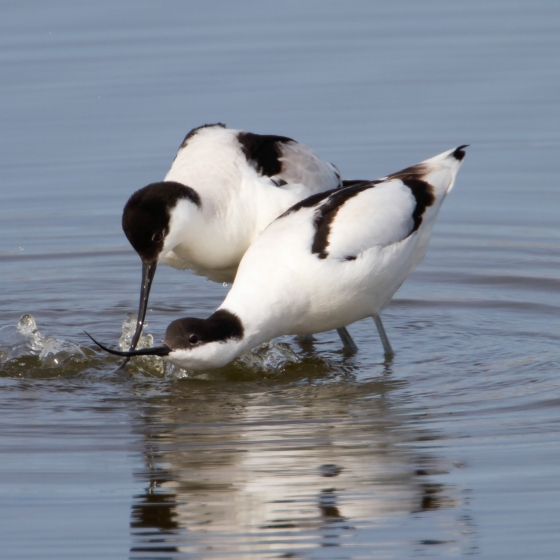
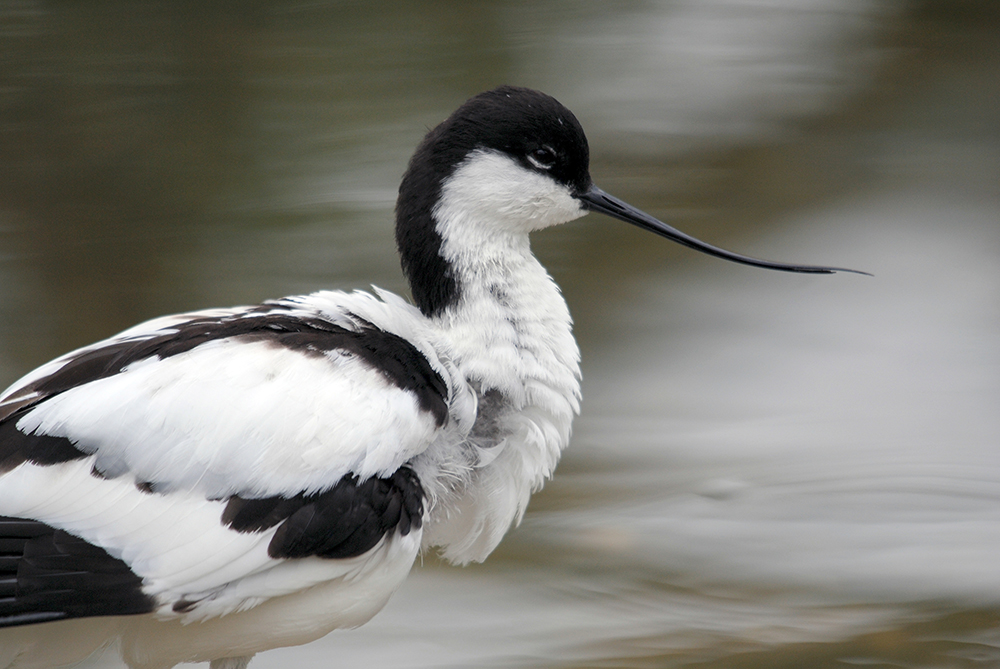
The Avocet is a long-legged wading bird with striking pied plumage and a long, thin upturned bill.
Re-establishing itself as a British breeding species in 1947 on the Suffolk coast, Avocets now breed more widely around England's east coast. In winter the population is augmented by birds from Europe. Large flocks can be found in suitable coastal habitat, predominantly in the south-east and south-west of England.
Although still predominantly a coastal breeder, atlas data reveal an increasing number of inland breeding locations. However, coastal freshwater marshes are where Avocets are seen at their best. Elegant bluish-grey legs enable a purposeful gait as they sweep their bill from side to side in shallow water to sift tiny invertebrates from the mud.
Key Stats








Identification
Songs and Calls
Call:
Alarm call:
Status and Trends
Conservation Status
Population Change
Avocets have since substantially increased both their population (Eaton et al. 2021) and their range (Balmer et al. 2013) during the second half of the twentieth century and subsequently. They are now breeding in suitable wetland locations scattered across most of England and also in Wales, predominantly at coastal sites, and have recently even bred in the Outer Hebrides (Eaton et al. 2021). The five-year mean for the period 2015–2019 reported by the RBBP was 2,138 pairs, an increase of more than 300% in the 25 years to 2019 (Eaton et al. 2021).
Distribution
The Avocet's breeding distribution is centred in eastern and southeast England but over recent decades has spread westwards and northwards. By 2008–11 there was one pair in Wales and several pairs in northwest England with the most northerly breeding site in Northumberland. Since then Avocets have continued to spread north, breeding in Scotland for the first time in 2018. In winter the largest concentrations lie around the Thames and Medway Estuaries, on the Suffolk coast and along the south coast between the Solent and Poole Harbour.
Occupied 10-km squares in UK
2007/08–10/11
or view it on Bird Atlas Mapstore.
2008–11
or view it on Bird Atlas Mapstore.
European Distribution Map
Distribution Change
Change in occupied 10-km squares in the UK
from 1981–84 to 2007–11
or view it on Bird Atlas Mapstore.
from 1968–72 to 2008–11
or view it on Bird Atlas Mapstore.
Seasonality
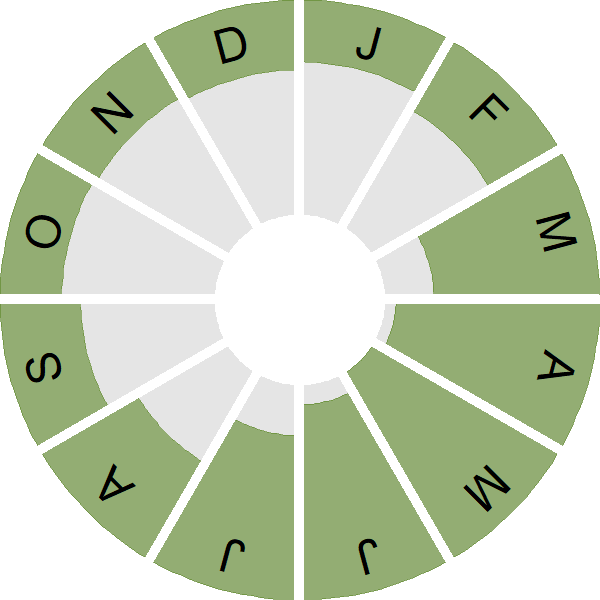
Avocets are recorded throughout the year but encountered more widely in spring and summer when birds move away from localised wintering sites to dispersed breeding locations.
Weekly pattern of occurrence
The graph shows when the species is present in the UK, with taller bars indicating a higher likelihood of encountering the species in appropriate regions and habitats.

Movement
Britain & Ireland movement
Foreign locations of birds ringed or recovered in Britain & Ireland
Dots show the foreign destinations of birds ringed in Britain & Ireland, and the origins of birds ringed overseas that were subsequently recaptured, resighted or found dead in Britain & Ireland. Dot colours indicate the time of year that the species was present at the location.
- Winter (Nov-Feb)
- Spring (Mar-Apr)
- Summer (May-Jul)
- Autumn (Aug-Oct)

European movements
EuroBirdPortal uses birdwatcher's records, such as those logged in BirdTrack to map the flows of birds as they arrive and depart Europe. See maps for this species here.
The Eurasian-African Migration Atlas shows movements of individual birds ringed or recovered in Europe. See maps for this species here.
Biology
Productivity and Nesting
Nesting timing
Egg measurements
Clutch Size
Survival and Longevity
Survival is shown as the proportion of birds surviving from one year to the next and is derived from bird ringing data. It can also be used to estimate how long birds typically live.
View number ringed each year in the Online Ringing Report.
Lifespan
Survival of adults
Survival of juveniles
Biometrics
Wing length and body weights are from live birds (source).
Ring Size
Classification, names and codes
Classification and Codes
- Order: Charadriiformes
- Family: Recurvirostridae
- Scientific name: Recurvirostra avosetta
- Authority: Linnaeus, 1758
- BTO 2-letter code: AV
- BTO 5-letter code: AVOCE
- Euring code number: 4560
Alternate species names
- Catalan: bec d'alena comú
- Czech: tenkozobec opacný
- Danish: Klyde
- Dutch: Kluut
- Estonian: naaskelnokk
- Finnish: avosetti
- French: Avocette élégante
- Gaelic: Gob-ceàrr
- German: Säbelschnäbler
- Hungarian: gulipán
- Icelandic: Bjúgnefja
- Irish: Abhóiséad
- Italian: Avocetta
- Latvian: avozeta
- Lithuanian: paprastoji avocete
- Norwegian: Avosett
- Polish: szablodziób (zwyczajny)
- Portuguese: alfaiate
- Slovak: šabliarka modronohá
- Slovenian: sabljarka
- Spanish: Avoceta común
- Swedish: skärfläcka
- Welsh: Cambig
- English folkname(s): Scooper, Crooked-bill
Research
Causes of Change and Solutions
Causes of change
A study in Germany found that predation by foxes and flooding affected hatching success and that June temperatures were the main determinant of chick survival, which was the main factor influencing breeding productivity (Hötker & Segebade 2000). This might suggest climate change as a possible driver of the UK increases but this is speculative in the absence of specific evidence from the UK and it should be borne in mind that climate change could also have negative effects on chick survival in the UK if it leds to wetter summers.
Publications (1)
Consequences of population change for local abundance and site occupancy of wintering waterbirds
Author:
Published: 2017
Protected sites for birds are typically designated based on the site’s importance for the species that use it. For example, sites may be selected as Special Protection Areas (under the European Union Directive on the Conservation of Wild Birds) if they support more than 1% of a given national or international population of a species or an assemblage of over 20,000 waterbirds or seabirds. However, through the impacts of changing climates, habitat loss and invasive species, the way species use sites may change. As populations increase, abundance at existing sites may go up or new sites may be colonized. Similarly, as populations decrease, abundance at occupied sites may go down, or some sites may be abandoned. Determining how bird populations are spread across protected sites, and how changes in populations may affect this, is essential to making sure that they remain protected in the future. These findings come from a new study by Verónica Méndez and colleagues from the University of East Anglia working with BTO. Using Wetland Bird Survey (WeBS) data the study looked at changes in the population sizes and distributions of 19 waterbird species across Britain during a period of 26 years and their effect on local abundance and site occupancy. Some of these species saw steady increases in population size (up to 1,600%, Avocet), whereas other saw mild declines (-26%, Purple Sandpiper and Shelduck). The results showed that changes in total population size were predominantly reflected in changes in local abundance, rather than through the addition or loss of sites. This is possibly because waterbirds tend to be long-lived birds, with high site fidelity and new suitable sites may not always be available. Thus colonisation of new sites may typically occur when their existing sites approach their maximum capacity. As changes in populations are largely manifested by changes in local abundance – and as sites are often designated for many species – the numbers of sites qualifying for site designation are unlikely to be affected. Understanding the dynamic between population change and change in local abundance will be key to ensuring the efficiency of protected area management and ensuring that populations are adequately protected. Data from the Wetland Bird Survey and its predecessor schemes, which are celebrating 70 years of continuous monitoring of waterbirds this year, have been integral to both the designation of protected sites and monitoring of their condition. Continuation of this monitoring through future generations will ensure that the impacts to waterbird populations of future environmental changes may be understood.
20.09.17
Papers
More Evidence
More evidence from Conservation Evidence.com
Partners




Citing BirdFacts
If you wish to cite particular content in this page (e.g. a specific value) it is best to use the original sources as linked in the page. For a more general citation of the whole page please use: BTO (20XX) BirdFacts Species: profiles of birds occurring in the United Kingdom. BTO, Thetford (www.bto.org/birdfacts, accessed on xx/xx/xxxx).