Arctic Skua
Introduction
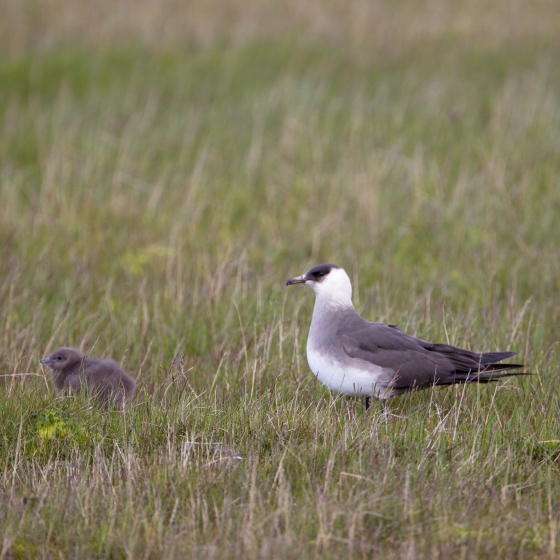
This highly-migratory seabird has a fast and powerful flight that can also be nimble and manoeuvrable. It breeds on moorland in the Arctic but spends most of its year in the open ocean.
A few colonies are found in the far north and west of Britain, on moorland within easy reach of the sea. Elsewhere, Arctic Skuas occur offshore on migration and may be seen close inshore, often when chasing terns.
Seabird censuses reveal that Arctic Skuas breeding in Britain are currently in severe decline. Recent tracking studies have shown that breeding birds make long excursions to gather food for their chicks, perhaps indicating that suitable prey is scarce near the colonies.
Key Stats







Identification
ID Videos
This section features BTO training videos headlining this species, or featuring it as a potential confusion species.
Skuas
Songs and Calls
Call:
Flight call:
Status and Trends
Conservation Status
Population Change
With the UK the Arctic Skua is restricted to north and west Scotland. Based on previous Censuses, the population increased substantially between 1969–70 and 1985–88; despite a subsequent decline, breeding numbers counted by Seabird 2000 (1998–2002) remained approximately double the 1969–70 population. The results of the recent Seabirds Count (2015–2021) are not yet available; however, annual monitoring data suggest that the decline has continued (JNCC 2022). Perkins et al. (2018) found that numbers had declined by 81% between 1992 and 2015 within their core Scottish breeding areas. The effects of the ongoing highly pathogenic avian influenza (HPAI) outbreak are being closely monitored.
Distribution
Arctic Skuas breeding in the UK are at the southwestern extremity of their mostly circumpolar breeding range. In the UK they nest in the Northern Isles, Caithness and Sutherland, the Outer Hebrides, St Kilda and a few southern Inner Hebridean islands. Highest numbers are found on Shetland, Orkney and the Outer Hebrides.
Occupied 10-km squares in UK
2007/08–10/11
or view it on Bird Atlas Mapstore.
2008–11
or view it on Bird Atlas Mapstore.
European Distribution Map
Distribution Change
Arctic Skuas have declined significantly and this is beginning to show in the range maps, with losses in the southern part of the range on Islay and Jura.
Change in occupied 10-km squares in the UK
from 1981–84 to 2007–11
or view it on Bird Atlas Mapstore.
from 1968–72 to 2008–11
or view it on Bird Atlas Mapstore.
Seasonality
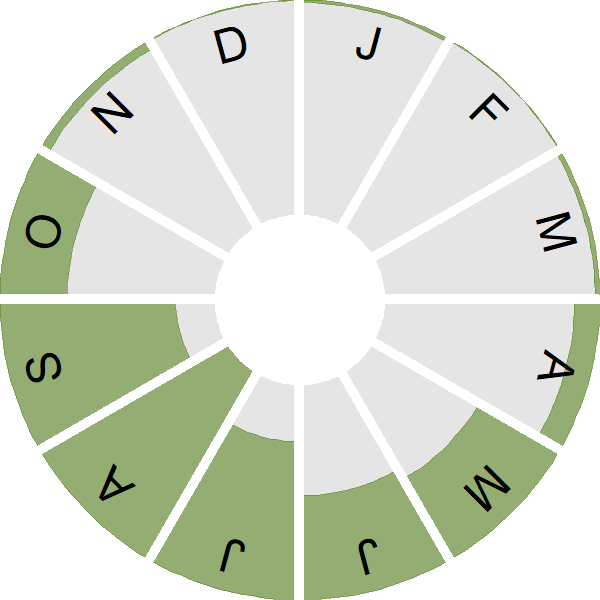
Arctic Skuas are predominantly summer visitors, arriving from April. Peak reporting is during autumn passage in August and September. Occasional birds may winter.
Weekly pattern of occurrence
The graph shows when the species is present in the UK, with taller bars indicating a higher likelihood of encountering the species in appropriate regions and habitats.

Movement
Britain & Ireland movement
Foreign locations of birds ringed or recovered in Britain & Ireland
Dots show the foreign destinations of birds ringed in Britain & Ireland, and the origins of birds ringed overseas that were subsequently recaptured, resighted or found dead in Britain & Ireland. Dot colours indicate the time of year that the species was present at the location.
- Winter (Nov-Feb)
- Spring (Mar-Apr)
- Summer (May-Jul)
- Autumn (Aug-Oct)

European movements
EuroBirdPortal uses birdwatcher's records, such as those logged in BirdTrack to map the flows of birds as they arrive and depart Europe. See maps for this species here.
The Eurasian-African Migration Atlas shows movements of individual birds ringed or recovered in Europe. See maps for this species here.
Biology
Productivity and Nesting
Nesting timing
Egg measurements
Clutch Size
Survival and Longevity
Survival is shown as the proportion of birds surviving from one year to the next and is derived from bird ringing data. It can also be used to estimate how long birds typically live.
View number ringed each year in the Online Ringing Report.
Lifespan
Survival of adults
Survival of juveniles
Biometrics
Wing length and body weights are from live birds (source).
Wing length
Body weight
Ring Size
Classification, names and codes
Classification and Codes
- Order: Charadriiformes
- Family: Stercorariidae
- Scientific name: Stercorarius parasiticus
- Authority: Linnaeus, 1758
- BTO 2-letter code: AC
- BTO 5-letter code: ARCSK
- Euring code number: 5670
Alternate species names
- Catalan: paràsit cuapunxegut
- Czech: chaluha príživná
- Danish: Almindelig Kjove
- Dutch: Kleine Jager
- Estonian: söödikänn
- Finnish: merikihu
- French: Labbe parasite
- Gaelic: Fàsgadair
- German: Schmarotzerraubmöwe
- Hungarian: ékfarkú halfarkas
- Icelandic: Kjói
- Irish: Meirleach Artach
- Italian: Labbo
- Latvian: isastes klijkaija
- Lithuanian: smailiauodegis plešikas
- Norwegian: Tyvjo
- Polish: wydrzyk ostrosterny
- Portuguese: mandrião-parasítico / moleiro-pequeno
- Slovak: pomorník príživný
- Slovenian: bodicasta govnacka
- Spanish: Págalo parásito
- Swedish: kustlabb
- Welsh: Sgiwen y Gogledd
Research
Causes of Change and Solutions
Causes of change
The decline in the Arctic Skua population is believed to be driven by strong decreases in breeding productivity (Perkins et al. 2018), with complete breeding failure occurring more frequently (JNCC 2022). Arctic Skuas are kleptoparasites, stealing food from other seabirds such as Kittwakes and auks. Recent declines for these species have been linked to the decline in their prey species, in particular sandeels Ammodytes marinus and it is likely that this will also have affected Arctic Skua productivity (Dwason et al. 2011; Perkins et al. 2018). Productivity is also likely to have been impacted by increases in the Great Skua population, through increased predation of Arctic Skua chicks (Meek et al. 2011; Perkins et al. 2018) and also through competition for territories (Dawson et al. 2011) and food (Meek et al. 2011).
Publications (10)
Seabird Population Trends and Causes of Change: 1986–2024
Author:
Published: 2026
The annual report of the Seabird Monitoring Programme View and download the report Read the report online This report presents the latest seabird population trends in breeding abundance and productivity using data from the Seabird Monitoring Programme (SMP). It documents changes in the abundance and productivity of breeding seabird species in Britain and Ireland from 1986 to 2024. This report includes both inland and coastal populations and trends from the Channel Islands, England, Isle of Man, Northern Ireland, Scotland, Wales and the Republic of Ireland, which are presented where sufficient data are available. The results from this report are used more broadly to assess the health of the wider environment, to inform policy and for conservation action.
19.03.26
Reports SMP Report
Global population status of the migratory Holarctic species Arctic Skua Stercorarius parasiticus
Author:
Published: 2026
BTO-led research estimates a minimum Arctic Skua breeding population of 185,131–395,315 pairs across Alaska, Canada, Greenland, and Europe combined, but highlights a data gap for Asian Russia, where an additional 40,000–600,000 pairs could be present. Given this uncertainty, the Arctic Skua should perhaps be reclassified as ‘Data Deficient’ rather than ‘Least Concern’ by the IUCN Red List at a global scale.
12.01.26
Papers
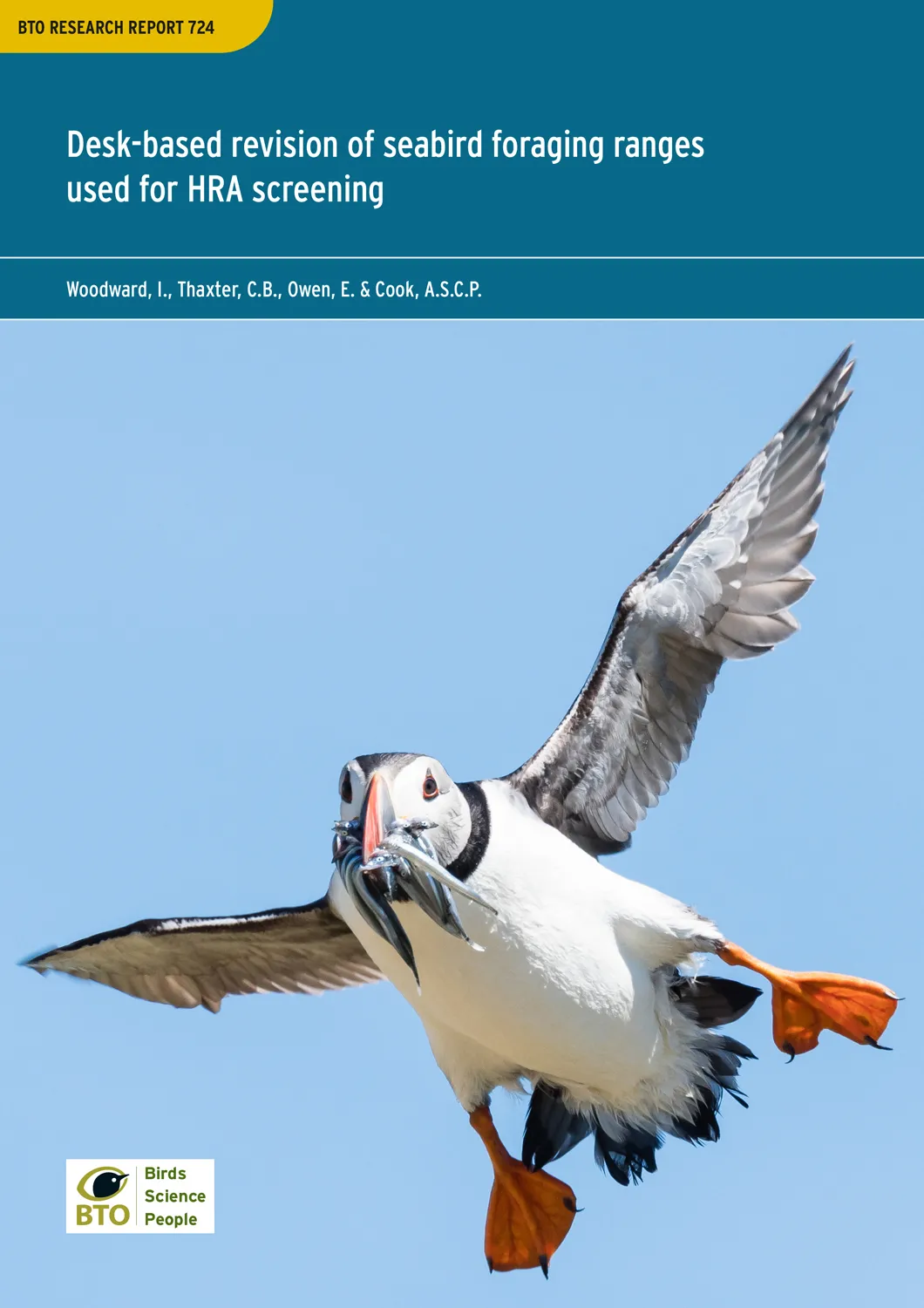
Desk-based revision of seabird foraging ranges used for HRA screening
Author:
Published: 2019
A key step in understanding the possible impacts of a proposed windfarm development is to identify potential interactions between seabird breeding colonies and the proposed development areas. Such interactions are typically assessed using generic information on foraging ranges, derived from academic studies. This report uses the latest data to provide updated estimates of foraging range, which will help to ensure that the best available information is available when new developments are being considered.
01.12.19
BTO Research Reports
New insights into the migration and wintering areas of Scottish-breeding Arctic Skuas
Author:
Published: 2024
Research by BTO Scotland unveils the migration routes and wintering grounds of one of the Arctic Skua, one the UK’s rarest and most endangered seabirds.
29.09.24
Papers
The status of the UK’s breeding seabirds
Author:
Published: 2024
Five seabird species are added to the Birds of Conservation Concern Red List in this addendum to the 2021 update, bringing the total number of Red-listed seabird species to 10, up from six since seabirds were last assessed. The Amber List of seabirds moves from 19 to 14 species, and the Green List increases from one to two species.
29.09.24
Papers
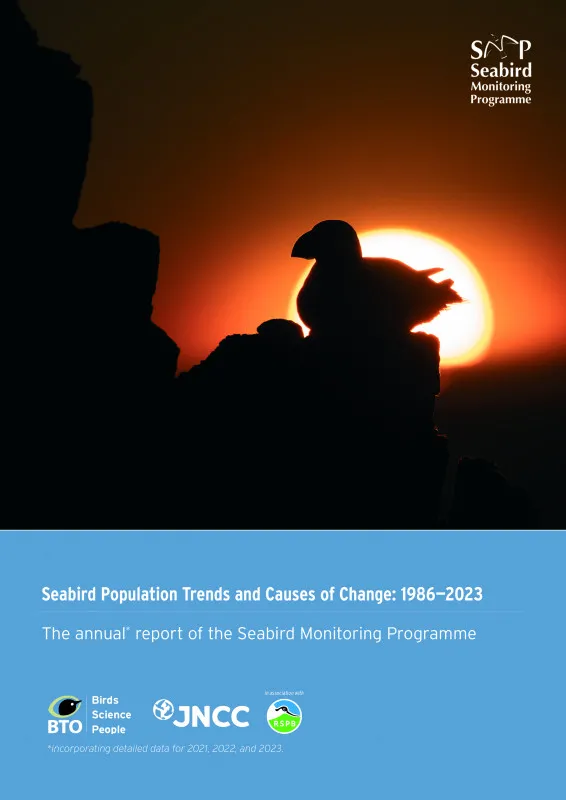
Seabird Population Trends and Causes of Change: 1986–2023
Author:
Published: 2024
This report presents the latest seabird population trends in breeding abundance and productivity using data from the Seabird Monitoring Programme (SMP).The report documents changes in the abundance and productivity of breeding seabird species in Britain and Ireland from 1986 to 2023, and provides a detailed account of the 2021, 2022 and 2023 breeding seasons. This report includes both inland and coastal populations and trends from the Channel Islands, England, Isle of Man, Northern Ireland, Scotland, Wales and the Republic of Ireland, which are presented where sufficient data are available. The results from this report are used more broadly to assess the health of the wider environment, to inform policy and for conservation action.
21.11.24
Reports SMP Report
Synchronous timing of return to breeding sites in a long-distance migratory seabird with ocean-scale variation in migration schedules
Author:
Published: 2024
22.03.24
Papers

Atlantic populations of a declining oceanic seabird have complex migrations and weak migratory connectivity to staging areas
Author:
Published: 2024
Tracking the long-distance migrations of Arctic Skuas from their north-east Atlantic breeding grounds revealed complex migration strategies, with mixing of individuals from different populations at important staging areas before the birds reached their southern wintering grounds. Arctic Skuas are long-distance migrant seabirds that have seen large declines in breeding numbers across areas of the north-east Atlantic. Part of these declines has been attributed to poor food availability during the breeding season, exacerbated by predation from Great Skuas, particularly in years where food availability is low. However, Arctic Skuas only spend around a third of the year at their breeding grounds. Therefore, they likely also face a range of threats during the non-breeding season. To shed light on the migration routes and strategies of Arctic Skuas, researchers, including BTO scientists, tracked 131 individuals with small tracking devices called geolocators between 2009 and 2019, collecting information from four breeding populations: Scotland, the Faroe Islands, Norway and Svalbard. This collaboration revealed extensive mixing of Arctic Skuas from different breeding populations during migration in several discrete staging areas. An area of high marine productivity, part of which has recently been designated as a high seas Marine Protected Area, was particularly important to the skuas during both their south-bound (autumn) and north-bound (spring) migrations. Because of their predictable food sources, such staging areas are vital, fuelling long flights to the wintering areas and, during spring, enabling individuals to build up reserves for the upcoming breeding season. This considerable mixing of individuals means that if adverse conditions affect the skuas in these important staging areas, then it has the potential to negatively impact multiple breeding populations through reduced survival or productivity. However, the data also revealed some differences in the migration routes and staging areas of individuals from the different breeding populations. Specifically, during southbound migration, skuas from Scotland largely migrated south through the North Sea and along the Iberian Peninsula, whilst those from the other more northerly populations tended to head west towards the mid-Atlantic staging area. Individuals from Svalbard staged much further west in the Atlantic during both migrations, where they may have encountered different, potentially more favourable, conditions given that the Svalbard population appears to be declining less severely than other populations in the north-east Atlantic. Understanding where long-distance migrants, such as Arctic Skuas, are distributed during migration and the strategies they use is a vital first step in identifying threats that individuals may encounter en route, and how this may affect their survival, productivity and therefore population trends. This new knowledge will help us prioritise future research and conservation actions for this declining charismatic seabird. View the Press release associated with this publication
07.03.24
Papers
The risk of extinction for birds in Great Britain
Author:
Published: 2017
The UK has lost seven species of breeding birds in the last 200 years. Conservation efforts to prevent this from happening to other species, both in the UK and around the world, are guided by species’ priorities lists, which are often informed by data on range, population size and the degree of decline or increase in numbers. These are the sorts of data that BTO collects through its core surveys. For most taxonomic groups the priority list is provided by the International Union for Conservation of Nature (IUCN) – the IUCN Red List comprises roughly 12,000 species worldwide and their conservation status. However, for birds in the UK, most policy makers refer to the Birds of Conservation Concern (BoCC) list, updated every six years (most recently in 2015). A new study funded by the RSPB and Natural England in cooperation with BTO, WWT, JNCC, and Game & Wildlife Trust has carried out the first IUCN assessment for birds in Great Britain. The study applied the IUCN criteria to existing bird population data obtained from datasets like the BTO/JNCC/RSPB Breeding Bird Survey (BBS). The criteria take into account various factors, most notably any reduction in the size (both in abundance and range) of populations, loss of habitats key to the species, small or vulnerable population sizes, and extinction risk. Alongside this, the criteria look to see if there is a “rescue” effect – such as immigration from neighbouring populations that might boost the population’s numbers, reducing the risk of extinction. The species are then categorised into one of the threat levels below. The results of the new study show that a concerning 43% of regularly occurring species in Great Britain are classed as Threatened, with another 10% classified as Near Threatened. Twenty-three breeding or non-breeding populations of birds were classed as Critically Endangered, including Fieldfare and Golden Oriole (both possibly extinct as breeders), Whimbrel, Turtle Dove, Arctic Skua and Kittiwake, as well as non-breeding populations of Bewick’s Swan, White-fronted Goose and Smew., Over the past 200 years, seven species have gone extinct as breeders in Britain, including Serin, Temminck’s Stint and Wryneck in the past 25 years. The total percentage of threatened birds in Great Britain (43%) is high compared to that seen elsewhere in Europe (13%). Reasons for this are not entirely clear, although it may be that Britain’s island status has something to do with this, as there are fewer neighbouring “rescue” populations. Although the results from the IUCN assessment and BoCC assessment largely overlap, the IUCN assessment raises the level of concern for species such as Red-Breasted Merganser, Great Crested Grebe, Moorhen, Red-Billed Chough (all classed as Vulnerable), and Greenfinch (Endangered). These species might thus warrant closer monitoring in the near future. In contrast, the BoCC assessment identifies a number of species of concern whose declines have been more gradual but over long time periods (e.g. Skylark and House Sparrow). The authors emphasise that this assessment is not a replacement of the BoCC report, but rather that the two reports complement each other. With this new wealth of knowledge, there will hopefully be even more support for those species that need it most.
01.09.17
Papers
Sex-specific food provisioning in a monomorphic seabird, the common guillemot Uria aalge: nest defence, foraging efficiency or parental effort?
Author:
Published: 2009
01.01.09
Papers
More Evidence
More evidence from Conservation Evidence.com
Partners




Citing BirdFacts
If you wish to cite particular content in this page (e.g. a specific value) it is best to use the original sources as linked in the page. For a more general citation of the whole page please use: BTO (20XX) BirdFacts Species: profiles of birds occurring in the United Kingdom. BTO, Thetford (www.bto.org/birdfacts, accessed on xx/xx/xxxx).