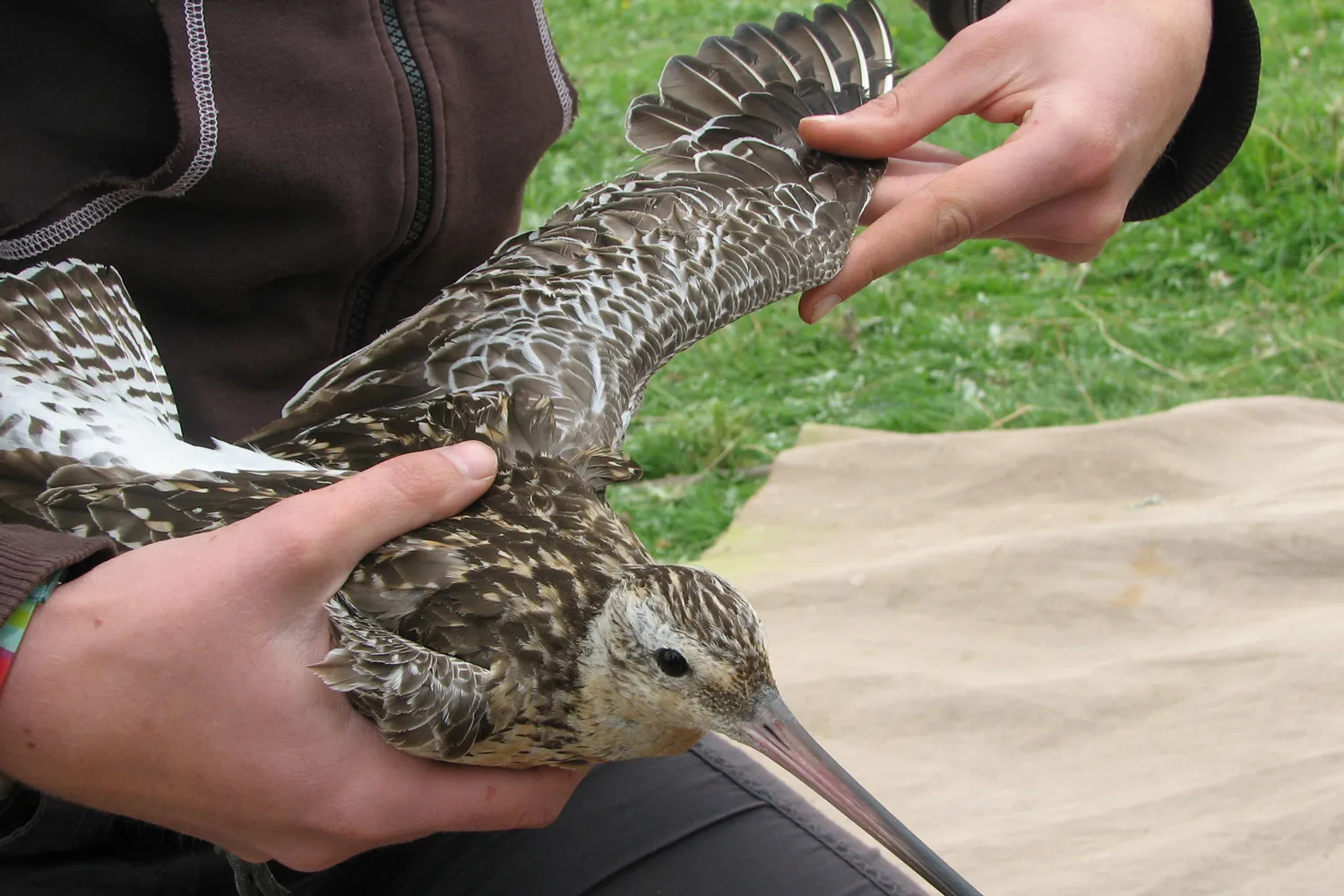
Ringing Committee is responsible for the ringing operations of BTO. The Chair of Ringing Committee sits on the Board and is supported by two members of the Board, four members elected by ringers and two other members. The Committee meets twice a year.
The Ringing Committee currently has three sub-committees:
- Ringing Standards Select Committee
- Cannon-netting Technical Panel
- Special Methods Technical Panel.
Each subcommittee deals with a particular aspect of ringing activities.
Jamie Dunning – Chair
 Jamie is an ornithologist spanning academic research and commercial application of bird survey and ringing data. He completed his PhD at Imperial College London on the evolution of social behaviour in birds, using the long-term genetic population of House Sparrows on Lundy Island. Since then, he has worked across diverse interests, from behavioural ecology and visual signal evolution to the spread of zoonotic disease through wild bird communities.
Outside academia, Jamie co-developed recent bird survey guidance for commercial application and sits on the group overseeing their continued development. He runs Skopeo, a spin-out business consulting on technical ornithology, survey design and resourcing. Jamie is also a ringing trainer with a new group in central Bristol, covering Severnside and the important River Severn SPA. Much of his ringing has focused on long-term and single-species studies, and their value to research and conservation.
Jamie is a life-long birder and BTO supporter. He looks forward to bringing his experience bridging academic research and commercial practice to the BTO board, exploring how BTO data and volunteer effort can be applied in both sectors.
Helen Franklin
Helen started ringing in 2007 with the Northants Ringing Group, gaining her A permit in 2017. She has experience ringing both at home and abroad, having joined ringing teams in Malta, Portugal and Cyprus as well as undertaking annual trips to Skokholm Bird Observatory.
Helen worked in administration and finance and, prior to retiring, was office manager and PA to the director of the RSPB Midlands office. Following retirement, she volunteered as the minute secretary for the Board of Buglife for several years.
Owain Gabb
Owain’s ringing career started as a trainee with the Natural History Society of Northumberland RG where he was able to participate in a wide range of ringing activities, including CES, RAS and seabird ringing, gaining his C permit after a few years. He then moved south and spent a few years ringing with the Newbury RG, where he gained his A permit, before returning to south Wales, where he grew up, and joined the Gower RG.
Owain established a ringing site at Oxwich Marsh National Nature Reserve in 2013 and soon became a ringing Trainer. He now focuses much of his ringing around training, including establishing and running the Welsh Ringing Course for over 10 years. Outside of ringing, Owain is a Director of BSG Ecology, an employee-owned consultancy employing around 60 people, Chairman of Gower Ornithological Society, a committed birdwatcher and moth trapper, and father to two little girls.
Les Hatton
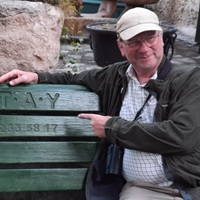
Les started ringing in 1987, moving to Scotland in 1988, where he benefited from the highly collaborative and supportive regional ringing group structure. He now lives in Fife, where he rings with the Tay Ringing Group, is a ringing Trainer and holds a cannon-net endorsement.
Outside of ringing, Les is trying to retire from his job as a consultant ecologist, a role he took up after a 17-year career as a countryside ranger looking after the Eden Estuary. He continues to undertake some freelance work, though, mostly on international projects.
Peter Kirmond

Peter’s ringing career has been very much a game of two halves: he became a trainee in the 1970s under the expert eye of John McMeeking. A decade of varied activity included the early days of ringing at Treswell Wood, numerous Wash Wader Ringing Group trips and time as assistant warden at Dungeness.
Work (as a pharmacist and GP surgery Practice Manager) and family led to a 30-year sabbatical, and he returned to ringing five or so years ago. This return has included, amongst other things, heavy involvement in CES at Slimbridge, spells at Gibraltar Rock Bird Observatory, monitoring for Gloucestershire Raptor Group’s Kestrel nest box scheme, establishing a colour ringing House Sparrow RAS and winter CES in his garden and a community-based Swift nest box scheme around his village.
Jim Lennon
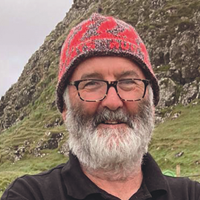
Jim started ringing in 1991 with the Severn Vale RG, but since the millennium has been based in Nottinghamshire. He is endorsed for, and trains, most types of ringing and has been involved in about 20 BTO ringing courses.
His ringing includes seabirds on the Shiant Isles, where they run four seabird RAS projects, farmland birds in the winter with local students who use the data as part of their studies, heron and egret pulli, a few hundred owl and kestrel boxes, plus garden ringing as a training tool.
Jim brings to the Ringing Committee experience of governance, partnership and funding issues within the public and voluntary sectors through his work with Natural England and RSPB.
Chrissi Twitchen
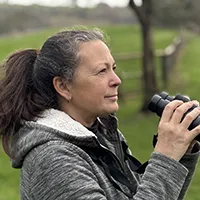
Chrissi began as a trainee in 2009 with the Ladywell RG in Lancing on the South Coast of England, under the watchful eye of John Newnham who has been her Trainer throughout her ringing career. She hasn’t moved far, now ringing at Cissbury RG, slightly higher up on the South Coast. She has a particular interest in raptors and owls and is also part of the national colour-ring project for rehabilitated gulls.
Away from ringing, Chrissi works full time as a prescribing paramedic practitioner for the NHS in a GP surgery in West Sussex. She started her career in Sussex Ambulance Service in 1996 on patient transport services and left in 2014 as a Clinical Team Leader and Paramedic Practitioner. Whilst working, she completed her first degree in Health and Social Care and later her MSc in Palliative Care. On the rare occasion she has free time, she can be found on the yoga mat in a beautiful yurt in Angmering.
Stephen Vickers
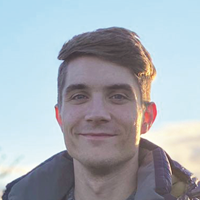
Stephen started ringing at Skokholm Island Bird Observatory in 2017. He subsequently trained with Gower and Mid-Wales Ringing Groups, getting his C permit the following year whilst back on Skokholm as a long-term volunteer and is now a qualified Trainer. He completed a PhD at the University of East Anglia in 2022, largely focusing on mechanisms of migratory connectivity in birds.
Now, alongside training, Stephen leads or contributes to projects across a wide range of species with a particular focus on colour ringing. He is active across a wide range of techniques, including mist netting, dazzling (with and without a thermal imager) and hand catching.
In his spare time, Stephen has developed a range of online tools for ringers to use to explore the BTO’s annual ringing report and their own ringing data, and he has also developed colour ring reporting apps that give instant life histories.
Stephen Willis
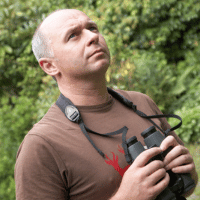
Stephen is currently a Professor of Ecology and Conservation, Director of Research, and Deputy Head of Department at Durham University. He has had a lifelong interest in birds and the study of birds, which resulted in his academic career in ecology, as well as spending much of his spare time over many years watching and surveying birds, for fun and as a citizen and professional scientist.
Stephen has been involved with BTO in various ways over the years, including survey volunteering, learning to ring, and participating in research collaborations.
Stephen has experience as a trustee for Discover Brightwater, which is Heritage Lottery-funded and focused on improving the biodiversity and environment throughout a northern river catchment. Stephen brings expertise and a commitment to working to remove barriers to equality, diversity, and inclusivity.