Read reviews of the books we hold in the Chris Mead Library, written by our in-house experts. A selection of book reviews also features in our members’ magazine, BTO News.
Featured review
All the Birds of the World
Lynx have had a long-term project to produce an exhaustive guide to the birds of the world. It started out with the 17 volumes of the Handbook of the Birds of the World (1992–2013) which has family and species accounts for all birds. This was followed by the two volumes of the Illustrated Checklist of the Birds of the World (2014–2016). They have now published the third and final stage of this avian odyssey with this current book.

Search settings
Of the Trees and the Birds
Author: Ian Parsons
Publisher: Whittles Publishing, Dunbeath
Published: 2024
My last BTO book review focused on a book that was about the relationship between flowers and birds. Of the Trees and the Birds carries on in a similar vein. However, as the title suggests, this particular book focuses on the relationship between trees and birds. In many ways, I know even less about trees than I do about flowers. However, over my 20+ year birding career, I have learnt a few things about the relationship between trees and birds. This includes the colourful Jay’s habit of burying acorns that sometimes grow into Oak trees, or the complex relationship that Golden Orioles have with the types of trees that they nest in (I used to work at RSPB Lakenheath Fen, where this species bred until 2009). Although this book is mainly text, there are some high quality colour photographs in it. It is written in a very accessible way, and the author keeps the scientific terminology to minimum. This is particularly helpful to people like myself, who do not have a professional background in science. The book details various different types of relationships between trees and birds. This mainly focuses on incidents such as a bird species ‘just’ using a particular species of tree to nest in, and the aforementioned example of a ‘mutual’ relationship between Jays, acorns and Oak Trees. Although my personal interest lies in UK birds, there is also some fascinating information about bird species from across the world and their relationship with trees. Whether this refers to the claws of the “pungent” Hoatzin of South America, or the gigantic nests of Cinereous Vulture, I have learnt a great deal from reading this book! As well as lots of information about the relationships between particular bird species and trees, this book provides a valuable insight into the ‘mechanics’ of a tree. This answers questions such as “How do trees become hollow?” and “what does a tree do to repair holes that form within them?” Admittedly, these are not things that I have given much thought to until now, but I am glad that I have read this book to find out. I would thoroughly recommend this book if you have an interest in the relationships between trees and birds. Although not a particularly long book, there is so much interesting information in it!
Nature Needs You: The Fight to Save Our Swifts
Author: Hannah Bourne-Taylor
Publisher: Elliott & Thompson, London
Published: 2025
People who didn’t already know Hannah Bourne-Taylor could hardly fail to notice her bold method of getting Swifts on the political agenda, walking through London adorned only in artistic body paint to launch her petition to make Swift bricks mandatory in November 2022. Her latest book charts the journey of the author’s campaign, from the conception of the petition and the agonising wait for it to get the required number of signatures, to the various frustrations, delays and obstacles in getting a small and simple measure enshrined into law – and no, there is no happy ending where it all comes good. Her account provides a fascinating insight into what goes on in the corridors of power, and the various officials, government ministers, and especially lobbyists, do not come off well from it (although Zac Goldsmith emerges a knight in shining armour figure). It is also interesting to read about how the author worked with other well-known campaigners and found inspiration from their predecessors. Although the author convincingly makes the case for Swift bricks, she makes it clear that they are no panacea – securing the species will also require ensuring the birds can find sufficient food, for example. It is evident that the author is driven by a genuine love of birds and other wildlife, which is reflected in the various passages of general natural history writing and lamentations on humanity’s loss of connection with, and knowledge of, the natural world. Although the author has an in-depth knowledge of Swifts, she makes a point of saying she isn’t an ornithologist, and this is betrayed in the odd small slip, like when she describes Nightjars as one of the earliest-arriving spring migrants. Those small details aside though, you definitely root for her as she documents the time and energy she has invested in her campaign, and the toll it has taken on her health. I read this book in late April and early May, just as Swifts were returning to scream and dart through the skies above Thetford. I love Swifts too and feel devastated by their loss. I am grateful to Hannah for giving so much of herself to the cause, but she can’t do it alone. As her book title says, nature needs us all to step up. Get inspired and get involved.
The Great Auk: Its Extraordinary Life, Hideous Death and Mysterious Afterlife
Author: Tim Birkhead
Publisher: Bloomsbury Publishing, London
Published: 2025
Tim Birkhead will need little introduction to much of the BTO audience; as a well-known academic, pre-eminent ornithologist and writer of multiple books on birds, his reputation is far reaching. As a seabird specialist, and self-confessed Guillemot obsessive, it should come as no surprise that he has chosen to delve in to the life, and especially the afterlife, of the imposing Great Auk in this latest publication. I was always rather intrigued by the Great Auk. Of all extinct creatures it seemed somehow more tangible. Unlike Dodo, or Moa, or any number of wonderous species laid waste by humans in the last few centuries, this large monochromatic seabird was foremost a British bird. And having grown up birdwatching around Morecambe Bay, I had a very clear, mental picture of what one would look like, bobbing around on the grey surf, just offshore. As a child I was convinced that there must still be some small undiscovered colony somewhere in the vast north … Having read this book, and been fortunate enough to host a talk with Tim recently, I have lost none of my wonder for this spectacular bird, though I sadly gave up on my dreams of its rediscovery decades ago. The heartbreaking tale of greed and exploitation that runs through this sorry story makes for pretty grim reading. Birkhead excels as a communicator of science; his style is as accessible as it is informative, and his personality is evident on every page. Along with plenty of detail about the lives of Great Auks and their desperate demise, the book looks at depth into the intrigue and at times bizarre circumstances surrounding the post-extinction history of the birds’ physical remains. The poor flightless auk was mercilessly persecuted, and even once extirpated the few remaining eggs, skins and other remains became desirable trinkets; items for the wealthy, and status-driven collectors. Stuffed specimens, eggs and bones became the currency of rich ornithologists (none of whom ever saw a living specimen) the world over. The few existing ‘artefacts’ of Great Auk were traded, bought, sold, and indeed lost. To many, the bird took on greater significance in death, than in life. With many seabird populations currently declining at a worrying rate, was the Great Auk simply the first of these remarkable birds to disappear from our seas? The rapid and brutal effect of human exploitation on the large flightless alcid may have been less subtle than our impact is today on Guillemots, Razorbills and Puffins, but are we collectively just as guilty as our greedy ancestors?
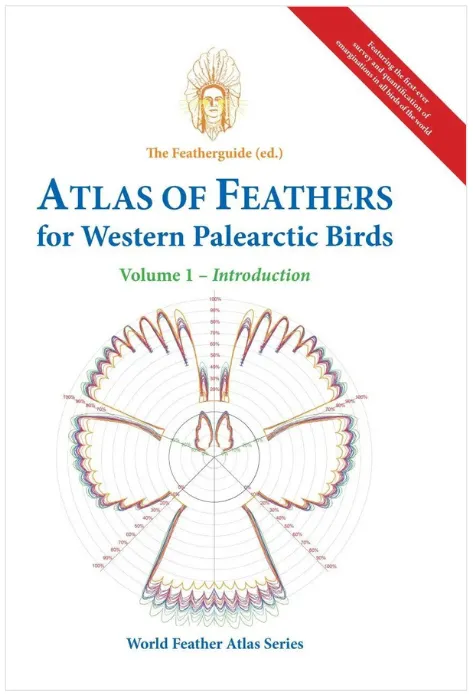
Atlas of Feathers for Western Palearctic Birds. Volume 1: Introduction
Author: The Featherguide (ed.) & Feather Research Group
Publisher: Featherguide Publishers, Köthen
Published: 2024
As a lifelong feather collector and researcher using feather analyses for peregrine diet studies, I am always drawn to detailed feather resources. Feathers offer invaluable insights beyond diet studies, including bird strike identification, evolutionary relationships, aging and even species discovery. They are also simply beautiful. The Atlas of Feathers for Western Palearctic Birds series is a particularly exciting development. This first volume, while primarily text-based, provides a comprehensive introduction to feather characteristics across all global bird families, detailing wing and tail feather counts and other key features such as the gaps or slots in feathers (emarginations); the sort you might see throughout detailed identification books used for bird ringing. I was slightly confused by the fact the introduction covers all the world’s families even though the title is focused on Western Palearctic Birds; however, it means the book potentially has a much wider use. The book features high quality scans of sets of feathers laid out in the pattern and sequence you would find them on the real bird. While I would have appreciated more photos in this introductory book, I understand it is laying the foundations for subsequent books in the series. Those shown mostly feature aberrations in the number of wing or tail feathers occasionally found birds such as Swift and Woodcock. However, several pages feature scans of the wing and tail feathers of hummingbirds and other species such as Wallcreeper and Siskin. They offer a glimpse and taster to the stunning visual detail promised in subsequent volumes, which will focus just on Western Palearctic species. Online resources like Featherbase – which are in some way linked to this book series – are an excellent go to. So why the need to produce a comprehensive series of books? I feel there is still something invaluable about having a real book in the hand, that goes into even more detail than a website ever can and enables a researcher like me to flick through intently, both from an aesthetical and scientific perspective. The series promises to be a visually rich and indispensable tool for researchers, birders and anyone fascinated by feathers.
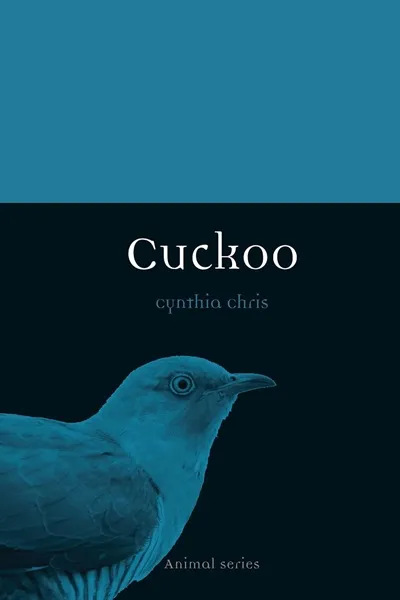
Cuckoo
Author: Cynthia Chris
Publisher: Reaktion Books Ltd, London
Published: 2024
Cuckoo is the latest monograph of Reaktion Books’ Animal Series. It is short and concise and takes a slightly different approach to other recent bird monographs, focusing less on scientific studies and more on the influence of the species on our society through time. Cuckoos are ideal for such a book as, over the centuries, they have imprinted onto many facets of our culture. Many poems, plays, books, films, and phrases have drawn inspiration from the species, which for so long our ancestors viewed with an air of mystery. And it wasn’t just obscure historical figures that were influenced by Cuckoos, but household names such as Shakespeare, Vivaldi and Wordsworth. It’s a real reminder of how powerful a species can be in our imagination, and how important it is that we conserve them. Author Cynthia Chris has done a fantastic job mining all this information, as well as finding the many pictures that enrich the pages. The book principally focuses on our Common Cuckoo, although other species of the cuckoo tribe (and near relatives) are mentioned. I very much liked reading about the origins of the family, and how it evolved to be the group of birds that delight so many of us today. And of course, it was great of Cynthia to mention BTO’s ongoing Cuckoo Tracking Project. Overall, this is a well-written book that would be a nice gift to any nature-loving friend or family member.
The Storm-petrels
Author: Rob Thomas
Publisher: Bloomsbury Publishing, London
Published: 2024
It’s difficult to do justice to such a clear labour of love in a short review. The passion, fascination and sheer awe author Rob Thomas has for storm-petrels leaps off the page, and is infectious. In this comprehensive account of the world’s smallest seabirds, the author takes us on a highly readable journey through their biology and ecology, including how they forage, fly, and perceive the world. Inevitably, we also learn about the various conservation challenges they face, and how they have been exploited by humans throughout their range. As well as general chapters relaying all this information, there are also comprehensive species accounts covering all known southern and northern storm-petrel species, and the book finishes with recommendations of places to go and experience storm-petrels for yourself. One of the many charming aspects of this book is how Rob acknowledges the work of his friends, colleagues and students throughout. It is also shot through with his characteristic humour. And no review would be complete without mentioning the fantastic artwork throughout, much of it by Rob himself, but also by people he has worked with. Alongside the art, there are also useful photos, graphics and figures, superbly illustrating the points Rob makes in the text. This book is a science communication tour de force, and a love letter to these very special seabirds.

Murmur (second edition)
Author: Darren Andrews
Publisher: Self-published
Published: 2024
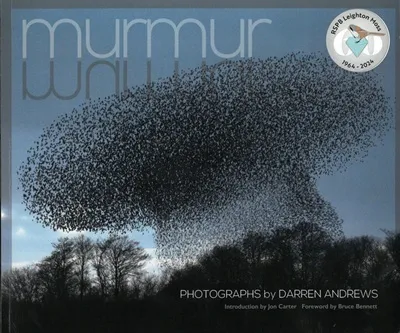
Books are usually filled with an abundance of words, but Murmur holds a wealth of images featuring Starling murmurations from Leighton Moss, Blackpool North Pier and Carnforth in Lancashire. The words that do appear in the introduction atmospherically set the scene, with the first few images featuring a small number of birds gathering on rooftops. Then you turn a page and are within the flock of thousands of Starlings. Every page is adorned by a photo of Starling murmurations and captures a different moment of this spectacle. I wondered how many birds were in each photo, too many to count. In some pictures, the landscape takes the lead as murmurations fly against the blue, yellow and orange sky of the RSPB nature reserve Leighton Moss. The skill of the photographer is evident throughout the book. The black and white images make you focus intently on the Starlings, their shapes so precisely captured, while on other pages flocks appear in motion like they could take flight from the book into the room with you. The way the photographs are ordered also takes the viewer on an immersive journey of anticipation, to awe and then calm. The last image is of a single Starling. In the dusk of the images, the time of day the Starlings gather to murmurate, you could almost feel the message within the photos, set out by the introduction. It is the warning that Starlings are in trouble, featuring on the UK’s Red List of Birds of Conservation Concern. It reminds us that though numbers may seem extraordinary in these photos, we shouldn’t take their presence for granted. Ending with an afterword by the photographer, Darren, the book captures the emotional relationship humans have with birds. Here, the photographer describes how sharing these images with his mum was a vital last connection for her with the joy of nature. This book with its compilation of photographs is absorbing to look through. It would appeal to those with a love of photography or nature in general, and by the end, you’ll certainly have a love for Starlings and an overwhelming desire to see a murmuration for yourself.
Bird Tracks: A Field Guide to British Species
Author: John Rhyder & David Wege
Publisher: The History Press, Cheltenham
Published: 2024
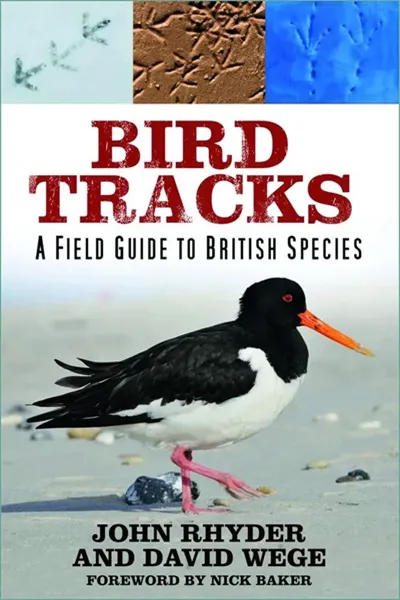
Quite often, a bird does not need to be seen to prove its presence. Many birders are adept at identifying birds by sound, or can confidently assign a nest or errant eggshell to species. But how many of us spend much time investigating the ground beneath us, looking for clues of avian activity? Most BTO members will be familiar with those established and useful books about tracks and signs, which often include more obvious or unusual features that birds and other animals leave behind. This new book, however, by John Rhyder and David Wege, focuses entirely on birds and their footprints. No nibbled acorns, discarded hair, or droppings are to be found in these pages. Covering 139 species, most of which occur naturally in the UK, this guide allows active birders to delve into the often-subtle world of avian prints, and how to determine just what left them behind. I am sure we’ve all come across curious tracks in snow, sand, or mud, and while we may have been able to assign the transient creature to a family, or ‘type’ of bird, we might have struggled to confirm the departed owner’s specific identity with confidence. This is where Bird Tracks comes in, detailing the exquisite differences between, say a Rook and Carrion Crow print, or those of Grey and Golden Plover. It does take quite a level of dedication to get down to the sometimes-indistinct differences between some of the featured footprints, but overall, the book is an absorbing collection of images and detailed text that takes the identification of bird tracks into fresh territory. I for one, had no clue about the syndactyl foot of the Kingfisher, and I was intrigued by the totipalmate structure of Gannet and Cormorant feet. Delving into this book, one may not become an expert in the identification of birds’ feet overnight, but there is a great deal in which to delight and discover.
Ten Birds That Changed the World
Author: Stephen Moss
Publisher: Faber & Faber, London
Published: 2024
In Ten Birds That Changed the World author Stephen Moss succinctly explores our relationship with birds over 10 chapters. He cleverly uses their charm and approachability to show how our actions have shaped the natural world, and how it has shaped our society in return. History geeks, this is for you! I read with fascination the snippets of ancient folklore surrounding the Raven, and was surprised by the buried story of China’s sparrow campaign. Each chapter could be read on its own, opening with a scene-setting vignette before a whirlwind exploration of the role of each species in human character development. But I’d argue the book is more enjoyable to read from start to finish. This way you can feel the contrast between the free- spirited Raven and the meek dove, baulk at our brushes with extinction and witness some of humanity’s darkest hours from a bird’s perspective. From Snowy Egrets and organised protests, to cormorants and an agricultural revolution, you marvel at the myriad consequences of birdwatching. The book ends with the Emperor Penguin and a familiar refrain on our position at a climate crossroads. After reading the previous nine chapters, this could seem tired and worn. However, it brings hope that we will learn from our mistakes, and save birds and ourselves. How else in the future could we read more of these stories?
