Citation
Overview
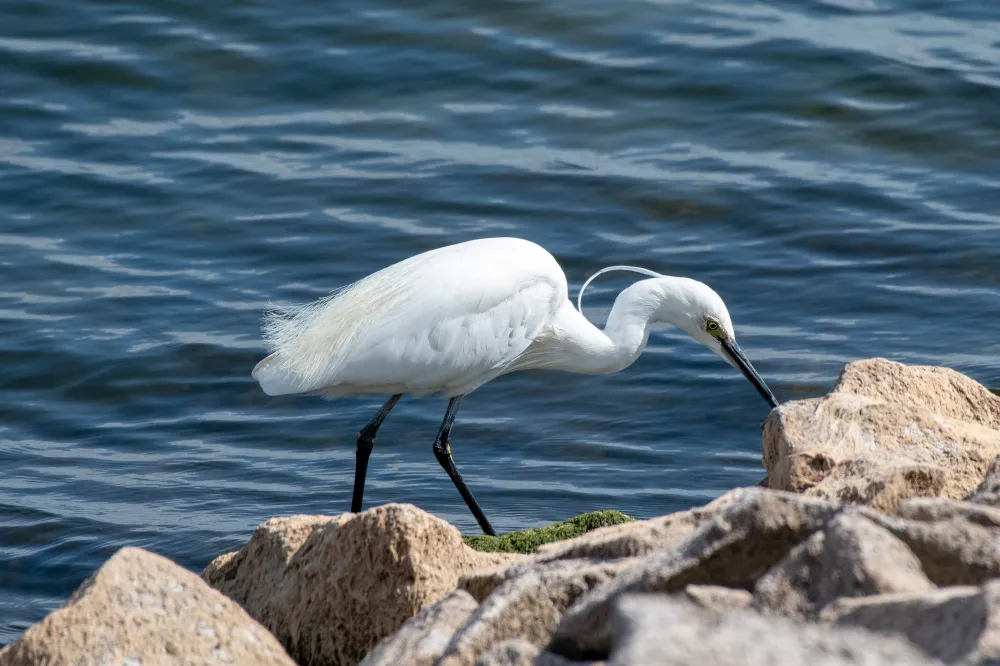
Data from the Heronries Census and the Rare Breeding Birds Panel (RBBP) were combined to produce population estimates for Little Egret. The population was estimated at 2,236 pairs / apparently occupied nests in 2022, which was around 40% higher than the total number of nests reported to the RBBP in that year.
In more detail
The study used a similar analytical approach to that used to produce the Heronries Census trend for Grey Heron, and means the population trend for Little Egret can now be updated annually and published alongside the Grey Heron trend in the Heronries Census Summary Report.
Accurate breeding population estimates will help inform future conservation policies and management actions for the species, including the identification and potential designation of nationally important breeding sites (usually sites supporting more than 1% of the national population, i.e. 22 or more pairs in 2022).
Further refinement of the survey methodology and reporting process for Little Egrets may be required to ensure that population estimates are as robust as possible. These could include additional late Census survey visits as the Little Egret breeding season starts (and finishes) later than that for Grey Heron.
Abstract
Modelling of Little Egret Egretta garzetta data from the Heronries Census (HC) and the Rare Breeding Birds Panel (RBBP) has been carried out to assess whether the HC, together with a bespoke analytical model developed for monitoring herons in the UK, can be used to produce ongoing annual population estimates for Little Egret. The model currently used for Grey Heron Ardea cinerea requires adaptation for Little Egret, since it assumes that the number of colonies is constant – an assumption invalid for Little Egret. An alternative model that captures new colonisations more effectively produces a population estimate for Little Egret of around 1,886 apparently occupied nests in 2022 when using HC data only, and an estimate of 2,236 nests when combining HC and RBBP data and taking the maximum counts from either source. The latter estimate exceeds the threshold of 2,000 pairs, above which species are normally no longer assessed by the RBBP. We discuss reasons to suspect that the true population could be even higher than our estimate of 2,236 nests. The assessment suggests that the HC can be used to produce population estimates for Little Egret and could potentially also be used in future for Western Cattle Egret A. ibis, Great Egret A. alba and Eurasian Spoonbill Platalea leucorodia. However, further refinement of both the model and the data-collection methodology for monitoring egrets would be advisable to ensure that ongoing population estimates are as robust as possible.
Staff author(s)





The BTO Heronries Census is supported by funding from Gifts in Wills, for which the authors are extremely grateful. The Wetland Bird Survey (WeBS) is a partnership jointly funded by BTO, RSPB and JNCC, with fieldwork conducted by volunteers and previous support from WWT. The BTO/JNCC/RSPB Breeding Bird Survey (BBS) is a partnership jointly funded by BTO, RSPB and JNCC, with fieldwork conducted by volunteers. The Rare Breeding Birds Panel is funded by RSPB, JNCC and BTO.