BTO works with a wide range of partners and organisations in the private, third and government sectors to contribute to and co-author reports and other types of publications relating to UK bird population monitoring and nature conservation—these can be found below. For self-published BTO reports and publications, please see the BTO publications page.
This report (published 2025) summarises raptor population trends, species-specific accounts, and the impact of Highly Pathogenic Avian Influenza (HPAI) on raptors in Scotland. It highlights an increase in Hen Harrier numbers, monitoring gaps for certain species, and ongoing research into HPAI and Kestrel declines. The report also outlines plans to enhance coverage for robust trend analysis and better inform conservation policy.
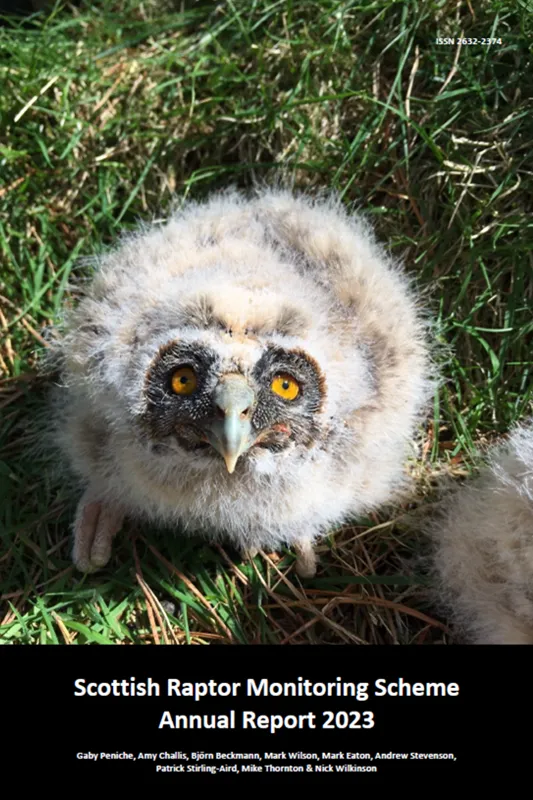
Scottish Raptor Monitoring Scheme Report 2023
Author:
Published: 2025
A summary of the activities and findings of the Scottish Raptor Monitoring Scheme for the year 2023.
19.08.25
Reports Other reports
Climate change and migratory species: a review of impacts, conservation actions, indicators and ecosystem services.
Author:
Published: 2023
This major report, prepared by BTO staff and colleagues at JNCC, surveys the evidence on the impacts of climate change on migratory species. It was launched on 10 December 2023 at the UN Climate Change Conference in Dubai (UNFCCC COP28).
10.12.23
Reports Other reports
Strategic study of collision risk for birds on migration and further development of the stochastic collision risk modelling tool (Work Package 1: Strategic review of birds on migration in Scottish waters)
Author:
Published: 2023
Report by British Trust for Ornithology, Royal Society for the Protection of Birds and ECO-LG to The Scottish Government, Crown Estate Scotland and The Crown Estate.
01.10.23
Reports Other reports
Scottish Raptor Monitoring Scheme Trends Summary 2009–2018
Author:
Published: 2022
This report presents trends for raptors in Scotland based on Scottish Raptor Monitoring Scheme (SRMS) data for the period 2009 to 2018. Trends cover breeding numbers and productivity (breeding success, clutch size, brood size and the number of fledglings) at national and regional (SRMS Region and Natural Heritage Zones) levels for 14 species (13 raptors plus Raven) that breed regularly in Scotland: Osprey, Golden Eagle, Sparrowhawk, Goshawk, Hen Harrier, Red Kite, White-tailed Eagle, Buzzard, Barn Owl, Tawny Owl, Kestrel, Merlin, Peregrine and Raven.
07.11.22
Reports Other reports
Climate Change and the UK's Birds
Author:
Published: 2021
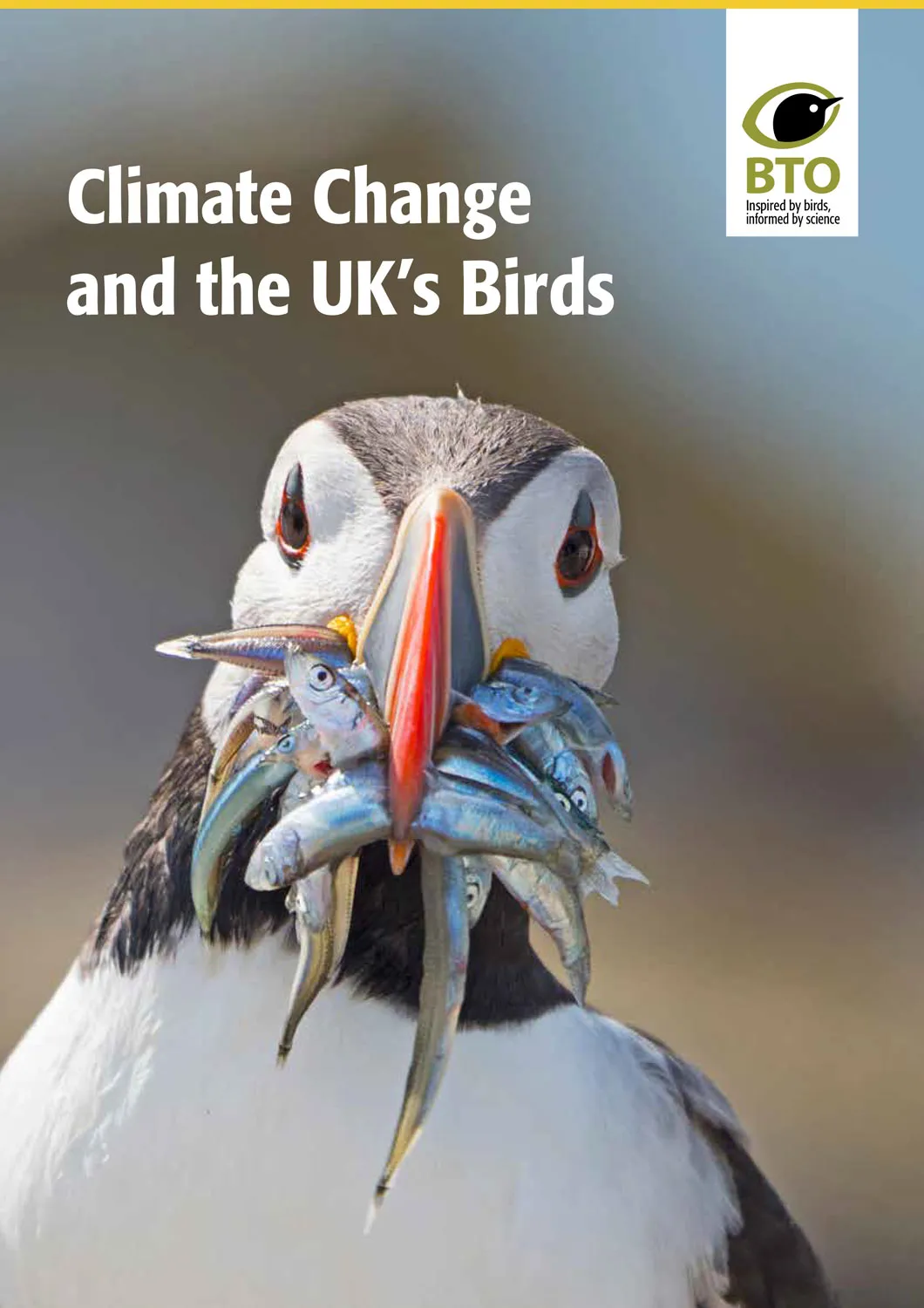
In this report we show how climate change is already impacting the UK’s birds. Our internationally important breeding seabird populations and unique assemblage of upland breeding birds are already negatively affected and appear most vulnerable to future change. Many southern species and widespread resident species are increasing in response to warmer temperatures. Overall, a quarter of our breeding species appear to be negatively affected and a quarter may be responding positively; the remaining breeding species that have been studied appear relatively unaffected by climate change. There are significant gaps in our knowledge for other species, notably our wintering bird populations.
04.11.21
Reports Other reports
Implications of lowland broadleaved woodland management for the conservation of target bird species
Author:
Published: 2017
This research consisted of a literature review and field study which investigated woodland management for birds within lowland broadleaved woodlands in Britain. The research considered the effect of woodland management (silvicultural intervention and control of deer browsing) on vegetation structure, and the relationships between vegetation structure and woodland birds. Based on habitat–bird relationships, a classification of six woodland stand structures (A–F) related to their value to birds, and a framework to help understand and manage woodland development to deliver these structures were created. The field study, which was conducted in England and Wales, showed that woodlands are predominantly mature or late thicket stands, with low structural heterogeneity (type E – closed canopy, few strata), and silvicultural interventions are primarily mid to late rotational thinning. Such interventions lead to a uniform stand structure and reduced stem and understorey density. High deer browsing pressure also reduces understorey density. Study results showed these vegetation structures to be less favourable to the target bird species who were instead found to be associating with the structures predicted from the literature as being favourable. This suggests that vegetation structures for birds can be described, and if provided, bird populations could be enhanced. The frequently occurring woodland structure type E is of least value to woodland birds. Woodland managers are encouraged to move type E stands towards other types to help meet bird conservation objectives.
16.06.17
Reports Other reports
The avoidance rates of collision between birds and offshore turbines
Author:
Published: 2014
Report of work carried out by the British Trust for Ornithology in collaboration with the Environmental Research Institute on behalf of the Marine Scotland Science. Accurately estimating birds’ risk of collision with offshore wind turbines is a key part of the decision-making process for proposed renewable developments. However, the evidence base for quantifying the number of birds likely to avoid colliding with turbines is limited. Recent BTO-led work helping to fill this gap, improving the understanding of the impacts of offshore renewables on marine wildlife.
03.12.14
Reports Other reports