Citation
Abstract
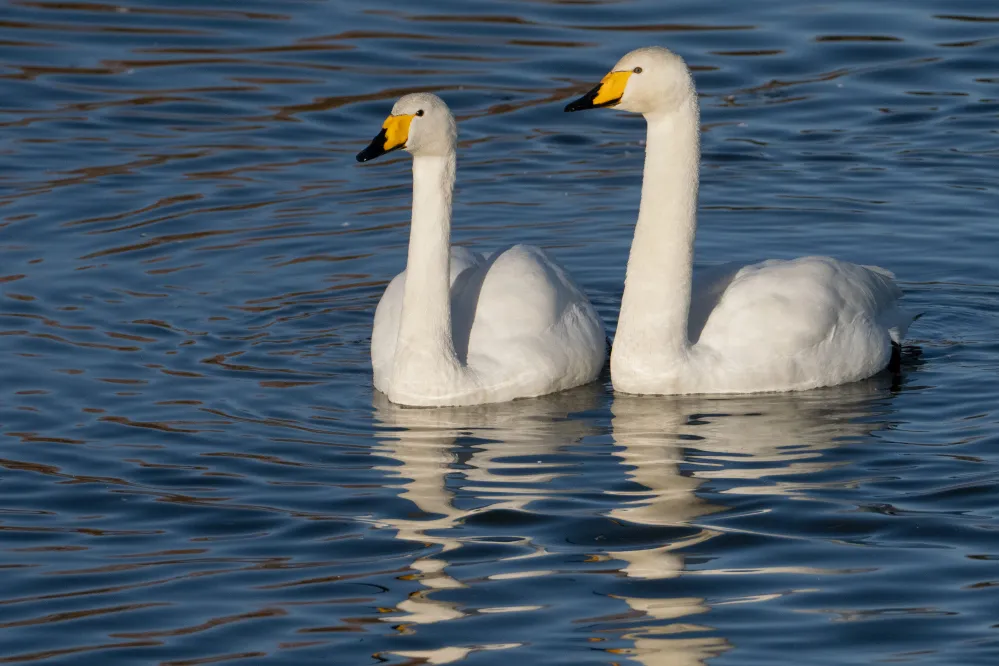
The Ouse Washes and the surrounding farmland in Cambridgeshire and Norfolk support England’s largest concentrations of overwintering Whooper Swans Cygnus cygnus, which migrate to Britain and Ireland from their breeding grounds in Iceland. Using data from the International Swan Census, the Goose and Swan Monitoring Programme, and recent GPS-tracking, this paper examines the subset of the Iceland/UK & Ireland population that winters at the Ouse Washes, by reviewing their migration routes, numbers, breeding success, feeding and roosting ecology, and the pressures that influence their use of the site. The total population size wintering in Britain and Ireland increased from 15,842 in 1995 to over 43,000 in 2020, and the Ouse Washes now regularly supports more than 30% of these birds. This expansion contrasts sharply with the decline of the northeast/northwest European Bewick’s Swan Cygnus columbianus population since the mid 1990s. The managed flooding of the Washes and the surrounding farmland provides ideal conditions for wintering birds, though changes in agriculture, hydrology, disease prevalence and climate may reshape future patterns of site use. Continued monitoring and international coopera- tion are essential to inform the management measures needed to safeguard this key Fenland refuge for Whooper Swans and other migratory waterbirds using the site
Staff author(s)
The authors are grateful to the many farmers across the Fens who support wintering swans on their land and facilitate access for monitoring. They thank the volunteers of the BTO/JNCC/NatureScot Goose and Swan Monitoring Programme and the teams at WWT, RSPB, Wildlife Trust and National Trust for their invaluable assistance with arable swan counts and coordinated sur veys at and around the Ouse Washes. Their thanks also go to the many visitors to WWT Welney, RSPB Ouse Washes and Wildlife Trust Ouse Washes, whose continued support underpins the long-term conservation of these important wetlands. They also thank all contributors of colour-ring sightings, which remain a cornerstone of flyway research, especially Mashuq Ahmad, David Fairhurst, Mike Marsh, Bethany Wilson and Pete Wilson. We thank Lee Barber, Jude Barbour, Alison Bloor, Catrin Eden, Dan Gornall, Aurora Gonzalo Tarodo and Steve Heaven for their assistance with data collection and processing. They are especially grateful to Scott Petrek, Ketil Þór Thorstensen and Sverrir Thorstensen for their assistance with capture, ringing and GPS- tagging efforts in Iceland, and to Professor Cao Lei for the generous provision of GPS tags mentioned within this study.