Citation
Overview
How can emerging technologies be optimally harnessed in seabird monitoring?
In more detail
Seabirds are among the most threatened groups of birds globally, and are exposed to many different and growing threats, including climate-mediated changes in prey availability and extreme weather events, predation by invasive species, fisheries bycatch, and High Pathogenicity Avian Influenza. Seabird monitoring allows us to keep track of these pressures and how they are affecting seabird populations.
In Britain and Ireland, standardised large-scale, cross-species surveys were established in the 1980s through the Seabird Monitoring Programme, which then inspired similar schemes in many other countries and regions. In these programmes, population size, breeding productivity and annual survival are generally assessed using direct visual observations by observers and professional fieldworkers. However, there are drawbacks to this, including observer bias and small sample sizes.
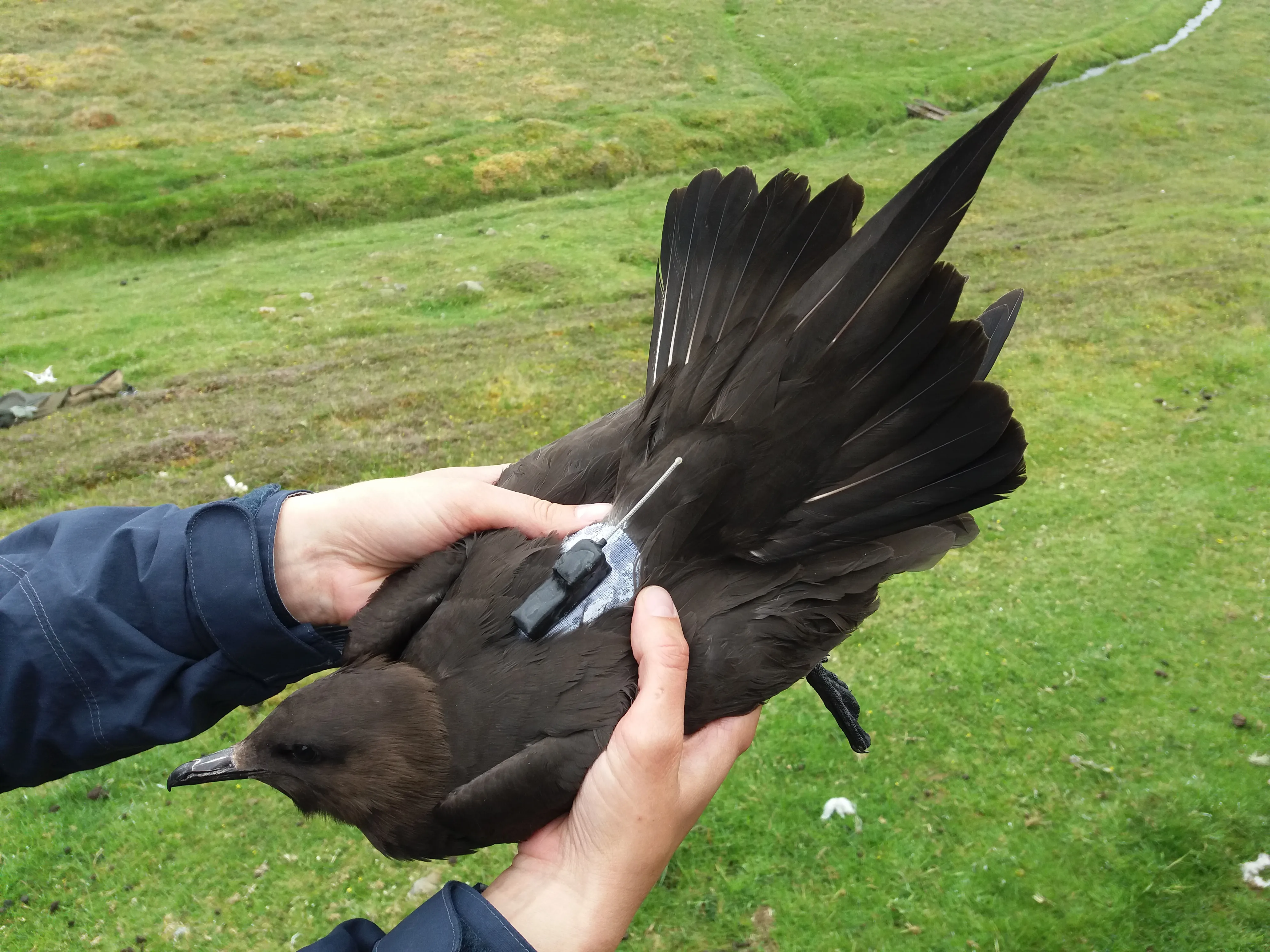
This study reviewed the use of new technology in enhancing seabird monitoring, including via automated time-lapse photography, uncrewed aerial vehicles (drones), passive acoustic monitoring and bird-borne telemetry (tracking). It concluded that such emerging technologies have the potential to greatly increase our knowledge of seabird ecology beyond traditional metrics that have been captured by observer-based surveys. However, the introduction of new technologies in seabird monitoring programmes needs to be carefully planned and budgeted, and volunteer and professional fieldworkers should be involved in decision-making on their implementation and use whenever possible.
Abstract
Monitoring of seabird population size and demography has for decades relied on observer-based methods. While such methods have allowed the accumulation of extensive, standardized time series, while typically involving both volunteer and professional observers, they often suffer from uneven coverage across species and locations, as well as limited replicability. Technological advances, in the form of, for example, visual and/or thermal imagery collected either by permanently situated automated cameras or remote-sensing technology, acoustic data loggers, or automated presence/absence biotelemetry systems, show great potential for overcoming the limitations of observer-based methods and extending coverage of monitoring programmes to more difficult circumstances and species. However, there are challenges and risks associated with the introduction of technology-based monitoring such as initial costs, data storage, post-processing of the large amounts of data, and potential alienation of experienced fieldworkers. We review the issues that agencies responsible for seabird monitoring should consider before introducing technology-based monitoring to complement existing methods, and we provide a set of recommendations and potential future research directions.