Citation
Overview
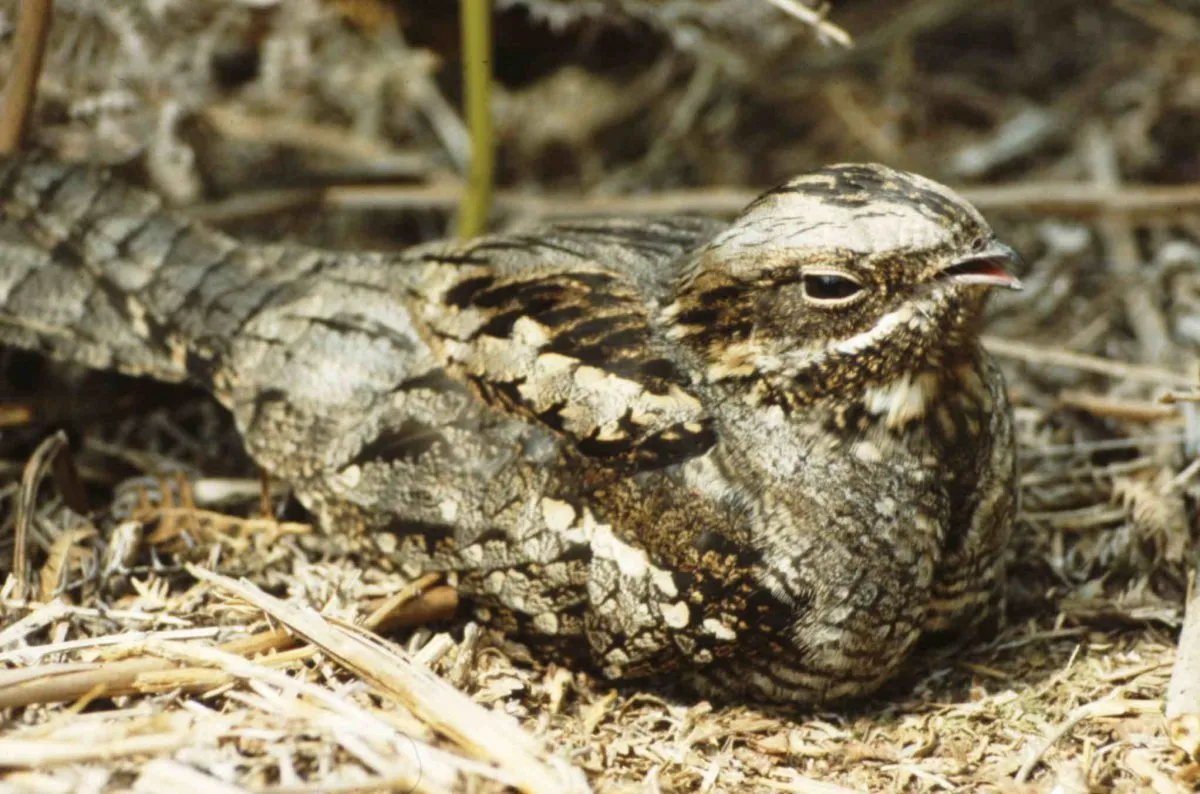
With increasing sophistication, genetic techniques and analyses are allowing us to delve deep into the past to show how prior environmental or demographic change has influenced species’ present day populations. This is particularly useful for scarce species that are difficult to observe and occupy remote habitats. In many species, large scale reduction in habitat availability has impacted their breeding distribution, which has been exacerbated by habitat fragmentation. Once widespread species become localised and the remaining breeding birds become increasingly isolated, this can result in reduced genetic diversity. This is the case for the Nightjar, a little-studied species, which has specialised habitat requirements and is located at the western edge of the European range.
In more detail
In this study, DNA samples were required from across the breeding distribution that has contracted considerably since the 1970s. During 2019-2021 BTO ringers helped to collect DNA (using buccal swabs, under licence) from study populations across England, Wales and southern Scotland. Further samples were obtained for museum specimens, which provided a historical (1840-1980) comparison group, along with samples from the formerly much more extensive breeding distribution.
Over the 180-year study period, the results from full genome sequencing of the c.100 DNA samples obtained showed that there had been a statistically significant (35%) reduction in heterozygosity (i.e. more limited genetic diversity, as compared to a more widespread and interconnected breeding population) and an increase in in-breeding. This indicates that the British and Irish breeding range has undergone contraction, and that local populations have become more isolated as breeding habitat has become more fragmented. Although there are no immediate conservation concerns, this study does highlight the impact that reduced breeding habitat extent can exert on bird populations, particularly habitat specialists.
Abstract
Migratory birds are inherently vagile, a strategy that may reduce the impacts of habitat loss and fragmentation on genetic diversity. However, specialist resource requirements and range-edge distribution can counteract these benefits. The European nightjar (Caprimulgus europaeus) is a long-distance migratory bird and resource specialist. Like other long-distance migrants, nightjar populations have declined across the British Isles and Northwestern Europe over the past century. With this decline well documented in the British Isles, there is a need to quantify its genetic impacts. We applied full genome resequencing to 60 historic (1841–1980) and 36 contemporary British nightjars. Nightjars exhibited a statistically significant 34.8% loss in heterozygosity and an increase in inbreeding over the last ~180 years, showing a departure from panmixia towards weak spatial structure in the modern population. Such fine-scale structuring in migratory birds is rare. Our results provide a case study of fragmentation's impact on a species with specialist resource requirements at its range limit. Similar demographic declines in nightjars and other long-distance migrants across Northern and Western Europe suggest that genetic patterns seen in the British population may reflect those in other nightjar populations and European avifauna. Whilst our results indicate no immediate conservation concern, they depict a trajectory of declining genetic diversity, increasing inbreeding and genetic structure, potentially shared with other migratory species. Our study highlights the value of applying spatiotemporal population genetics analysis to migratory birds, despite their inherent vagility.
Staff author(s)

This work was funded by the Natural Environment Research Council (NERC) as part of the Adapting to Challenges of a Changing Environment doctoral training program grant (NE/L002450/1), under UK Research and Innovation (UKRI). The wet lab, sequencing and bioinformatics were funded by a UKRI NERC Environmental Bioinformatic Centre grant (NBAF1266).