Citation
Abstract
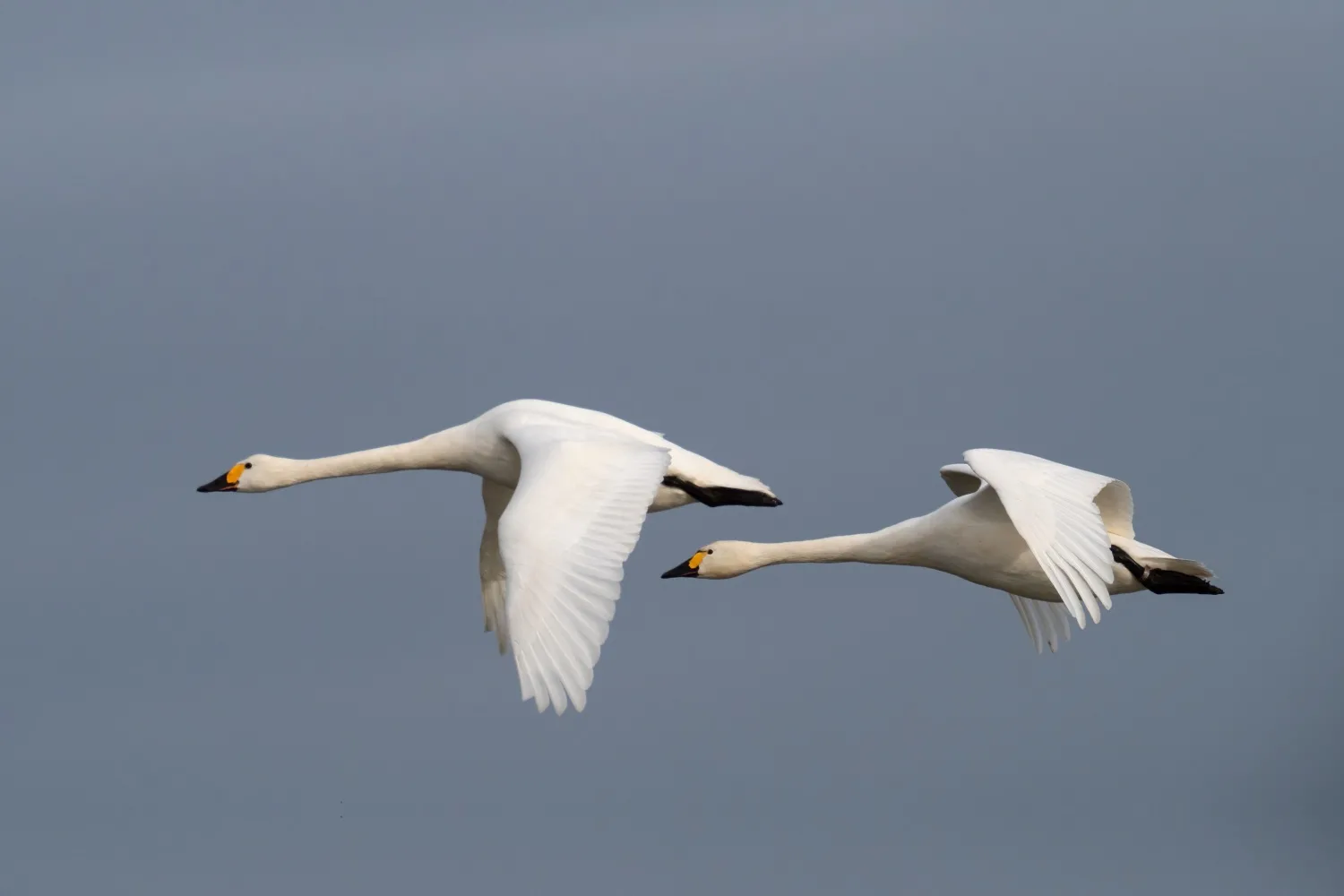
The 39.4% decline in numbers in the Northeast/Northwest European population of Bewick’s Swan Cygnus columbianus bewickii between 1995 (29,780 birds) and 2010 (18,057 birds) was of major conservation concern, alleviated by a partial recovery to 20,149 recorded in the January 2015 census. The most recent census, in January 2020, however found that the recovery was not sustained. The results described in this paper found a further 29.7% decline between 2015 and 2020, with 12,702 individuals counted in 2020 and the population estimated at 12,930 birds. This represents a 56.7% decrease over the 25-year period from 1995–2020; an annual average decrease of 3.3% per year, with a higher rate of decline (8.5%/year) over the most recent 5- year period. Changes in the Bewick’s Swans distribution were evident, with a significant increase in the proportion of the population recorded in countries in the northeastern part of the wintering range compared with those further south and west. More sites of international importance for Bewick’s Swans in mid-winter (i.e. with ≥ 1% of the total population) consequently were found in Germany during the 2020 census than in previous censuses. Moreover, the swans were found to be more widely dispersed, rather than being concentrated at key sites, in 2015 and 2020. Annual productivity data, based on the percentage of cygnets (first-winter birds) recorded in wintering flocks, indicate that the recruitment to the population was consistently lower than estimated survival rates between 2010 and 2020, and moreover this has continued up to and including winter 2024/25. A population model predicts that a further reduction in population size to an estimated 11,068 Bewick’s Swans will be found during the next census scheduled for January 2026, unless the swans have a good breeding season in summer 2025, which would represent a decrease of 14.4% since 2020.
Staff author(s)

The International Bewick’s Swan Censuses are carried out under the auspices of the IUCN SSC Swan Specialist Group, in cooperation with national count programmes and the international waterbird censuses coordinated by Wetlands International. Counts within the UK (Britain and Northern Ireland) were undertaken and coordinated in association with the Wetland Bird Survey (WeBS) funded by the Goose & Swan Monitoring Programme (GSMP), and censuses in Ireland were undertaken through I-WeBS, which is a National Parks and Wildlife Service project coordinated by BirdWatch Ireland.