Citation
Abstract
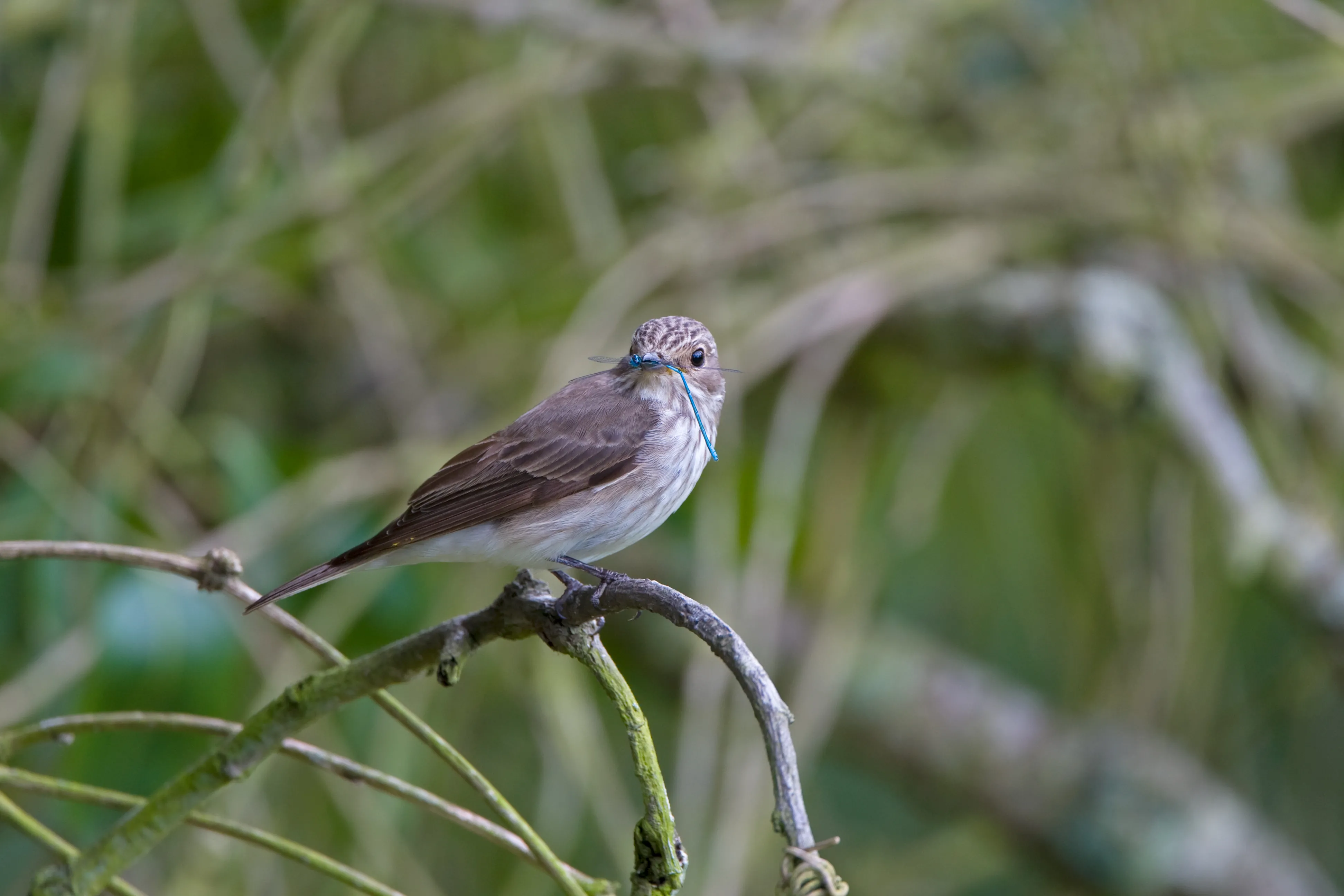
Cross-system fluxes of aquatic insects rich in omega-3 long-chain polyunsaturated fatty acids (ω-3 LC-PUFAs), specifically eicosapentaenoic acid (EPA) and docosahexaenoic acid (DHA), may subsidise insectivorous vertebrates that are suffering due to terrestrial insect declines. The benefits of high ω-3 LC-PUFA diets, such as improved growth and immunocompetence, have previously been demonstrated for riparian insectivores. Understanding the potential for aquatic insects to benefit a range of species is necessary for informing land management practices. Using the spotted flycatcher (Muscicapa striata), a habitat-generalist, insectivorous bird as a model, we tested how blood plasma ω-3 LC-PUFA concentrations and the ratio of ω-6:ω-3 fatty acids were related to the body condition of 14 adults and 84 chicks in the wild. We measured how variation in ω-3 LC-PUFAs and ω-6:ω-3 was related to river proximity, to test whether they were related to aquatic insect availability. We assessed how these relationships may extend beyond the individual level by monitoring flying insect availability throughout two breeding seasons and testing its ability to predict reproductive success. EPA was positively correlated with body condition in chicks and adults and declined with distance from a river. Conversely, ω-6:ω-3 was negatively correlated with body condition and increased with distance from a river. Breeding success was positively correlated with aquatic insect availability, suggesting that access to a high ω-3 LC-PUFA diet has the potential to mitigate declines in generalist insectivores. Our results highlight how the maintenance or creation of high-quality freshwater habitats may be promoted in a conservation context for non-riparian species.
Staff author(s)

This work was supported by the Natural Environment Research Council [NE/S007423/1], with Catrin Eden’s studentship through the ENVISION Doctoral Training Partnership. Additional funding was provided by Natural England through the Species Recovery Programme.