New research, published today by the British Trust for Ornithology (BTO) and Durham University, suggests that many migratory bird species are struggling to adapt to the effects of changes in the climate.
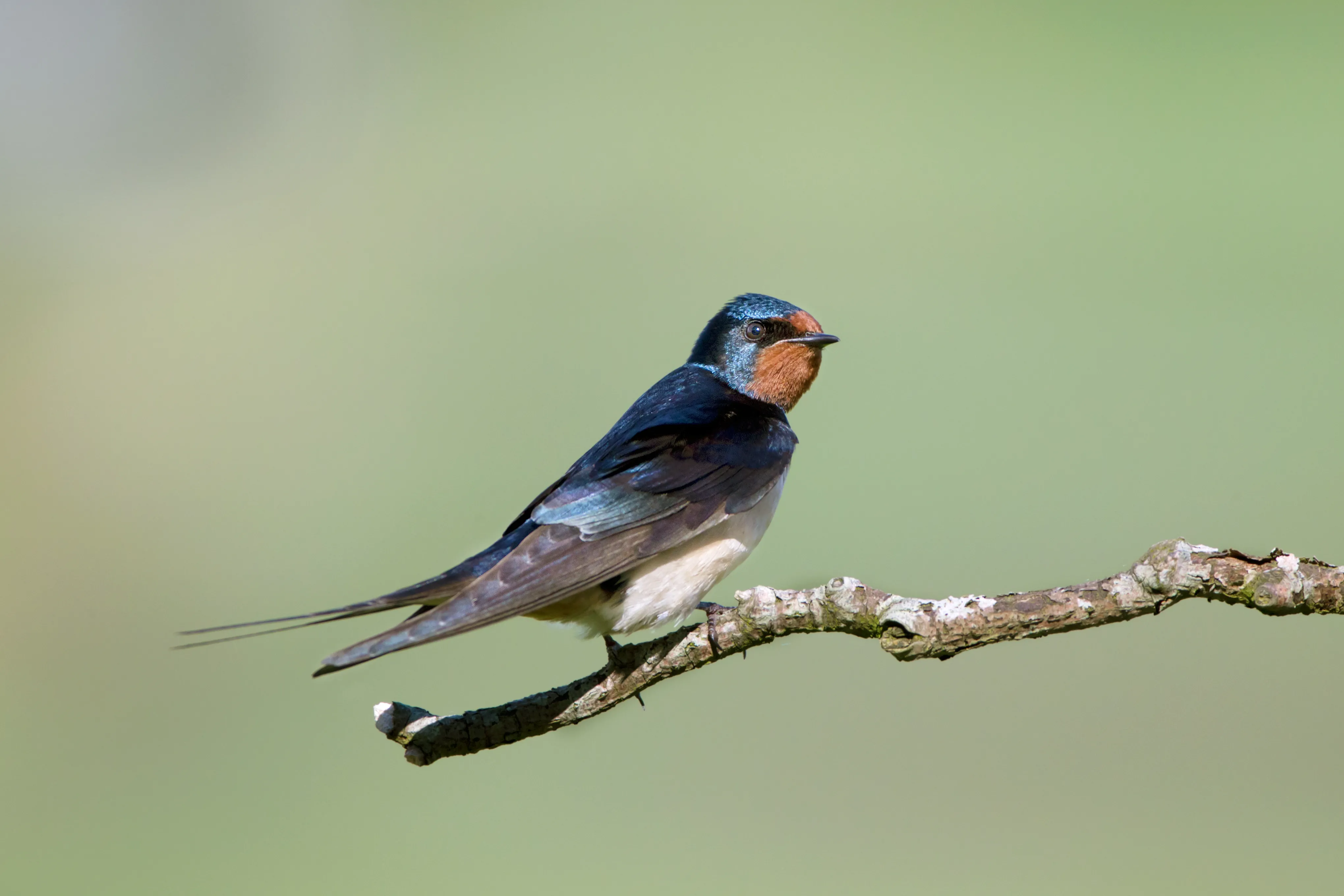
Climate change is a major threat to biodiversity, and migratory birds such as the Swallow and Willow Warbler are particularly vulnerable, due partly to their reliance on reliable sources of food and appropriate habitat across a network of sites at specific times in their life cycle.
With population declines being recorded across the continent in many of these long-distance avian travellers, researchers set out to understand how changes in climate may be contributing to these downturns.
Concentrating on more than 30 bird species which migrate between Africa and Europe, scientists looked at the condition of birds at key times to assess their ability to migrate over long distances.
Prior to making long and potentially perilous journeys across the Mediterranean and then the Sahara Desert, these birds are required to increase their weight significantly to complete these tasks of remarkable endurance. This ‘migratory fuel-load’ ensures that the birds can fly thousands of kilometres over hostile environments without the need to stop and ‘refuel’.
Having evolved strategies that allow the birds to take advantage of seasonal food availability, these migratory species have established traditional patterns of movement to align with these fuel peaks.
As the climate changes, traditional migratory schedules, timed to coincide with food availability on the journey, may have become mismatched. Climate change may also reduce overall food availability, for example through increased likelihood of drought. Hotter summers have become more apparent with climate change, particularly in southern Europe. Shortly after breeding, many migrant birds must attempt the long and perilous journeys south to Africa, which requires them to be in optimum condition.
Scientists used long-term bird ringing data on 33 Afro-Palearctic migratory species at 286 sites across Europe to demonstrate for the first time a large-scale decrease in migratory fuel-loads during autumn over the last 40 years. The timing of autumn fuelling has also shifted, occurring earlier than previously recorded for those birds nesting in the north, and later for those at southern sites.
These changes are likely to result from changes in timing, quantity, and quality of food resources available for migratory fuelling across Europe and could have serious impacts for migratory songbirds. Any reduction in migratory fuel load could mean that more of our migratory birds die on migration before they reach their African wintering grounds, either directly through under-nourishment, or indirectly, by delaying migration and risking potentially problematic seasonal weather changes.
Further, the analysis linked these reductions in migratory fuel-load to rises in temperatures in Europe over the last four decades, particularly in the south. Higher temperatures around the Mediterranean have increased drought frequency and scientists expect this will reduce the quality and quantity of food at this critical stage, which is required to fuel the birds’ onward journeys across the sea and desert.
Dr Jennifer Border, Senior Research Ecologist at BTO, says “Collecting large-scale and long-term data on the condition of individual animals during migration is extremely challenging. But in migratory birds, we have an existing model system where a large network of bird ringers collect individual data on body size and mass, enabling variation in body condition to be tracked. The amount of information gathered over four decades, involving millions of birds, allowed us to observe significant changes in these birds’ behaviours.”
Professor Stephen Willis of the Conservation Ecology Group at Durham University, says “To better understand how future changes, whether they be climate or land use changes, affect migrating birds, we first need to determine what affects their body condition, before and during migration. The current research is an important step in advancing our understanding of what affects a bird’s fuel-load prior to a long-distance migration.”
Professor James Pearce-Higgins, BTO Director of Science, says “This study reveals a previously hidden impact of climate change on migratory species. Reductions in the birds' condition in warmer years may reduce the ability for migrants to complete their crossings of the Mediterranean and Sahara Desert barriers, impacting their survival and potentially contributing to long-term population declines in many of our much loved species, such as the Swallow.”
This project was funded by NERC grants to the British Trust for Ornithology and Durham University and additionally, generously supported by a gift in Will from Michael Welch, for which we are extremely grateful.