Bird migration in mid October 2025.
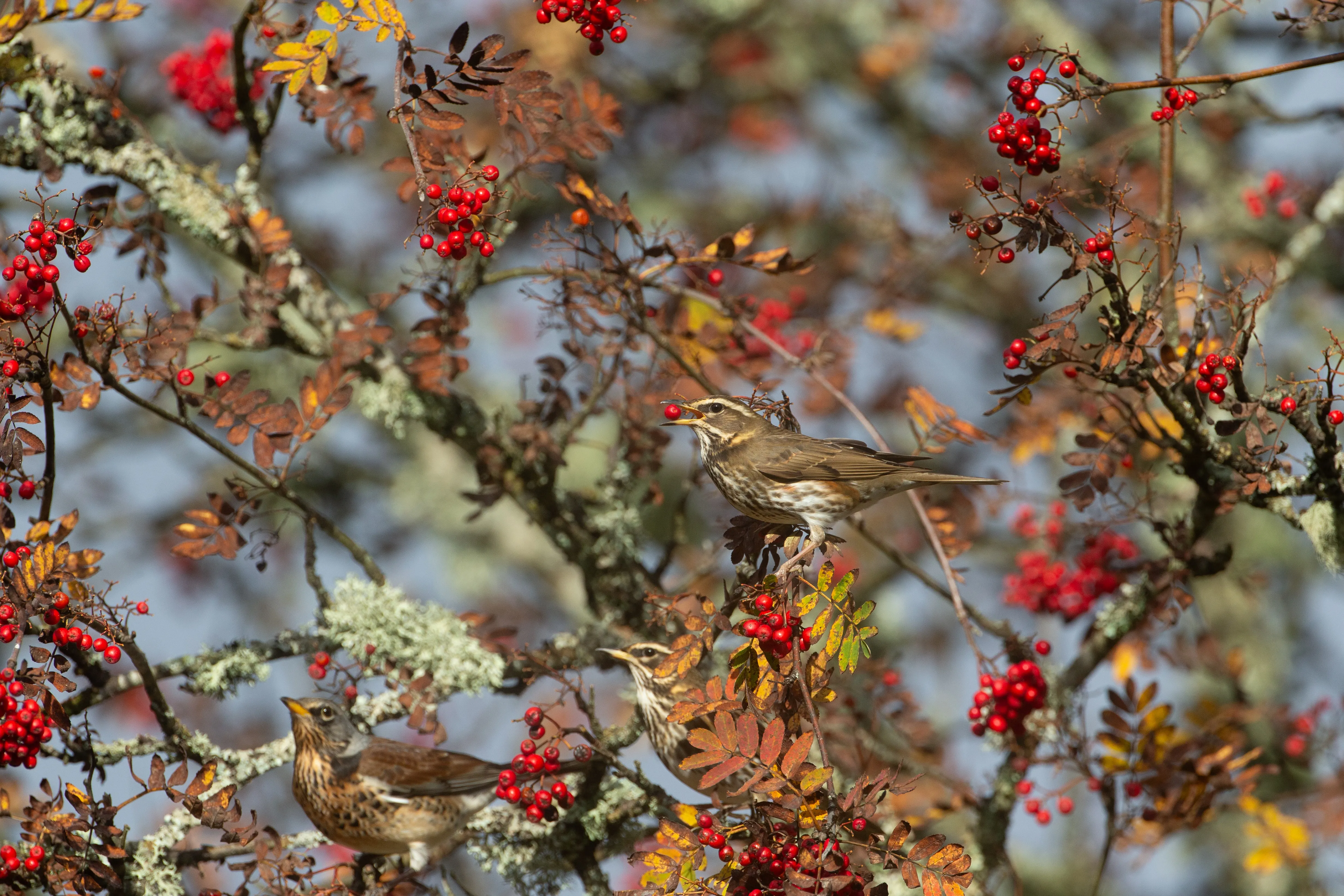
In last week’s blog I suggested this week could see more birds crossing the North Sea to Britain and, while the conditions haven't been quite right for really big falls of migrants, it has been nice to see some more arrivals and a different mix of species being reported compared to previous weeks.
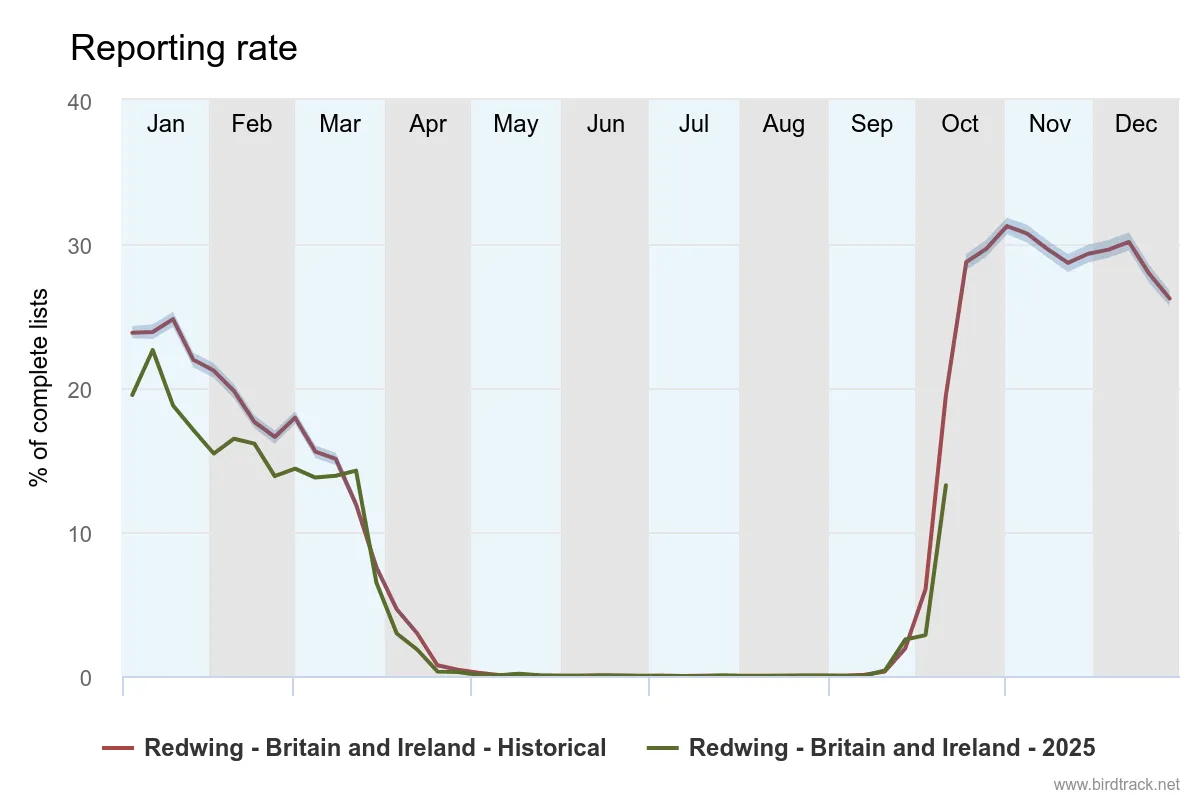
We've mentioned a few times recently that winter thrushes have been late arriving this year, but a change in the weather to a more north-easterly wind on Monday 13 October resulted in a good arrival that day. At Flamborough Head in Yorkshire, 6,100 Redwings were counted, as well as 560 Fieldfares and 675 Blackbirds. Unsurprisingly, the BirdTrack reporting rate for Redwing has now shot up and it will be interesting to see whether it has caught up with the historic average by this time next week.
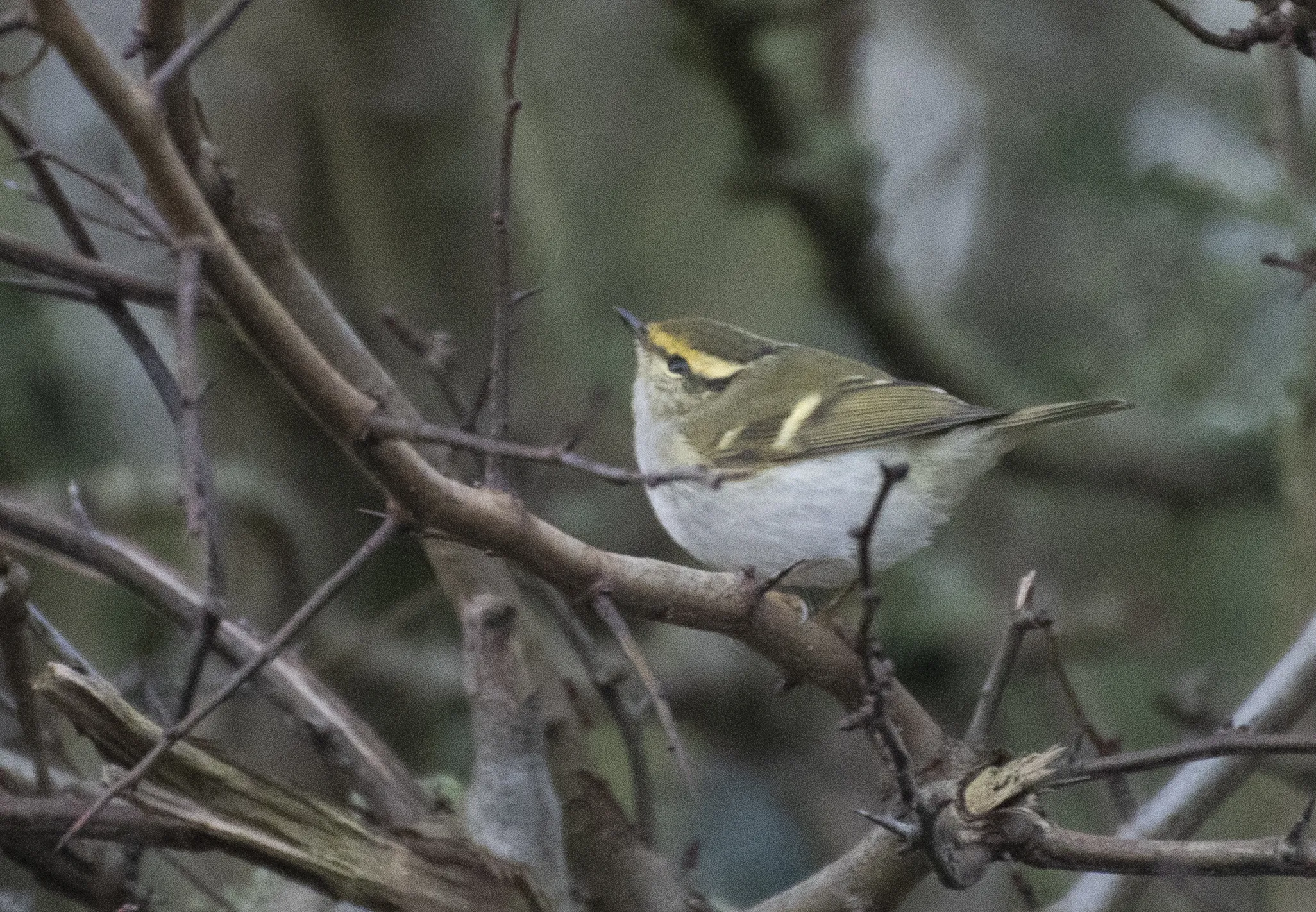
It’s also been pleasing to see an increase in reports of the small and stripey Yellow-browed Warbler this week after a below average autumn so far. On the Yorkshire coast there were 12 at Spurn and nine at Flamborough on Monday, while several dozen have been found at various sites along the Norfolk coast. There have also been a few sightings of the Yellow-browed Warbler’s rarer cousin, the Pallas’s Warbler. Breeding in southern Siberia and wintering in southern China, this very active and colourful Goldcrest-sized warbler is a vagrant to Britain, with an average of 75 records a year here. While others will want to make the case for many other species, in my opinion this is the most breathtaking bird you can see in Britain!
Other eastern vagrants have included a couple of Red-flanked Bluetails at Holy Island, Northumberland, and Wells Woods, Norfolk, and several Radde’s Warblers, as predicted in last week’s blog, while there were three brief sightings of the White-throated Needletail seen in Yorkshire last week, this time on the east coast of the Scottish Highlands.
Last week we also mentioned Short-eared Owls and there have been a good number of sightings of birds arriving off the sea along the east coast of England this week. There have also been several reports of Long-eared Owls, including this individual on the Norfolk coast, which was found looking very wet and unhappy having probably just crossed the North Sea, but fortunately appeared much healthier later on!
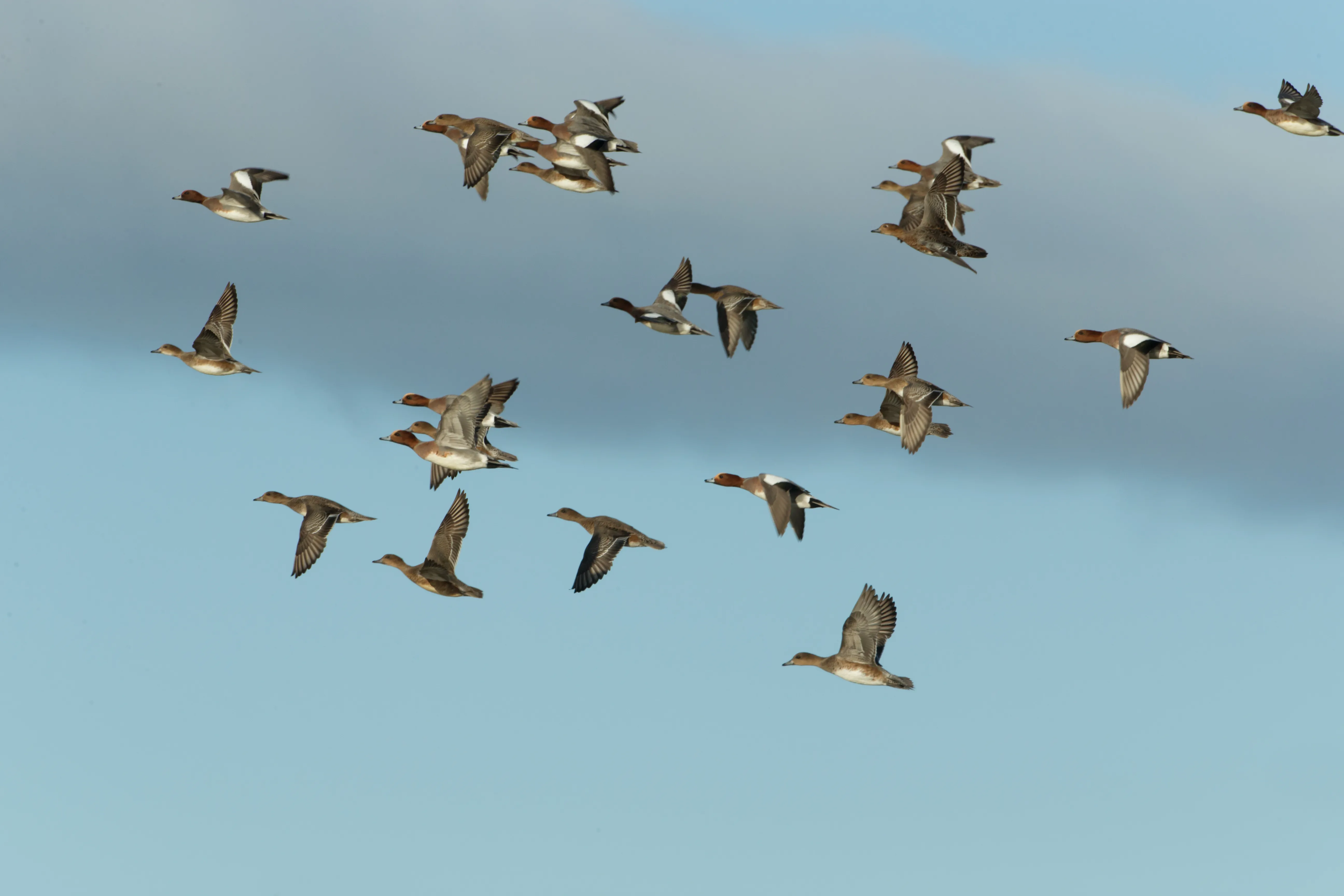
Arrivals of winter wildfowl have also picked up. I spent a few days birding on the North Norfolk coast over last weekend and early this week and there was an almost constant stream of flocks of Dark-bellied Brent Goose, Wigeon and Teal heading west along the coast. More diligent observers than me were busy counting them and recorded over 2,000 Dark-bellied Brents passing Sheringham on Monday.
Looking to the week ahead, it doesn’t seem like there will be any particularly dominant or persistent patterns of weather, but promisingly it appears that this weekend will see an area of higher pressure over Southern Scandinavia and the Low Countries, with the resulting easterly winds likely to bring more winter thrushes to Britain, as well as various other winter visitors and passage migrants. Even if you are not able to get to a coastal hotspot to observe the migration, take a moment to stand outside after dark as you may well hear the distinctive ‘tseep’ of Redwings flying overhead at night.
Wherever you are, I wish you a successful week of birding and don’t forget to add your sightings to BirdTrack!
Add your sightings to BirdTrack
Help us track the departures and arrivals of migrating birds by adding your sightings to BirdTrack. It’s free, quick and easy, and signing up also allows you to explore trends, reports and recent records in your area.
Author(s)

Tom Jordan