Reviewing UK bird migration in mid September 2025.
I ended last week’s blog by suggesting that the window of south-easterly winds over the weekend could lead to an arrival of migrants on the east coast and fortunately there was some truth in that. The best of the action was in Orkney and Shetland, where there was a good arrival of common and scarcer ‘drift migrants’. On North Ronaldsay, Orkney, there was a very notable count of nine Barred Warblers on 8 September, while Fair Isle had seven Barred Warblers as well as records of Wyneck, Red-backed Shrike, Icterine Warbler, Red-breasted Flycatcher and Common Rosefinch across 7–8 September.
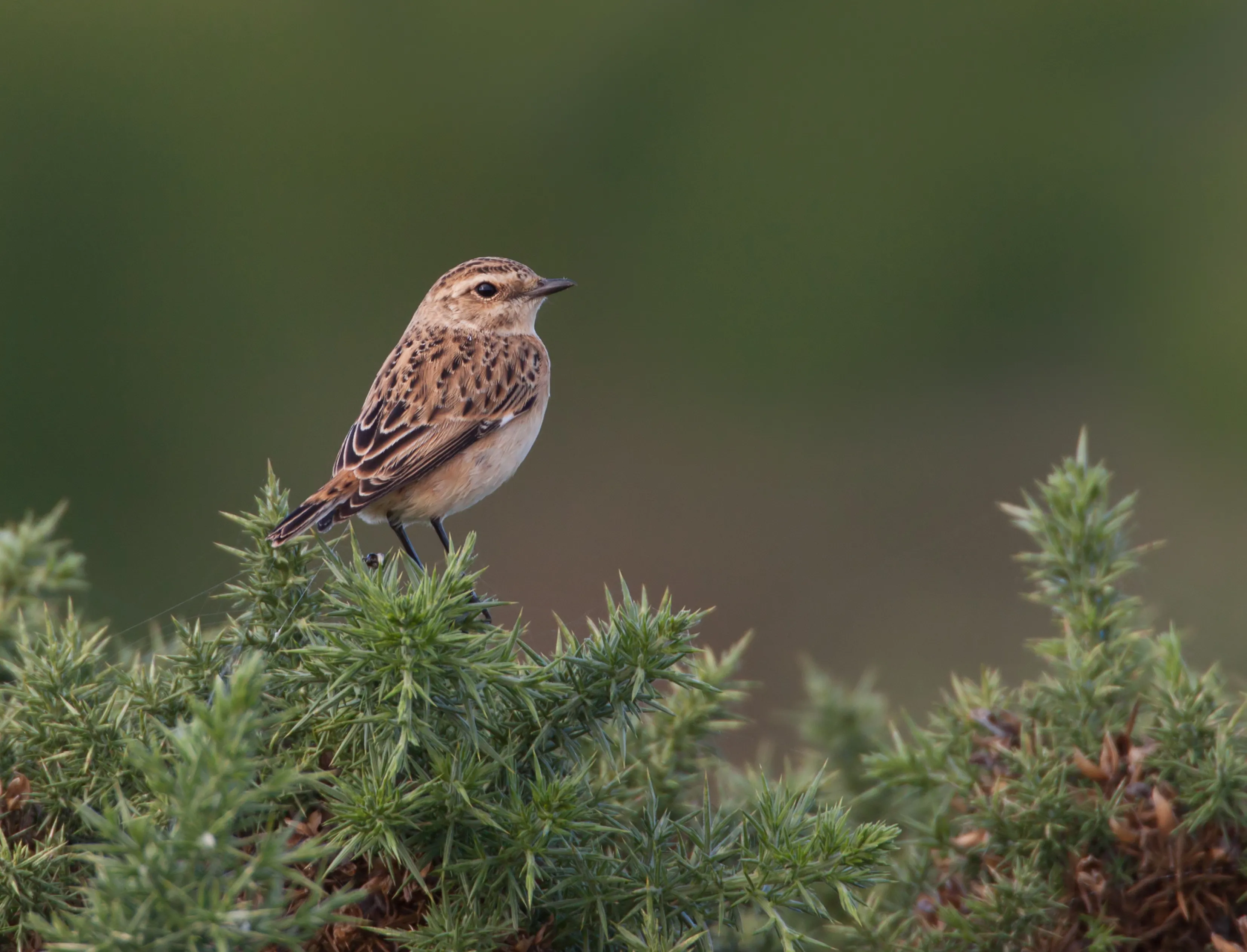
There were also birds to be found further south, for example, Spurn, Yorkshire, saw a nice arrival of migrants on 7 September, including 31 Pied Flycatchers and 67 Whinchats, while Holme, Norfolk, recorded 17 Pied Flycatchers on the same day. Although both of these species breed in Britain and Ireland, these particular birds will almost certainly be arriving from Fennoscandia and migrating along the western edge of Europe.
Willow Warbler is a species that provides a nice illustration of this phenomenon of arriving drift migrants. As a summer migrant to Britain and Ireland that migrates south to overwinter in central and southern Africa, one would reasonably assume that as the autumn progresses, Willow Warblers would be recorded more frequently in southern England than further north. In actual fact, over the last week Willow Warblers have been recorded on a higher percentage of BirdTrack lists in Shetland than in any county in southern England. The explanation for this is that while most of ‘our’ Willow Warblers have already departed, birds that have bred in Fennoscandia are still arriving into northern Scotland when the weather leads to this westward drift in migration.
While the recent window of south-easterly winds led to a fairly broad arrival along the east coast, arrivals of migrants can sometimes be quite concentrated as different weather systems move across Britain. Last week I mentioned Curlew Sandpiper as a species to look out for in September and it’s been interesting to see the distribution of this year’s arrival. Generally Curlew Sandpipers are recorded most frequently in south-east England, but this year numbers have been slightly below average there, while in Scotland, particularly across the Northern Isles and Outer Hebrides, there has been a significant influx. It seems like the strong westerly winds that have swept across England and the southern North Sea in recent weeks have limited arrivals of Curlew Sandpipers from the Continent, but more frequent windows of easterlies in the northern North Sea have sent them ‘over the top’ of Britain, with many congregating on the beaches of South Uist rather than the mudflats of the Thames Estuary, where they would usually be more numerous.
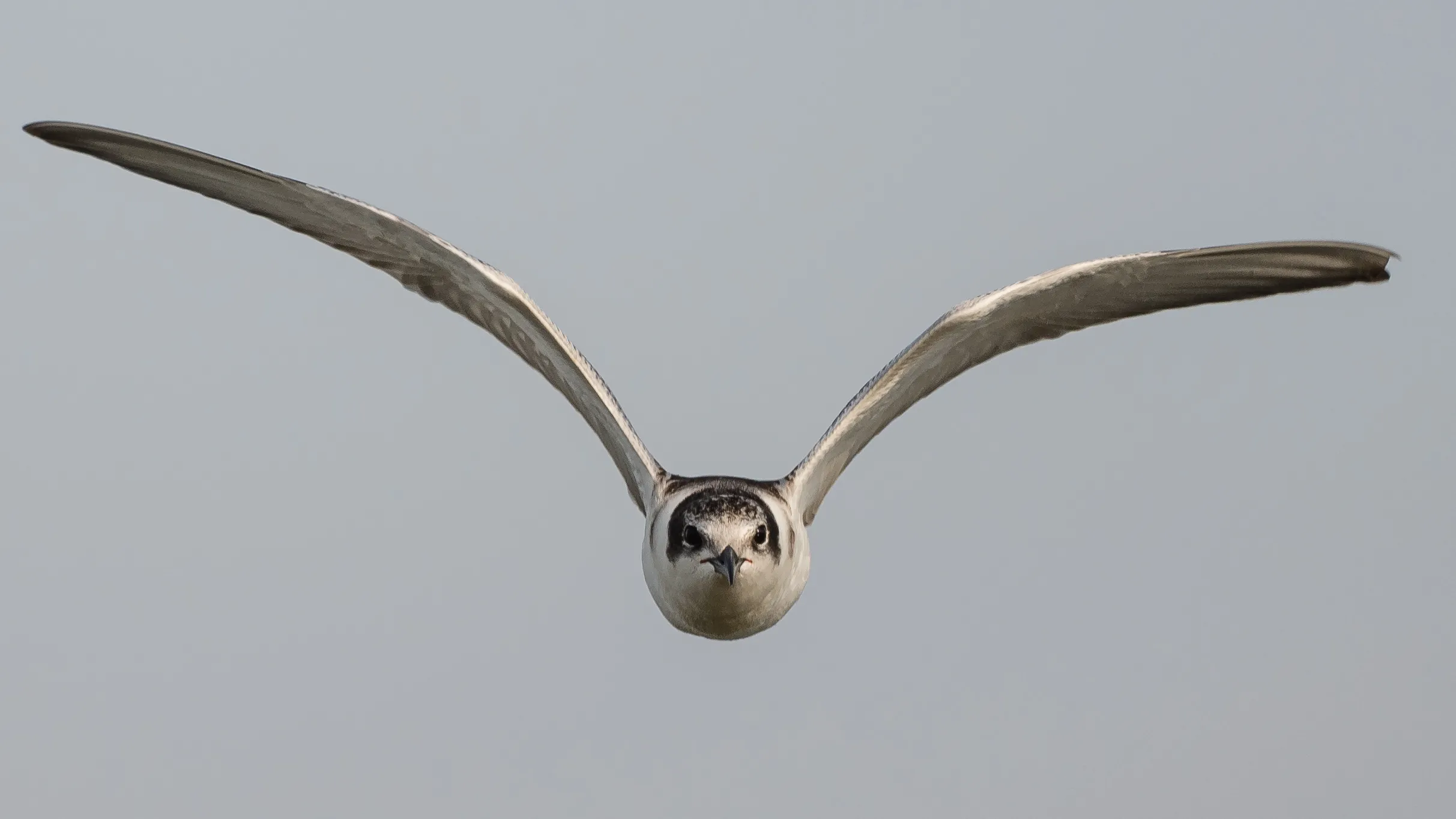
Inland birders may be feeling a little left out with all this talk of distant coastlines and islands, so it’s worth noting a decent arrival of Black Terns this week, with many gracing inland reservoirs and large lakes. Black Tern is another species for which we are at the western edge of its migration route, so it’s in spells of easterly winds that the highest numbers occur.
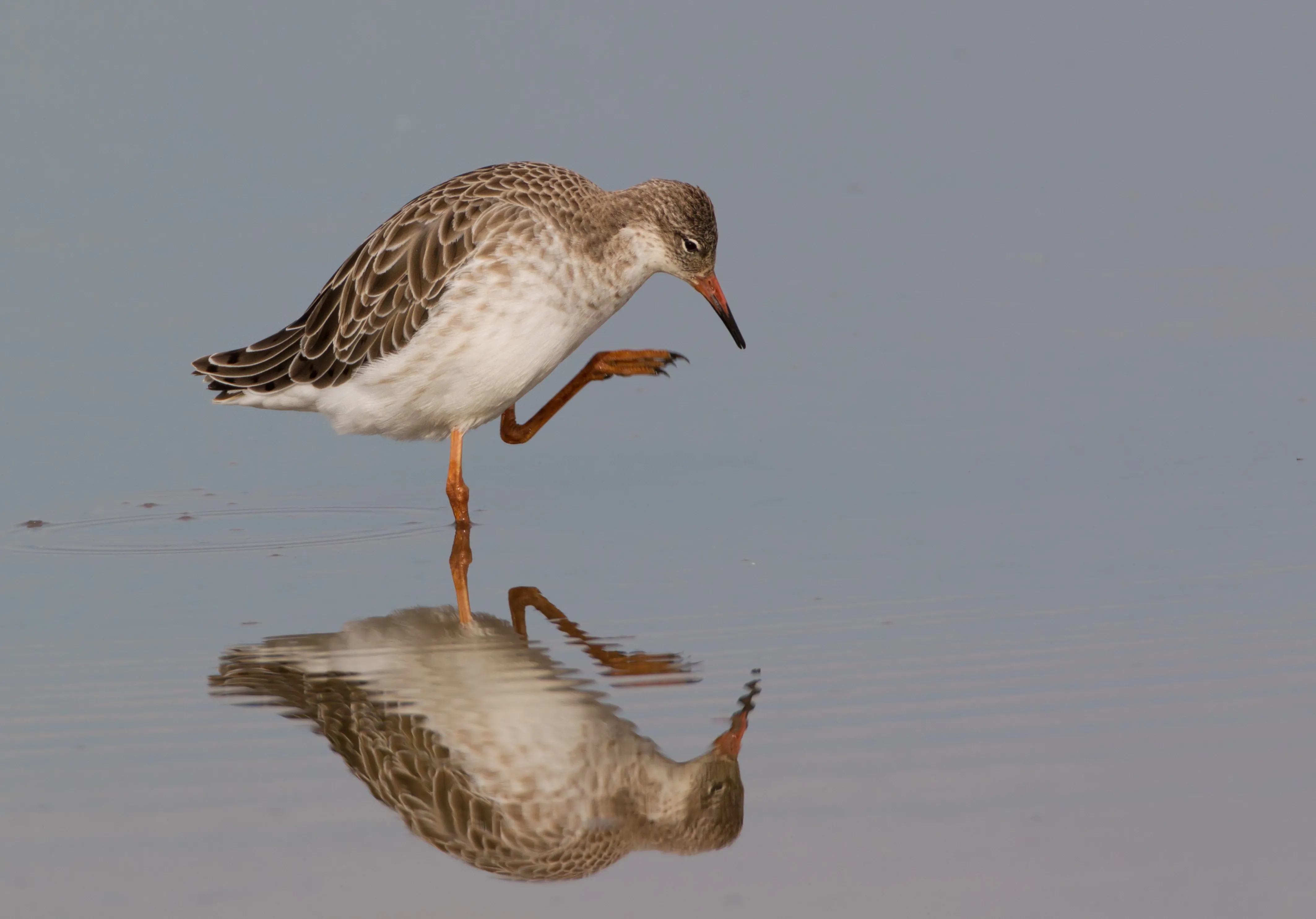
September is also a great month for inland waders, with species like Ringed Plover, Dunlin, Black-tailed Godwit and Ruff often turning up at reservoirs, gravel pits and sewage farms, so look out for them in any wetland with areas of shallow water and mud.
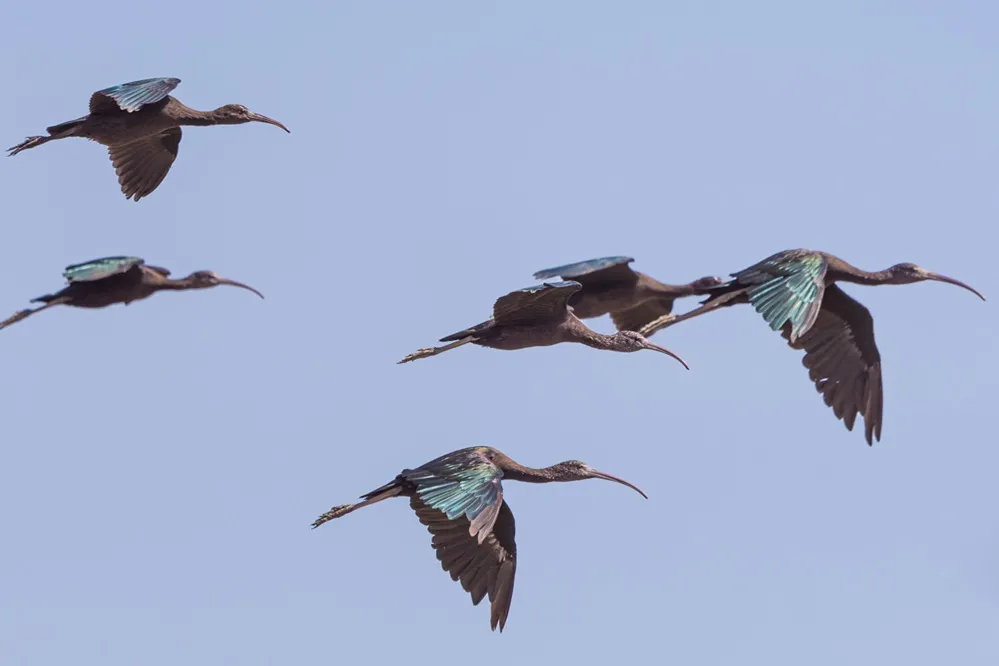
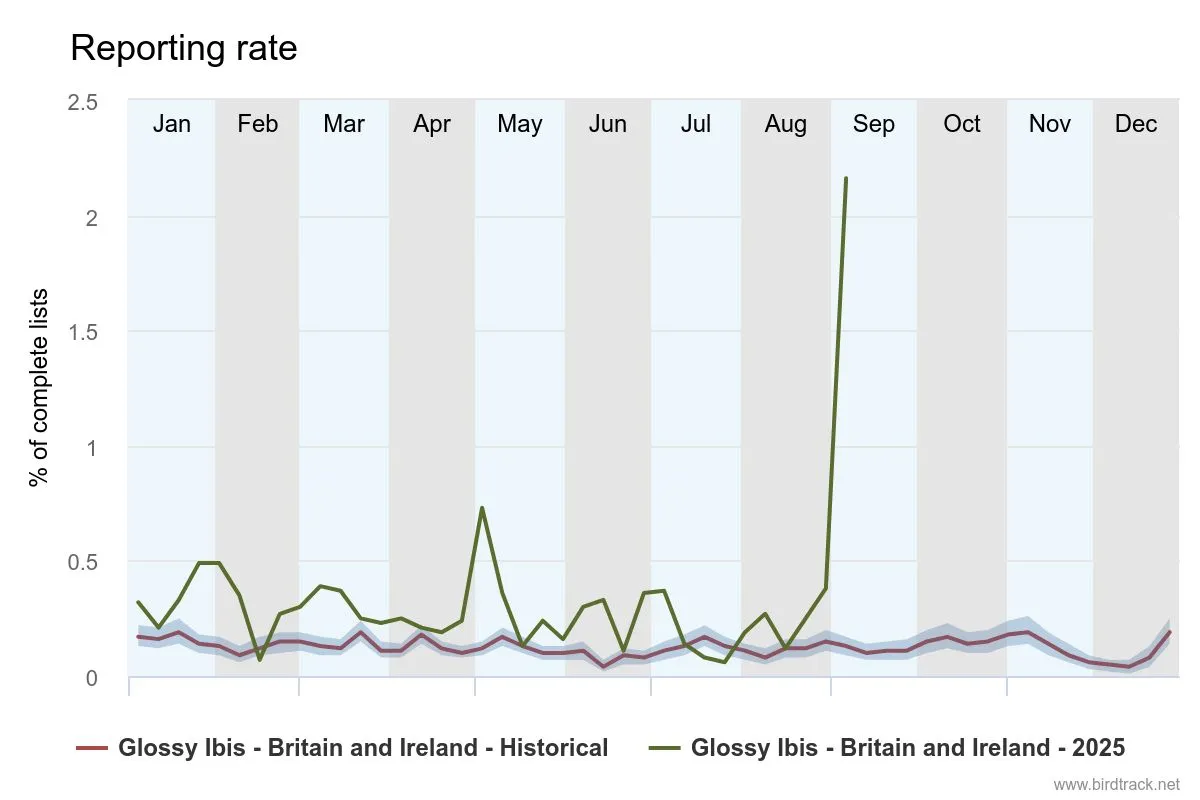
It would be remiss not to mention here the most notable ornithological event of this week, which has been an unprecedented influx of Glossy Ibis to Britain and Ireland, with a minimum of 605 birds recorded on 8 September and more arriving since then. The bigger picture here is that Glossy Ibis is increasingly occurring in Britain, just as similar species like Great White Egret and Cattle Egret have, but factors behind this particular arrival probably include a combination of a successful breeding season, favourable winds and the drying up of wetlands in France and Spain. While most of these birds will probably head south again after a period of exploring, some may overwinter in Britain and Ireland and potentially go on to breed next spring.
Looking to the week ahead, it appears that westerly winds are likely to predominate for the foreseeable future, reducing arrivals of drift migrants, but as always I have to caveat that by saying that forecasts can change and we could again see some easterlies in the northern North Sea delivering migrants to the Northern Isles. Once again the most likely rarities to be found will be American waders, but as we head into the second half of September there is also a chance of the first North American passerine vagrant of the autumn. If there are any more northerly or north-westerly winds then we could see a big increase in the reporting rate for species like Pink-footed Goose, Barnacle Goose and Whooper Swan as they arrive from Iceland and Greenland to spend the winter in Britain and Ireland.
Lastly, myself and several BTO colleagues will be attending the Spurn Migration Festival over the weekend, so do come and have a chat or join one of our migration walks if you are attending the festival. Wherever you are, I wish you a good week’s birding.
Add your sightings to BirdTrack
Help us track the departures and arrivals of migrating birds by adding your sightings to BirdTrack. It’s free, quick and easy, and signing up also allows you to explore trends, reports and recent records in your area.
Author(s)

Tom Jordan