A busy time for bird migration in October 2025.
There has been a lot going on since last week’s blog, with plenty of birds on the move and many new rarities being discovered. As predicted, the arrival of Storm Amy did produce some great seawatching for those lucky enough to be in the right area. Cornwall was particularly productive, for example seawatchers at St Ives recorded 55 Grey Phalaropes, 22 Sabine’s Gulls and seven Long-tailed Skuas on 4 October, while in Ireland there was a great count of 239 Grey Phalaropes off the Bridges of Ross. All of these species breed around the Arctic and are now heading south to winter at sea in areas south of the Equator. In North-west England, the conditions were also productive for seeing Leach’s Petrel off Merseyside, with a good number pushed inshore, including 42 at Hilbre Island on 5 October.
It has also been a very productive week for vagrants from North America, most of which have been found in Ireland. These have included a Northern Parula in Co. Cork, a couple of Blackpoll Warblers, several Swainson’s Thrushes, a Grey-cheeked Thrush, two Harlequin Ducks in Donegal, and a Mourning Dove on the Isles of Scilly.
However, probably the most exciting find for the keen twitchers has been a White-throated Needletail in Yorkshire. This is the first time this vagrant swift from East Asia has been seen on mainland Britain since 1991. A few other rarities from the east have also been found, with a Siberian Thrush entertaining birders on Shetland, while a very smart Turkestan Shrike has been well watched in Suffolk.
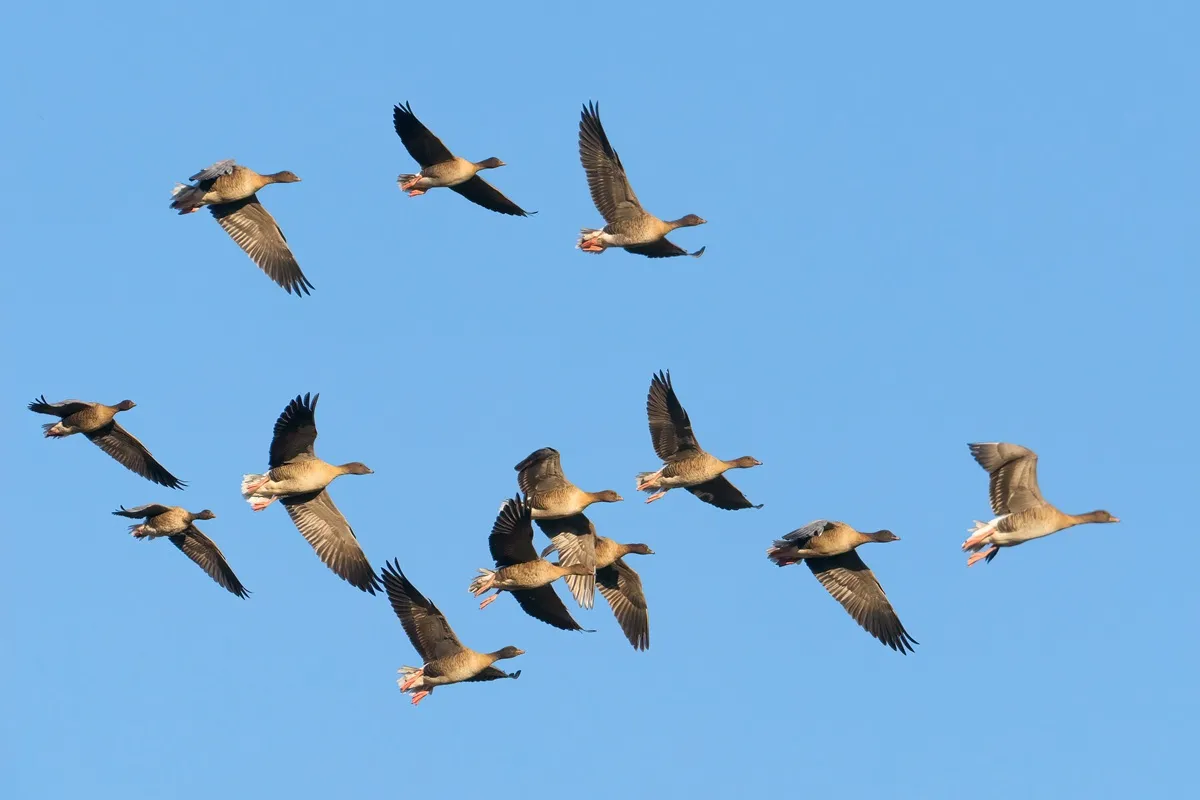
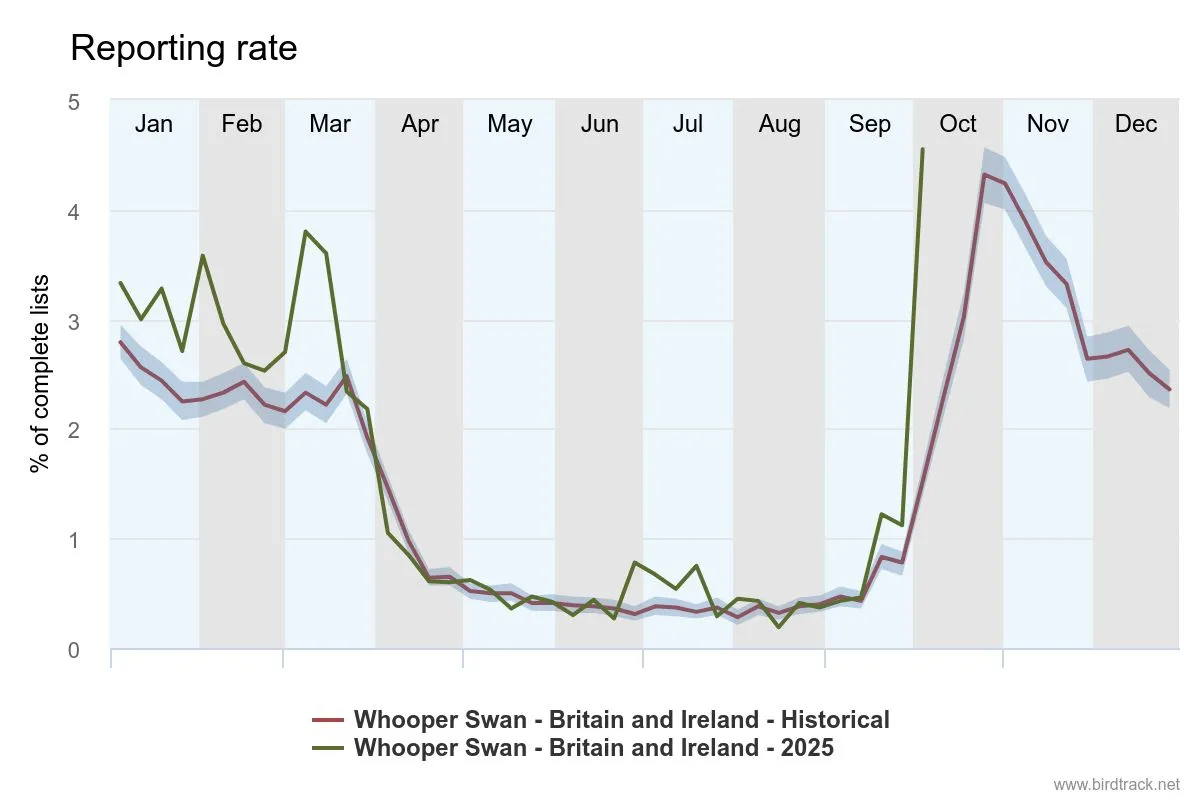
Winter visitors that arrive from Iceland and Greenland have also been on the move in the last week. Whooper Swans have been observed arriving in good numbers, including to wintering sites in the Fens, and this has been reflected in the BirdTrack reporting rate, which has already reached levels we would not typically see until the end of October. Pink-footed Geese have also been arriving en masse, appearing on over 10% of complete lists this week.
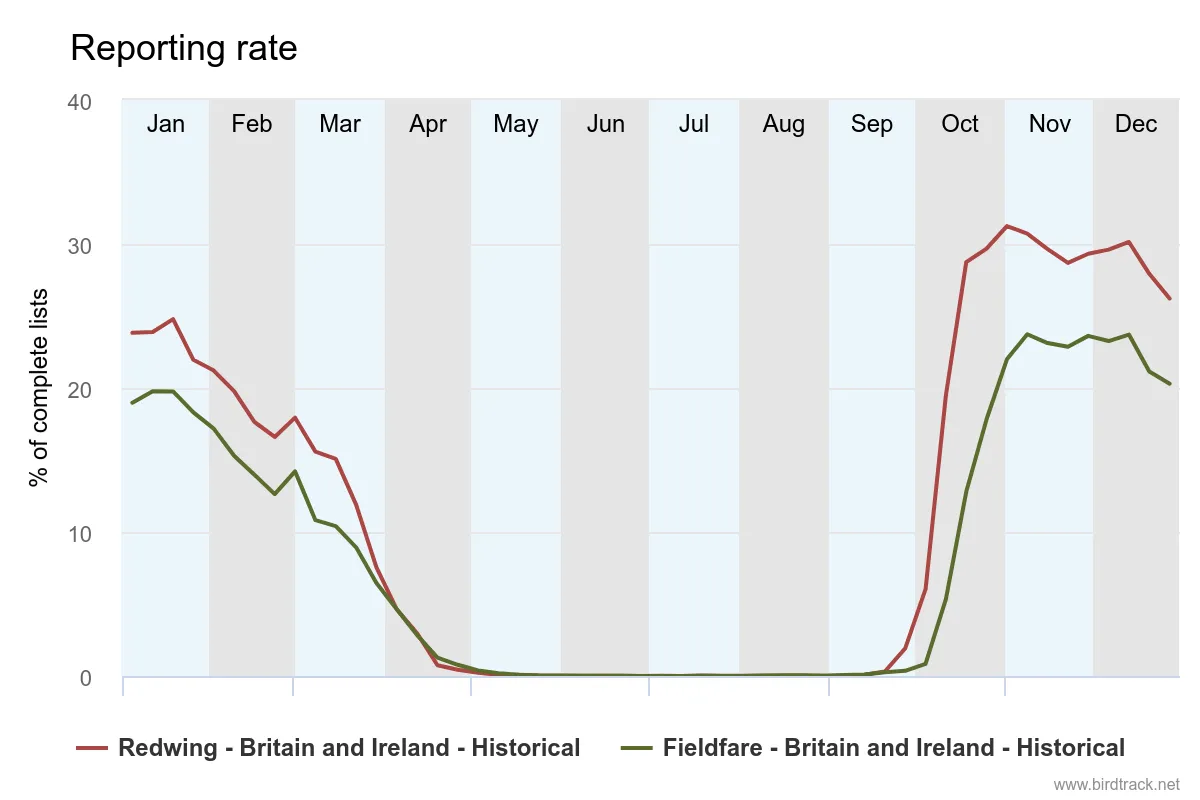
Winter wildfowl coming from the east have not arrived in such numbers yet, for example the reporting rate for Dark-bellied Brent Goose is still a bit behind the average for the time of year, while species like Redwing and Brambling are also running behind schedule. The main arrival of Fieldfare is normally a couple of weeks later than the previously mentioned species, so it’s not too surprising to see very few reports of this claret and blue thrush so far.
However, looking to the forecast for the week ahead, things are looking up for the east coast birders now, as it looks like we will see a period of more northerly to easterly winds across the North Sea from early next week. The forecast also suggests that conditions will be mostly dry, which may limit the potential for large falls of migrants, but we should still see some arrivals of winter visitors and scarcer migrants. As well as the previously mentioned Redwing and Fieldfare, we may see some more Ring Ouzels passing through after a poor autumn for the species so far.
For those particularly interested in rarities and scarcities, it wouldn’t surprise me if there were some discoveries of species like Olive-backed Pipit, Radde’s Warbler and Little Bunting, all of which occur most often around early October.
Although winds aren’t forecast to be strong, northerly and north-easterly winds can be productive for seawatching on the east coast, so we may see some reports of scarcer seabirds such as Pomarine and Long-tailed Skuas, as well as movements of wildfowl along the coast.
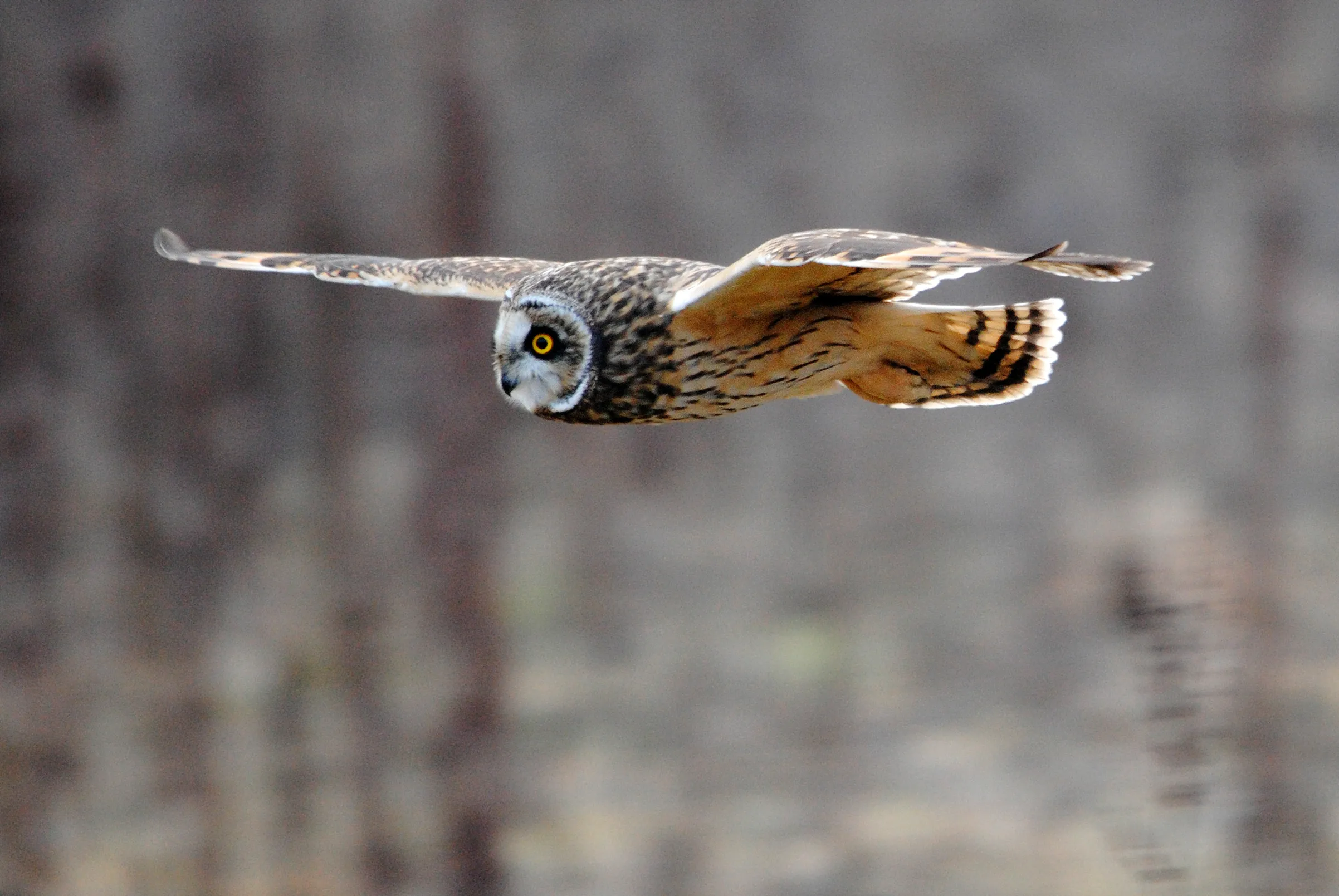
It will also be interesting to see how many Short-eared Owls exploit the favourable tailwinds to cross the North Sea and spend the winter in Britain. While the winter months always see a greater number of this species present in Britain and Ireland, numbers from year to year are highly variable depending on factors like breeding success, food availability and weather conditions. The winter of 2023/2024 was particularly good for Short-eared Owls, with some even staying to breed the following summer at sites where they would typically only be seen in winter, but last winter saw a much more modest arrival. You can find out more about BTO’s research into this fascinating species on the Short-eared Owl Tracking page.
It should be an interesting week for birding wherever you are, I wish you good luck and don’t forget to enter your sightings to BirdTrack.
Add your sightings to BirdTrack
Help us track the departures and arrivals of migrating birds by adding your sightings to BirdTrack. It’s free, quick and easy, and signing up also allows you to explore trends, reports and recent records in your area.
Author(s)

Tom Jordan