Oystercatcher
Introduction
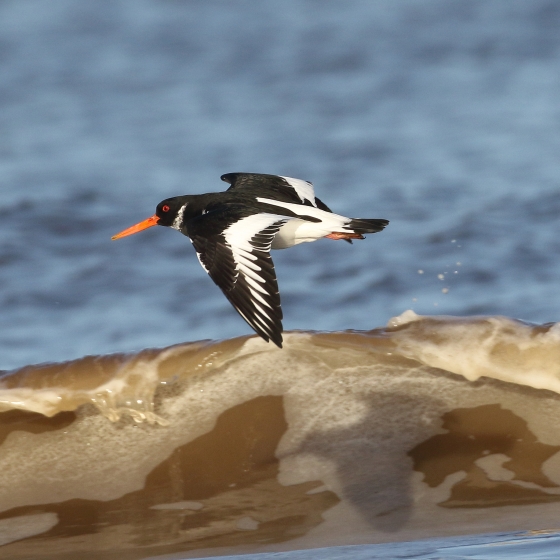
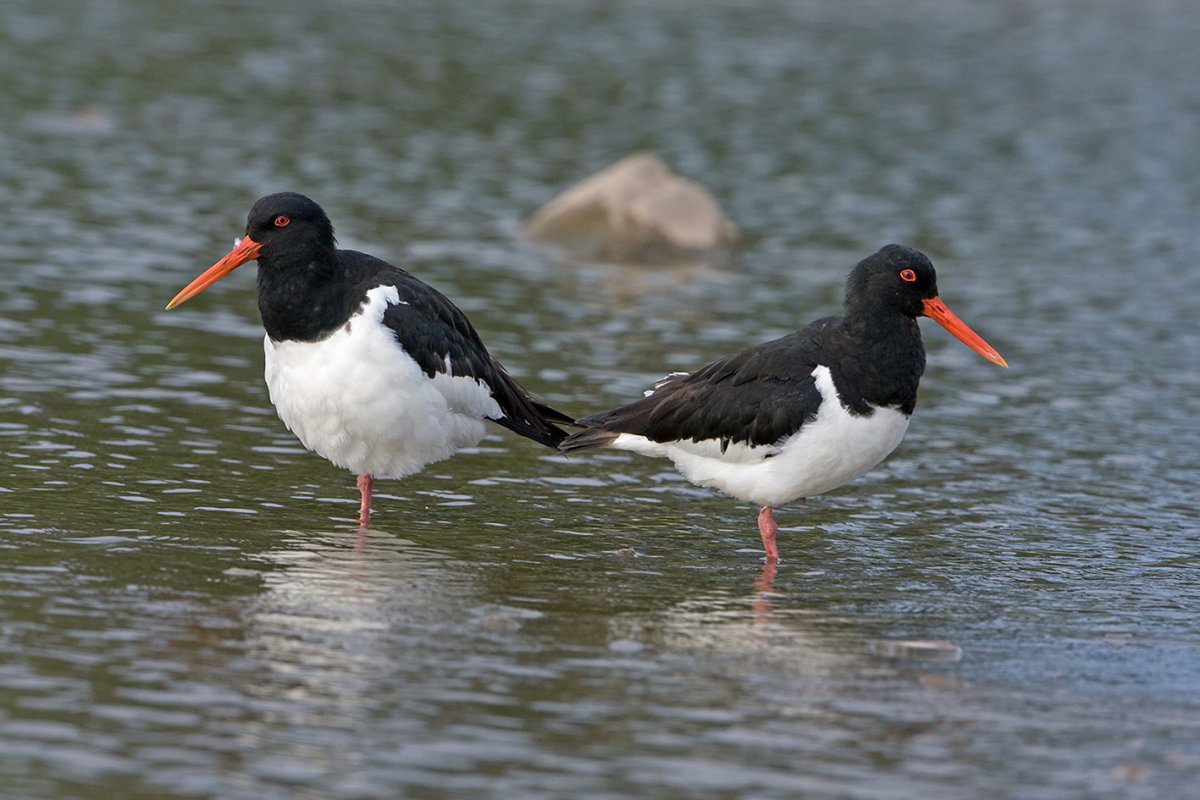
The Oystercatcher is a striking and familiar wader, its pied plumage contrasting with the bright orange bill and pinkish legs.
The species breeds widely, both around the coast and inland, particularly in northern Britain, whilst during winter large flocks congregate on our estuaries. In Ireland the breeding population remains predominantly coastal. Britain & Ireland support a significant proportion of the global population of this species.
Ringing studies highlight that there is little interchange between the Atlantic subpopulation – which includes those breeding in Iceland, the Faeroes, Britain and Ireland – and the continental subpopulation, which is made up of birds from Scandinavia and the Low Countries.
- Our Trends Explorer gives you the latest insight into how this species' population is changing.
Key Stats







Identification
Songs and Calls
Song:
Call:
Alarm call:
Flight call:
Status and Trends
Conservation Status
Population Change
Oystercatchers increased along linear waterways between 1974 and about 1986, as the species colonised inland sites across England and Wales (Gibbons et al. 1993). Thereafter, the WBS/WBBS index stabilised and now appears to be in decline, so showing a pattern similar to that in winter abundance (WeBS: Frost et al. 2020). Surveys in England and Wales revealed an increase of 47% in breeding birds in wet meadows between 1982 and 2002 (Wilson et al. 2005). BBS data since 1995, which include birds in a broader range of locations and habitats, show a moderate increase in England but a significant, moderate decline in Scotland. There has been a decline across Europe since 1980 (PECBMS: PECBMS 2020a>).
Distribution
In winter, Oystercatchers are widely distributed on rocky and estuarine shores, with the largest concentrations forming on the major estuaries. They breed around most of the UK coast and are nearly ubiquitous across the interior of Scotland except for some northwestern upland areas and have recently spread into the interior of northern and eastern England.
Occupied 10-km squares in UK
2007/08–10/11
or view it on Bird Atlas Mapstore.
2008–11
or view it on Bird Atlas Mapstore.
European Distribution Map
Distribution Change
Since the 1970s there has been a 28% range expansion in Britain, but little change in Ireland. Gains in Britain are almost exclusively at inland sites.
Change in occupied 10-km squares in the UK
from 1981–84 to 2007–11
or view it on Bird Atlas Mapstore.
from 1968–72 to 2008–11
or view it on Bird Atlas Mapstore.
Seasonality
Oystercatchers are recorded throughout the year but encountered more widely in spring and summer when birds are less confined to the coast.
Weekly pattern of occurrence
The graph shows when the species is present in the UK, with taller bars indicating a higher likelihood of encountering the species in appropriate regions and habitats.

Habitats
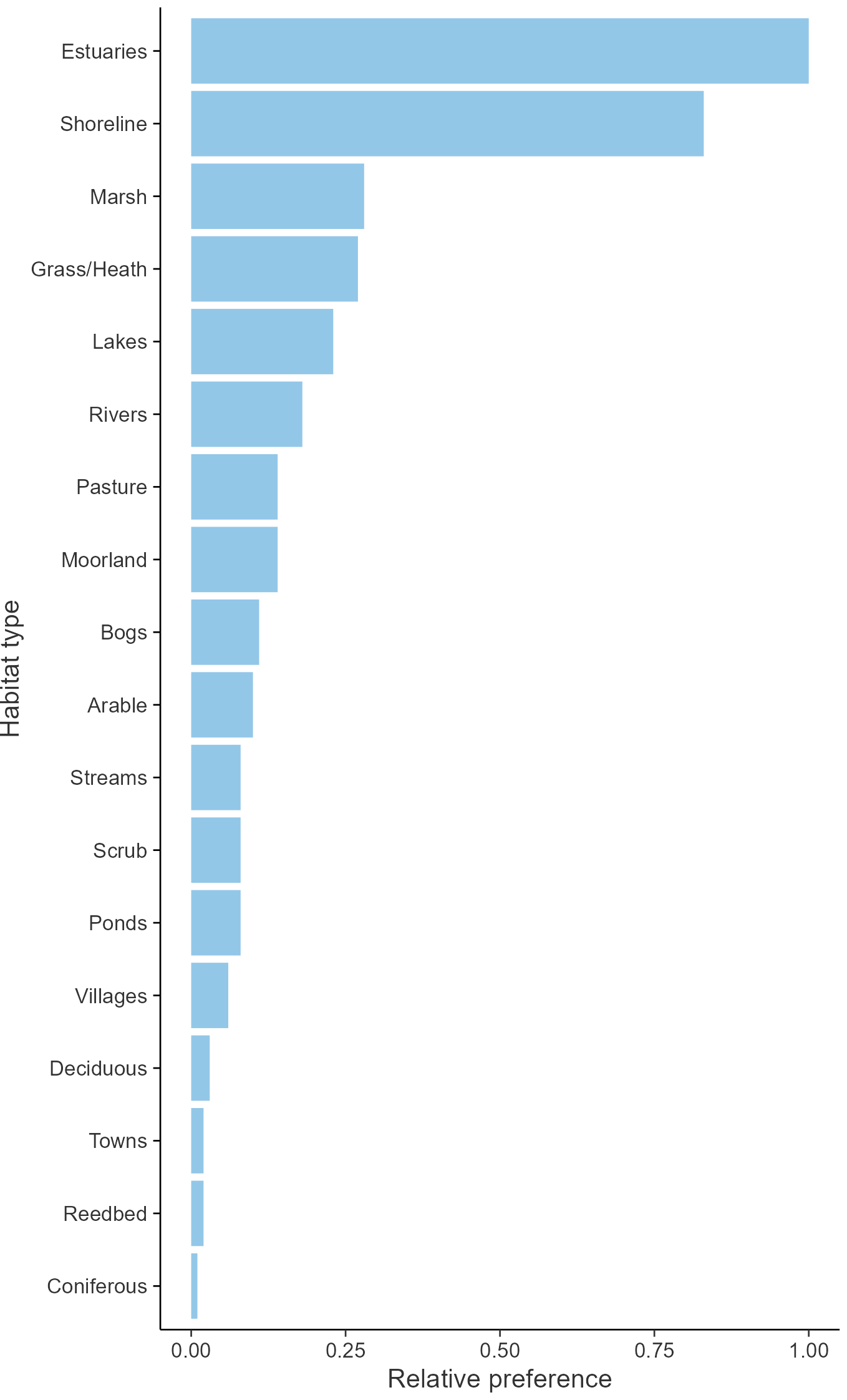
Breeding season habitats
Relative frequency by habitat
The graph shows the habitats occupied in the breeding season, with the most utilised habitats shown at the top. Bars of similar size indicate the species is equally likely to be recorded in those habitats.
Movement
Britain & Ireland movement
Foreign locations of birds ringed or recovered in Britain & Ireland
Dots show the foreign destinations of birds ringed in Britain & Ireland, and the origins of birds ringed overseas that were subsequently recaptured, resighted or found dead in Britain & Ireland. Dot colours indicate the time of year that the species was present at the location.
- Winter (Nov-Feb)
- Spring (Mar-Apr)
- Summer (May-Jul)
- Autumn (Aug-Oct)

European movements
EuroBirdPortal uses birdwatcher's records, such as those logged in BirdTrack to map the flows of birds as they arrive and depart Europe. See maps for this species here.
The Eurasian-African Migration Atlas shows movements of individual birds ringed or recovered in Europe. See maps for this species here.
Biology
Productivity and Nesting
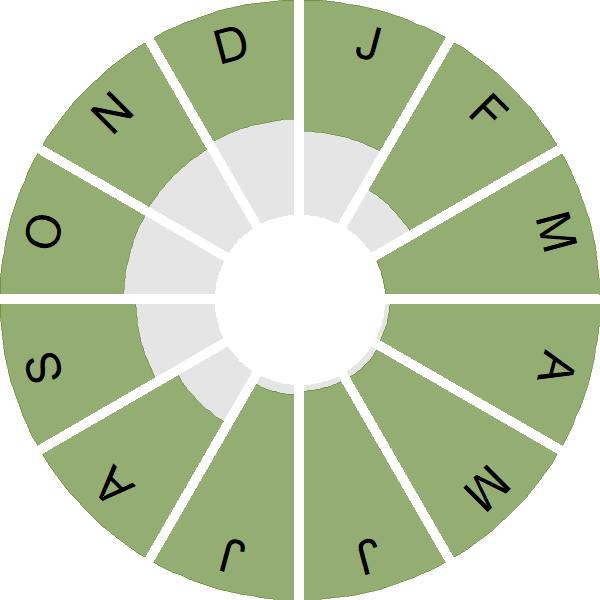
Nesting timing
Egg measurements
Clutch Size
Survival and Longevity
Survival is shown as the proportion of birds surviving from one year to the next and is derived from bird ringing data. It can also be used to estimate how long birds typically live.
View number ringed each year in the Online Ringing Report.
Lifespan
Survival of adults
Survival of juveniles
Biometrics
Wing length and body weights are from live birds (source).
Wing length
Body weight
Ring Size
Classification, names and codes
Classification and Codes
- Order: Charadriiformes
- Family: Haematopodidae
- Scientific name: Haematopus ostralegus
- Authority: Linnaeus, 1758
- BTO 2-letter code: OC
- BTO 5-letter code: OYSTE
- Euring code number: 4500
Alternate species names
- Catalan: garsa de mar
- Czech: ústricník velký
- Danish: Strandskade
- Dutch: Scholekster
- Estonian: merisk
- Finnish: meriharakka
- French: Huîtrier pie
- Gaelic: Gille-Brìghde
- German: Austernfischer
- Hungarian: csigaforgató
- Icelandic: Tjaldur
- Irish: Roilleach
- Italian: Beccaccia di mare
- Latvian: juras žagata
- Lithuanian: eurazine juršarke
- Norwegian: Tjeld
- Polish: ostrygojad (zwyczajny)
- Portuguese: ostraceiro
- Slovak: lastúrniciar strakatý
- Slovenian: školjkarica
- Spanish: Ostrero euroasiático
- Swedish: strandskata
- Welsh: Pioden Fôr
- English folkname(s): Sea Pie
Research
Causes of Change and Solutions
Causes of change
The main causes of the recent decline are unclear.
Further information on causes of change
The increase in nest failure rates during the 27-day egg stage (25 days for incubation and 2 days for laying) probably results from the spread of the species into less favourable habitats, where nest losses through predation or trampling may be more likely. A 95% decline over 1990-2015 at a study area in Perthshire, Scotland, was attributed to land use and crop type changes (Bell & Calladine 2017). The trend towards earlier laying may be linked to recent climate change (Crick & Sparks 1999).
Information about conservation actions
The causes of the recent decline are unclear and hence conservation requirements are also uncertain. Oystercatchers breed in wetland habitat both along the coast and inland, and therefore actions to improve breeding habitat for other waders may also improve breeding success for Oystercatchers. These could include maintaining and restoring saltmarsh and other wetland habitats, less intensive management of grasslands (including reduced drainage to raise water) and delaying mowing of grasslands in which waders are breeding.
Declines in the Netherlands have been attributed to over-exploitation by shell-fisheries in the Wadden Sea and hence reduced survival during winter (van de Pol et al. 2014). Exploitation of shellfish has also affected some sites in the UK (e.g. Norris et al. 1998; Atkinson et al. 2003), although it is unclear if the UK population declines have been caused by it. However, the majority of the UK breeding population winters around the UK coast, with many estuaries holding protected status as they support nationally and internationally important numbers of Oystercatchers and other wetland species during winter. Appropriate management of shellfish numbers at key wintering sites is therefore likely to be important for this species, along with other policies to ensure these sites continue to be protected and habitat quality maintained or improved (e.g. Goss-Custard et al. (2019).
Publications (13)
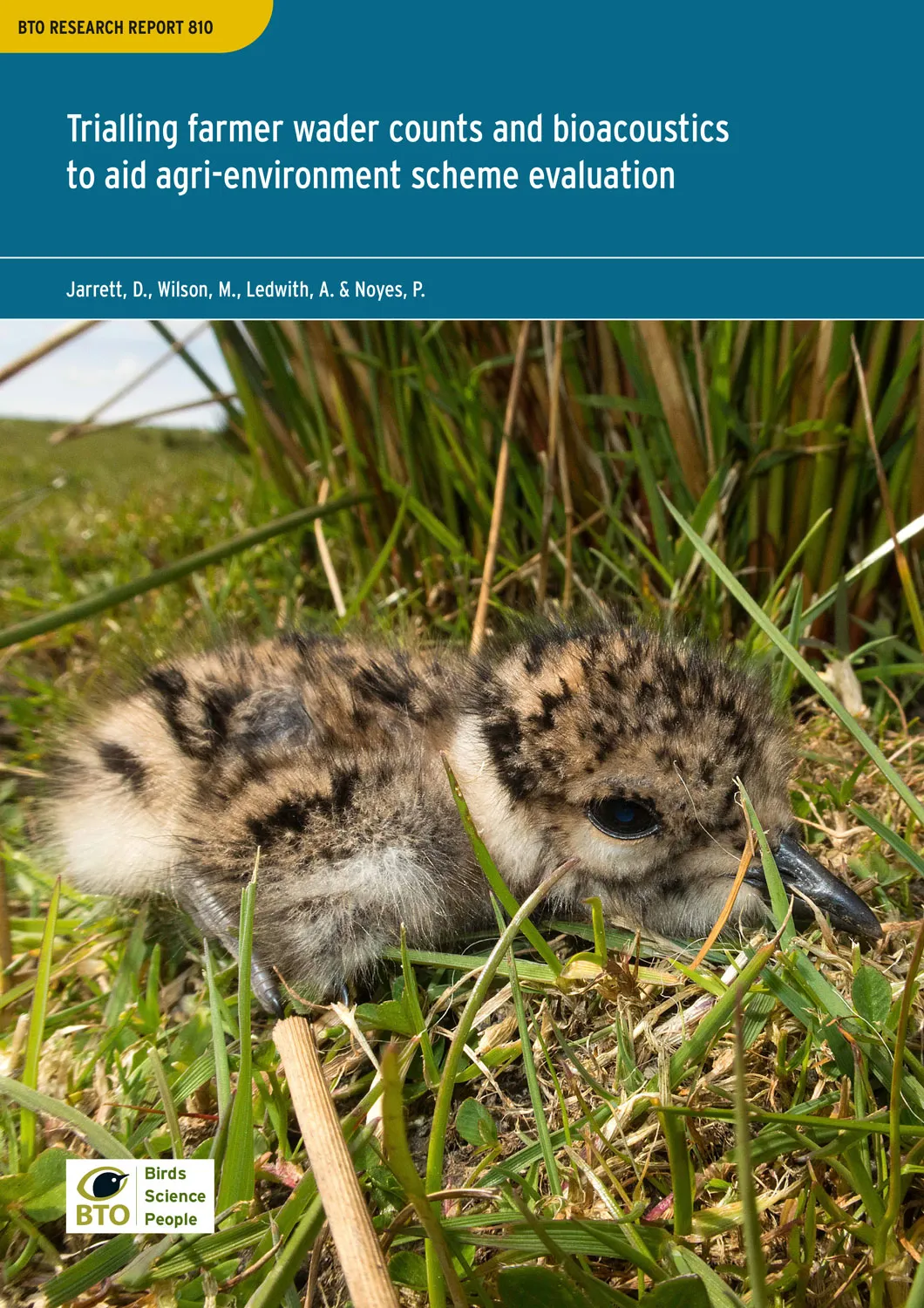
Trialling farmer wader counts and bioacoustics to aid agri-environment scheme evaluation
Author:
Published: 2026
The primary tool by which wader conservation is delivered in farmed landscapes is agri-environment schemes, whereby payments incentivise land managers to conduct beneficial management for species or habitats. Assessments of the effectiveness of such schemes have been based on infrequent, large-scale surveys which do not produce landscape- or intervention-specific evidence to facilitate local adaptations to the design of agri-environment schemes. This report details work carried out at 10 participating farms in the Yorkshire Dales National Park, where we trialled two methods that could help to evaluate the effectiveness of scheme measures at regional scales.
27.03.26
BTO Research Reports
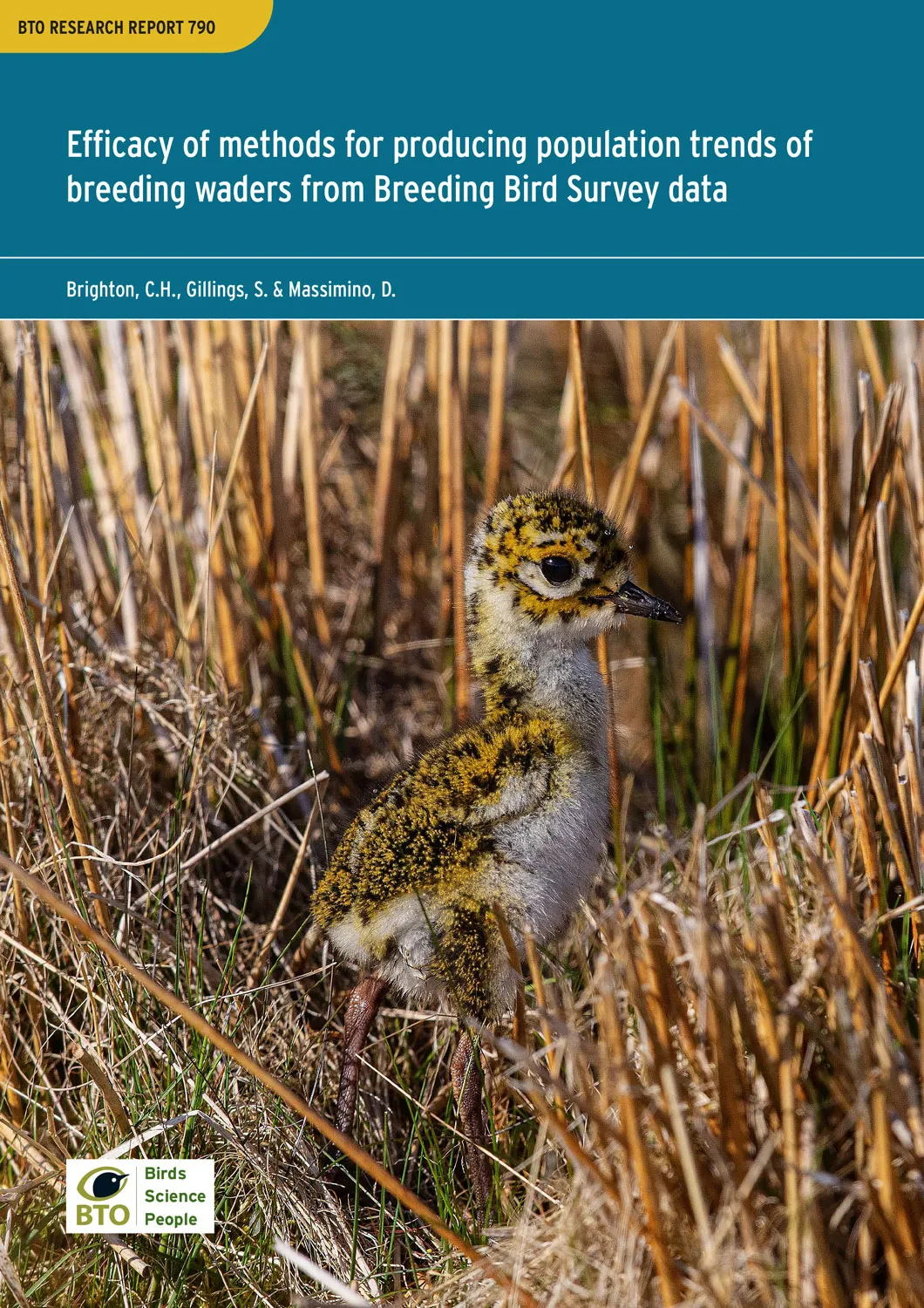
Efficacy of methods for producing population trends of breeding waders from Breeding Bird Survey data
Author:
Published: 2025
This report investigates the efficacy of methods for producing population trends from BTO/JNCC/RSPB Breeding Bird Survey data for six breeding wader species in the UK. It examines the effects of increasing the count threshold on the population trends for these six species, and also explores the effects of different geographic exclusion rules on the population trend of Golden Plover. Overall, it aims to test for any potential biases in the current trends, and in doing so, determines whether we can create a better approach which provides the most robust data for wader conservation moving forwards.
23.06.25
BTO Research Reports
Decline in the numbers of Eurasian Oystercatchers Haematopus ostralegus on the Exe estuary Special Protection Area
Author:
Published: 2024
The Exe Estuary in Devon is a nationally important site for Oystercatchers wintering in the UK. However, the proportion of this species found in south-west England and wintering on the Exe declined from 60% in the late 1980s to 35% by the late 2010s. This study uses 45 years of data collected by volunteers taking part in the Wetland Bird Survey (WeBS) to investigate why.
07.11.24
Papers
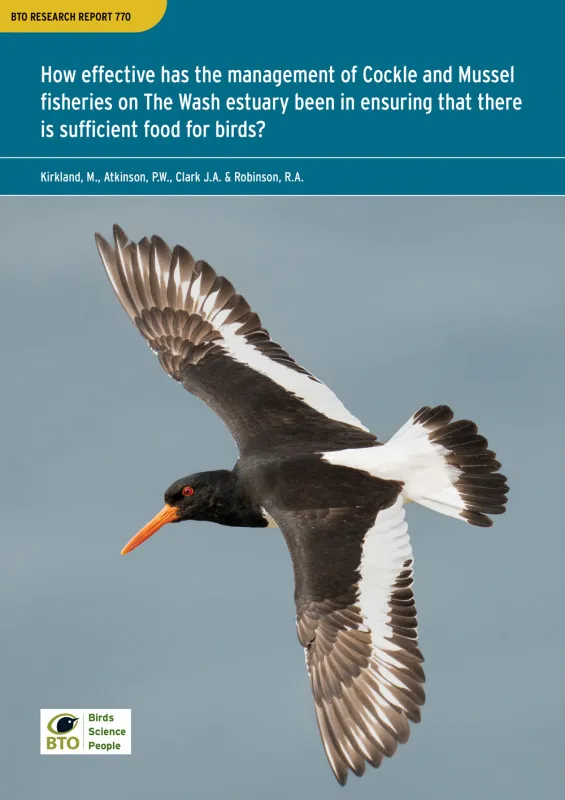
How effective has the management of Cockle and Mussel fisheries on The Wash estuary been in ensuring that there is sufficient food for birds?
Author:
Published: Winter 2024
The Wash is England’s largest Special Protection Area, with Oystercatchers being a designated feature. During the winter, Oystercatchers rely heavily on Cockles and Blue Mussels for their food requirements, creating the potential for conflict with the human fisheries for these species.
10.07.24
BTO Research Reports
Changes in breeding wader populations of the Uist machair and adjacent habitats between 1983 and 2022
Author:
Published: 2023
Periodic surveys of machair and associated habitats on the west coast of North Uist, Benbecula and South Uist have documented marked changes in the composition of an important breeding wader assemblage. Within the study area of there was a 25% decline in the total number of breeding waders recorded between 1983 and 2022.
15.06.23
Papers
Modelling important areas for breeding waders as a tool to target conservation and minimise conflicts with land use change
Author:
Published: 2022
The future of Britain’s breeding wader populations depends on land use policy and local management decisions, both of which require robust evidence and appropriate tools if they are to support the conservation of these priority species. One of the biggest challenges has been the geographical scale at which national data on wader abundance and distribution are available. These data are coarse in their resolution, making them poorly suited to directing conservation initiatives or informing land management decisions at a local scale. But can a statistical approach produce high-resolution maps of predicted wader abundance that are sufficiently accurate to be used for decision-making?
27.09.22
Papers
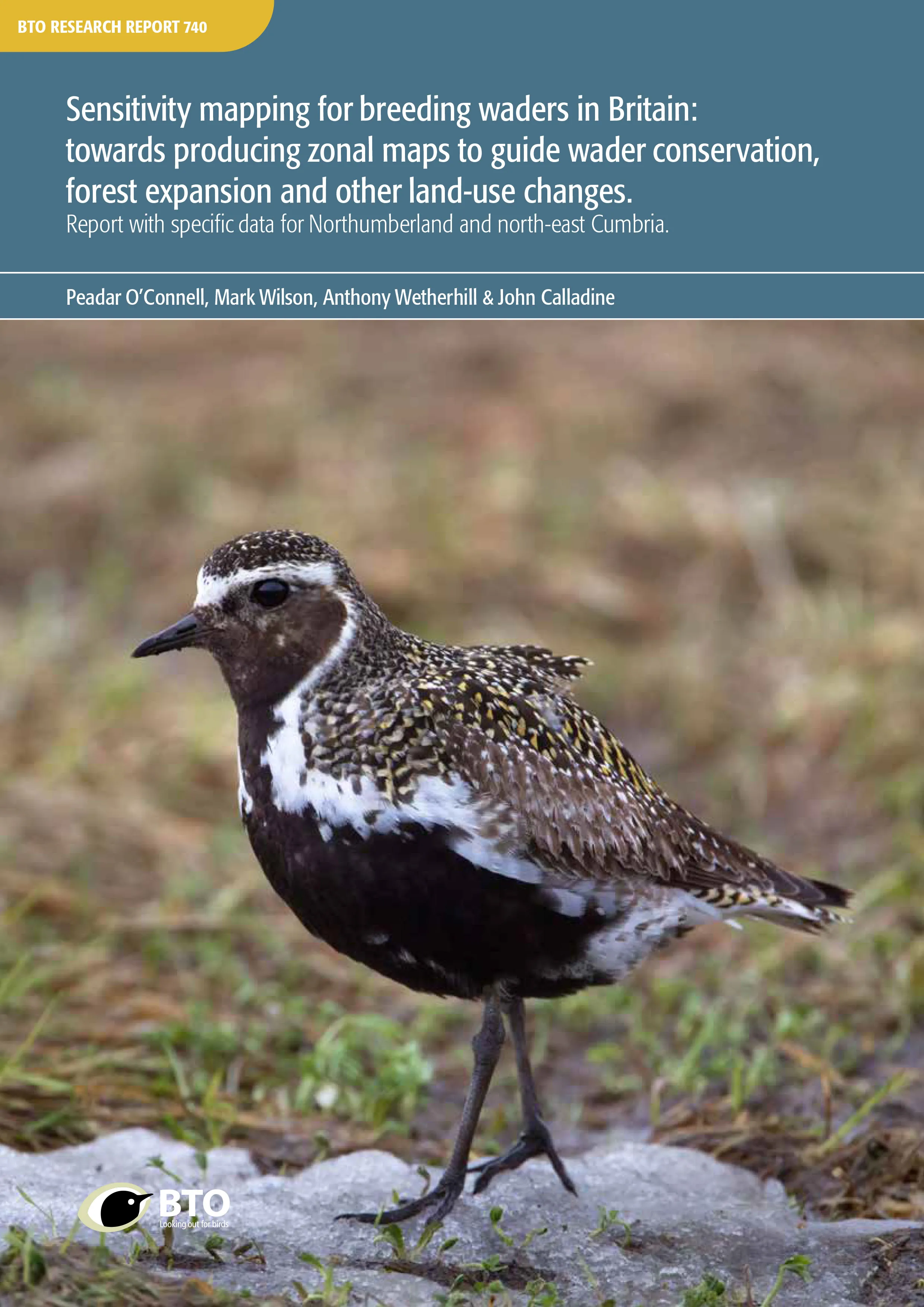
Sensitivity mapping for breeding waders in Britain: towards producing zonal maps to guide wader conservation, forest expansion and other land-use changes. Report with specific data for Northumberland and north-east Cumbria
Author:
Published: 2021
Breeding waders in Britain are high profile species of conservation concern because of their declining populations and the international significance of some of their populations. Forest expansion is one of the most important, ongoing and large-scale changes in land use that can provide conservation and wider environmental benefits, but also adversely affect populations of breeding waders. We describe models to be used towards the development of tools to guide, inform and minimise conflict between wader conservation and forest expansion. Extensive data on breeding wader occurrence is typically available at spatial scales that are too coarse to best inform waderconservation and forestry stakeholders. Using statistical models (random forest regression trees) we model the predicted relative abundances of 10 species of breeding wader across Britain at 1-km square resolution. Bird data are taken from Bird Atlas 2007–11, which was a joint project between BTO, BirdWatch Ireland and the Scottish Ornithologists’ Club, and modelled with a range of environmental data sets.
09.12.21
BTO Research Reports
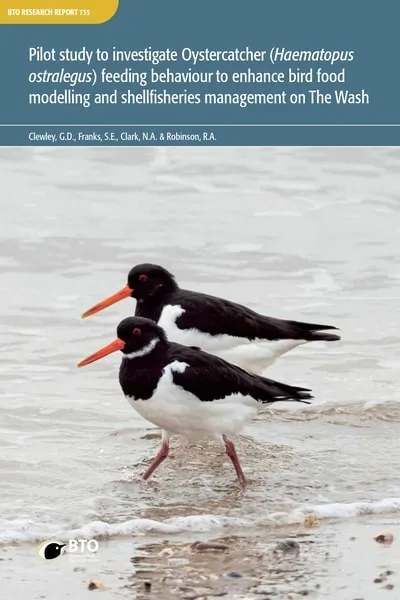
Pilot study to investigate Oystercatcher (Haematopus ostralegus) feeding behaviour to enhance bird food modelling and shellfisheries management on The Wash
Author:
Published: 2021
26.04.21
Reports
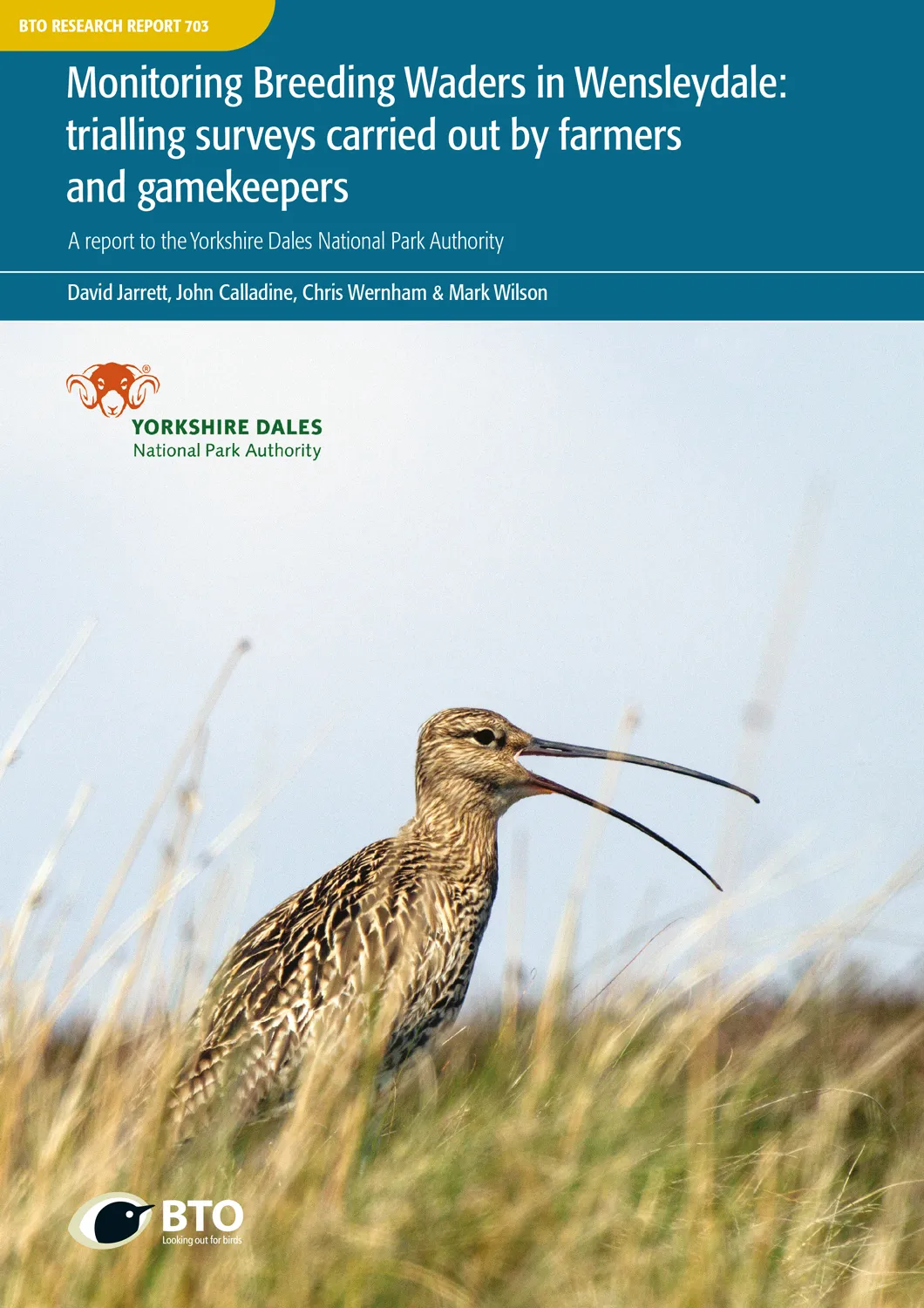
Monitoring breeding waders in Wensleydale: trialling surveys carried out by farmers and gamekeepers
Author:
Published: 2017
This report details pilot work in Wensleydale to test methods for involving farmers and gamekeepers in the survey and monitoring of breeding waders, and consider how such methods could be applied more widely.
21.11.17
BTO Research Reports
Consequences of population change for local abundance and site occupancy of wintering waterbirds
Author:
Published: 2017
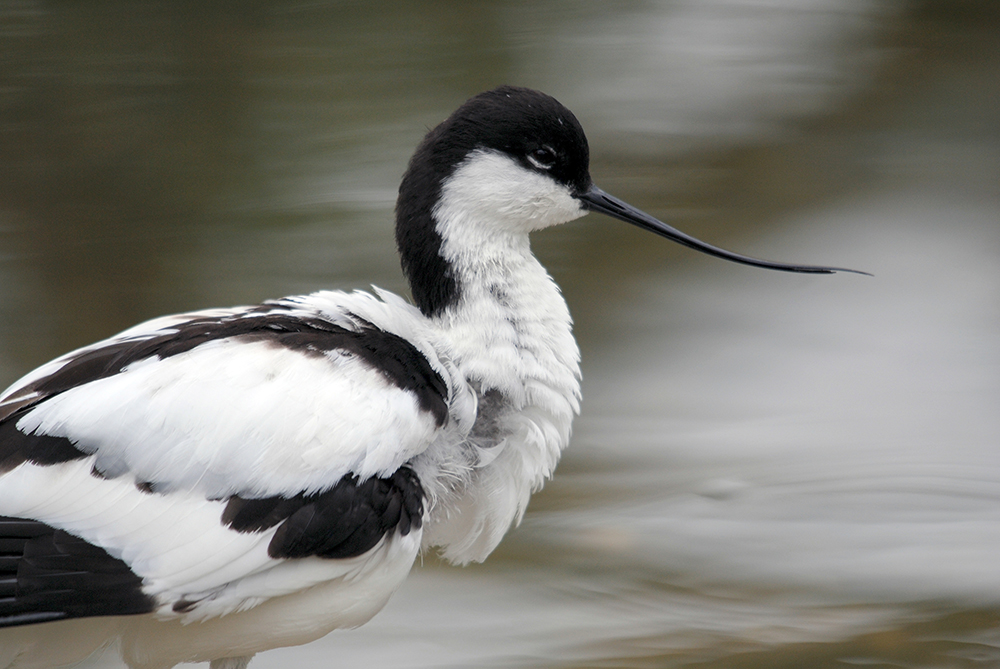
Protected sites for birds are typically designated based on the site’s importance for the species that use it. For example, sites may be selected as Special Protection Areas (under the European Union Directive on the Conservation of Wild Birds) if they support more than 1% of a given national or international population of a species or an assemblage of over 20,000 waterbirds or seabirds. However, through the impacts of changing climates, habitat loss and invasive species, the way species use sites may change. As populations increase, abundance at existing sites may go up or new sites may be colonized. Similarly, as populations decrease, abundance at occupied sites may go down, or some sites may be abandoned. Determining how bird populations are spread across protected sites, and how changes in populations may affect this, is essential to making sure that they remain protected in the future. These findings come from a new study by Verónica Méndez and colleagues from the University of East Anglia working with BTO. Using Wetland Bird Survey (WeBS) data the study looked at changes in the population sizes and distributions of 19 waterbird species across Britain during a period of 26 years and their effect on local abundance and site occupancy. Some of these species saw steady increases in population size (up to 1,600%, Avocet), whereas other saw mild declines (-26%, Purple Sandpiper and Shelduck). The results showed that changes in total population size were predominantly reflected in changes in local abundance, rather than through the addition or loss of sites. This is possibly because waterbirds tend to be long-lived birds, with high site fidelity and new suitable sites may not always be available. Thus colonisation of new sites may typically occur when their existing sites approach their maximum capacity. As changes in populations are largely manifested by changes in local abundance – and as sites are often designated for many species – the numbers of sites qualifying for site designation are unlikely to be affected. Understanding the dynamic between population change and change in local abundance will be key to ensuring the efficiency of protected area management and ensuring that populations are adequately protected. Data from the Wetland Bird Survey and its predecessor schemes, which are celebrating 70 years of continuous monitoring of waterbirds this year, have been integral to both the designation of protected sites and monitoring of their condition. Continuation of this monitoring through future generations will ensure that the impacts to waterbird populations of future environmental changes may be understood.
20.09.17
Papers
The decline of a population of farmland breeding waders: a twenty-five-year case study
Author:
Published: 2017
The breeding populations of many different wader species are in decline across the globe, and the UK is no exception. These declines have been linked to increased predator numbers, changes in agricultural practices, and in the management of the wider landscape. There is an urgent need for information on how such changes in land management, particularly within farmland, may affect breeding waders. This information can then be used to inform future land management decisions. Long-term studies can make an important contribution to our understanding of wader decline, as is demonstrated by work carried out by BTO’s Regional representative for Perthshire, Mike Bell. Mike had the foresight to start monitoring what was an important concentration of breeding waders in Strathallan (Perthshire, Scotland) in the late 1980s. Twenty-five years after establishing repeatable methods over the study area proved an appropriate time to take stock of changes that occurred. The four most numerous species in the area were Oystercatcher, Lapwing, Curlew and Redshank, which respectively achieved densities of 12, 36, 3 and 5 pairs per km2 in 1990. All are facing serious declines across the UK. Alongside information on the breeding populations of these four waders, Mike also documented agricultural changes; from this it was possible to determine how local farming practices were likely to have influenced the waders. Over the period of 1990-2015 Oystercatchers showed the greatest proportional decline with the breeding population falling by 95%, followed by Lapwing (-88%), Redshank (-87%) and Curlew (-67%). Although the greatest declines were associated with changing land use, the declines appeared greater than could be accounted by losses of preferred habitat alone. Furthermore, breeding success was low throughout the study and probably not sufficient to maintain the population. This raises the importance of understanding the roles of source and sink populations for breeding waders in the wider countryside. Alongside this, threats from poor weather, increased disturbance (e.g. from dog walkers), and increased predator numbers could further implicate the population, although this was not studied specifically at Strathallan. Mike Bell is a long-term volunteer for the BTO and now Regional Representative for Perthshire. This 25-year (and ongoing) study was undertaken in his own time, highlighting the value of volunteers to science and conservation. It also emphasises how long-term datasets such as this can provide invaluable insights into the pressures that bird species are facing, and how we may alleviate these pressures. As most long-term studies are possible only with volunteers, the importance of their contribution is increasingly important. With support from the BTO’s recent Curlew Appeal, BTO has been trialling a range of approaches where volunteers can add to our understanding of the ecology of breeding waders, knowledge which will be vital to provide these beautiful birds with a fighting chance.
12.04.17
Papers Bird Study
Oystercatcher starvation on the Wash - a case of poor food supplies
Author:
Published: 1995
01.01.95
Papers
Differential distribution of Oystercatchers Haematopus ostralegus overwintering on the Wash, east England
Author:
Published: 2004
01.01.04
Papers Bird Study
More Evidence
More evidence from Conservation Evidence.com
Partners




Citing BirdFacts
If you wish to cite particular content in this page (e.g. a specific value) it is best to use the original sources as linked in the page. For a more general citation of the whole page please use: BTO (20XX) BirdFacts Species: profiles of birds occurring in the United Kingdom. BTO, Thetford (www.bto.org/birdfacts, accessed on xx/xx/xxxx).