Kittiwake
Introduction
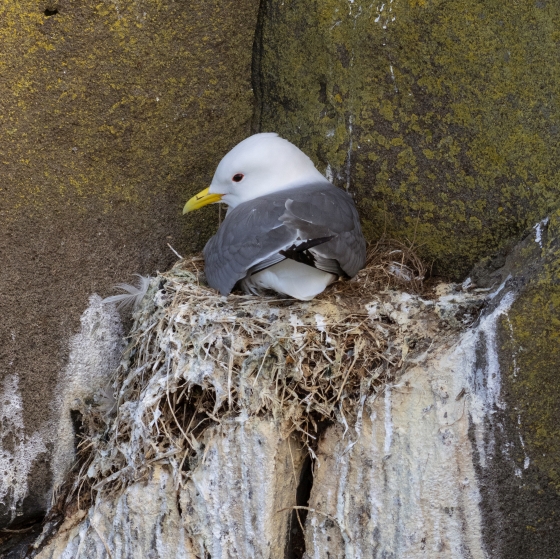
This medium-sized seabird is our most numerous gull species, and also our most maritime, spending much of the non-breeding season on the high seas of the Atlantic Ocean.
Breeding adults have a white head and body with a mid-grey mantle and wings. They also have distinctive, jet black 'ink-dipped' wing tips. Kittiwakes take three years to attain full adult plumage.
The main breeding strongholds are in Scotland, especially Orkney, Shetland and the north-west coast.
Key Stats






Identification
ID Videos
This section features BTO training videos headlining this species, or featuring it as a potential confusion species.
Kittiwake & Other Small Gulls
Songs and Calls
Call:
Flight call:
Other:
Status and Trends
Conservation Status
Population Change
The Kittiwake population increased by 24% between the 1969–70 and 1985–88 Censuses, but these increases had been reversed by the time of Seabird 2000 (1998–2002). Ongoing annual monitoring show that further substantial declines have since occurred and it is expected that the results of the Seabirds Count (2015–2021) will confirm this (JNCC 2022)
Distribution
Kittiwakes predominantly breed on coasts with rocky cliffs, though man-made structures can be used, including the only colonies in East Anglia. The highest densities are on the British east coast, particularly between Flamborough Head and Orkney. Kittiwakes are mostly pelagic in the non-breeding season so most winter records are from vantage points along the British and Irish coastlines. During 2007–11 concentrations were greatest in southwest Ireland, southwest Wales and the Northern Isles.
Occupied 10-km squares in UK
2007/08–10/11
or view it on Bird Atlas Mapstore.
2008–11
or view it on Bird Atlas Mapstore.
European Distribution Map
Distribution Change
Since the 1970s Kittiwake range has contracted by 10%, associated with an almost halving of the British breeding population. Losses are thought to be associated with changes in prey availability.
Change in occupied 10-km squares in the UK
from 1981–84 to 2007–11
or view it on Bird Atlas Mapstore.
from 1968–72 to 2008–11
or view it on Bird Atlas Mapstore.
Seasonality
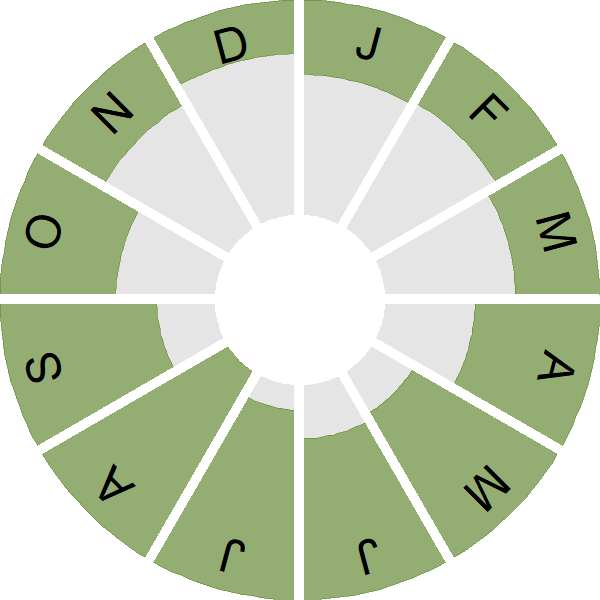
Kittiwakes are recorded year-round, though more consistently in the breeding season on coasts near breeding areas.
Weekly pattern of occurrence
The graph shows when the species is present in the UK, with taller bars indicating a higher likelihood of encountering the species in appropriate regions and habitats.

Movement
Britain & Ireland movement
Foreign locations of birds ringed or recovered in Britain & Ireland
Dots show the foreign destinations of birds ringed in Britain & Ireland, and the origins of birds ringed overseas that were subsequently recaptured, resighted or found dead in Britain & Ireland. Dot colours indicate the time of year that the species was present at the location.
- Winter (Nov-Feb)
- Spring (Mar-Apr)
- Summer (May-Jul)
- Autumn (Aug-Oct)

European movements
EuroBirdPortal uses birdwatcher's records, such as those logged in BirdTrack to map the flows of birds as they arrive and depart Europe. See maps for this species here.
The Eurasian-African Migration Atlas shows movements of individual birds ringed or recovered in Europe. See maps for this species here.
Biology
Productivity and Nesting
Nesting timing
Egg measurements
Clutch Size
Survival and Longevity
Survival is shown as the proportion of birds surviving from one year to the next and is derived from bird ringing data. It can also be used to estimate how long birds typically live.
View number ringed each year in the Online Ringing Report.
Lifespan
Survival of adults
Survival of juveniles
Biometrics
Wing length and body weights are from live birds (source).
Wing length
Body weight
Ring Size
Classification, names and codes
Classification and Codes
- Order: Charadriiformes
- Family: Laridae
- Scientific name: Rissa tridactyla
- Authority: Linnaeus, 1758
- BTO 2-letter code: KI
- BTO 5-letter code: KITTI
- Euring code number: 6020
Alternate species names
- Catalan: gavineta de tres dits
- Czech: racek tríprstý
- Danish: Ride
- Dutch: Drieteenmeeuw
- Estonian: kaljukajakas
- Finnish: pikkukajava
- French: Mouette tridactyle
- Gaelic: Ruideag
- German: Dreizehenmöwe
- Hungarian: csüllo
- Icelandic: Rita
- Irish: Saidhbhéar
- Italian: Gabbiano tridattilo
- Latvian: trispirkstu kaija
- Lithuanian: tripirštis kiras
- Norwegian: Krykkje
- Polish: mewa trójpalczasta
- Portuguese: gaivota-tridáctila
- Slovak: cajka trojprstá
- Slovenian: triprsti galeb
- Spanish: Gaviota tridáctila
- Swedish: tretåig mås
- Welsh: Gwylan Goesddu
- English folkname(s): Annett, Tarrock
Research
Causes of Change and Solutions
Causes of change
There is good evidence that the declines in the Kittiwake population are likely to have been driven by low breeding productivity which is likely to be related to changes in sandeel populations (Coulson 1983, Frederiksen et al. 2005, Coulson 2017, McMurdo Hamilton et al. 2016). Sandeel stocks, and therefore breeding success of Kittiwakes and other seabirds, may be affected by the impact of fisheries and also by changes to sea surface temperatures due to climate change. Hence, management of fisheries may be necessary to maintain Kittiwake populations (Furness & Tasker 2000).
Publications (20)
Seabird Population Trends and Causes of Change: 1986–2024
Author:
Published: 2026
The annual report of the Seabird Monitoring Programme View and download the report Read the report online This report presents the latest seabird population trends in breeding abundance and productivity using data from the Seabird Monitoring Programme (SMP). It documents changes in the abundance and productivity of breeding seabird species in Britain and Ireland from 1986 to 2024. This report includes both inland and coastal populations and trends from the Channel Islands, England, Isle of Man, Northern Ireland, Scotland, Wales and the Republic of Ireland, which are presented where sufficient data are available. The results from this report are used more broadly to assess the health of the wider environment, to inform policy and for conservation action.
19.03.26
Reports SMP Report
Desk-based revision of seabird foraging ranges used for HRA screening
Author:
Published: 2019
A key step in understanding the possible impacts of a proposed windfarm development is to identify potential interactions between seabird breeding colonies and the proposed development areas. Such interactions are typically assessed using generic information on foraging ranges, derived from academic studies. This report uses the latest data to provide updated estimates of foraging range, which will help to ensure that the best available information is available when new developments are being considered.
01.12.19
BTO Research Reports
Evaluating aerial LiDAR and other approaches to avian flight height measurement – ReSCUE Project Validation Study Report
Author:
Published: 2025
This report investigates the accuracy and reliability of seabird flight height data that are used to mitigate impacts of offshore wind farms on seabird populations. Through a set of trials, we set out to validate Light Detection and Ranging (LiDAR)-coupled Digital Aerial Surveys (DAS), and to a lesser extent size-based methods. Additional technologies evaluated in the trials included bird-borne Global Positioning System (GPS) telemetry tags and human-operated laser rangefinders. We found that the comparative performance of the two LiDAR-coupled Digital Aerial Survey suppliers varied based on system differences and weather conditions during surveys, particularly in terms of detection rates from different sensors. LiDAR flight height measurements, however, proved to be accurate and precise for both suppliers, with measurement uncertainties on the scale of centimetres. In contrast, size-based DAS estimates had uncertainties on the order of tens of metres. Findings from this study will directly inform the development of best practice guidance for seabird flight height data collection and analysis, supporting impact assessments for offshore wind farms while minimising ecological risks to seabird populations.
14.10.25
BTO Research Reports
BTO Northern Ireland Marine Bird Evidence Review 2024: marine bird spatial use in the Celtic Seas
Author:
Published: 2025
This report was commissioned by the Northern Ireland Environment Agency to scope the evidence available on the movements and spatial distributions of certain marine birds in and around Northern Ireland waters, in order to identify knowledge gaps. The focus is on 37 marine birds found offshore, away from the coastline, that utilise the Celtic Seas (OSPAR Region III) and Ireland Exclusive Economic Zone marine environments. Metadata from 10 different sources (including directly contacting researchers, a literature review and accessing several archived datasets) are used.
07.07.25
BTO Research Reports
Diet analysis of Kittiwake Rissa tridactyla and Shag Gulosus aristotelis using DNA metabarcoding of faeces
Author:
Published: 2025
This study used DNA metabarcoding on faeces collected opportunistically during the breeding season, to identify fish and marine invertebrate prey in the diet of Shag and Kittiwake in western Scotland. Read our BTO blog on making this research accessible through the medium of a comic!
17.06.25
Papers
Review of methods used to calculate scale of artificial nesting structures proposed as a compensation measure for Kittiwake mortality at offshore wind farms
Author:
Published: 2025
This report reviews the suitability of methods used to calculate the scale of Artificial Nest Structures (ANS) provided as compensation measures for Kittiwake mortality at offshore wind farms in English waters, due to turbine collision only. This report was revised in October 2025 and republished on 30-10-2025, correcting an error in Table 5. The recalculated compensation populations in the original report did not match the underlying fecundity values in the column headers. In addition, a link to helpful computer code was added to Appendix 3 (see below).
19.06.25
BTO Research Reports
The status of the UK’s breeding seabirds
Author:
Published: 2024
Five seabird species are added to the Birds of Conservation Concern Red List in this addendum to the 2021 update, bringing the total number of Red-listed seabird species to 10, up from six since seabirds were last assessed. The Amber List of seabirds moves from 19 to 14 species, and the Green List increases from one to two species.
29.09.24
Papers
Current understanding of how climate change affects seabirds varies between regions and species in the North-East Atlantic
Author:
Published: 2025
BTO-led research identifies key gaps in our knowledge and understanding of how climate change is affecting seabirds.
27.02.25
Papers
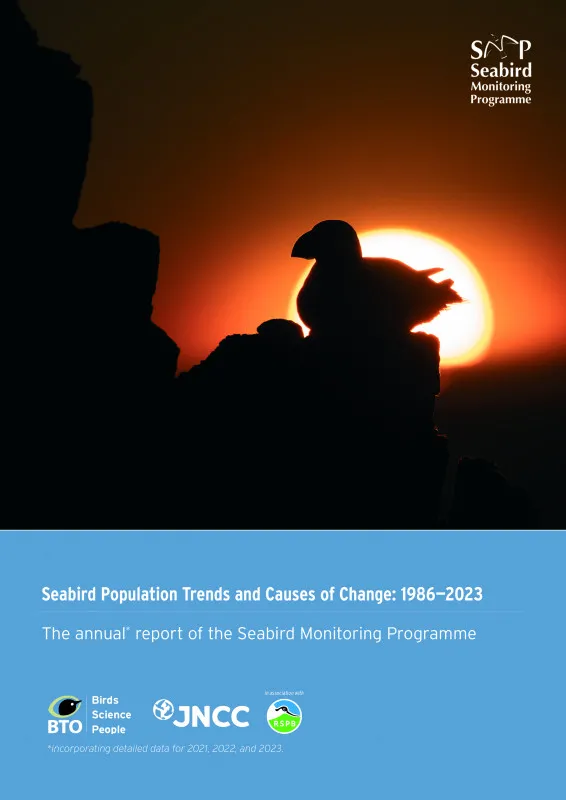
Seabird Population Trends and Causes of Change: 1986–2023
Author:
Published: 2024
This report presents the latest seabird population trends in breeding abundance and productivity using data from the Seabird Monitoring Programme (SMP).The report documents changes in the abundance and productivity of breeding seabird species in Britain and Ireland from 1986 to 2023, and provides a detailed account of the 2021, 2022 and 2023 breeding seasons. This report includes both inland and coastal populations and trends from the Channel Islands, England, Isle of Man, Northern Ireland, Scotland, Wales and the Republic of Ireland, which are presented where sufficient data are available. The results from this report are used more broadly to assess the health of the wider environment, to inform policy and for conservation action.
21.11.24
Reports SMP Report
Influence of wind on kittiwake Rissa tridactyla flight and offshore wind turbine collision risk
Author:
Published: 2024
Climate change presents a major threat to populations of seabirds such as the Kittiwake, a Red-listed species of conservation concern. However, one mitigation approach to climate change – exploiting renewable energy through offshore wind farms – itself poses a potential threat to Kittiwakes, partly due to collision risk with turbine blades.
09.09.24
Papers
The value of seabird foraging ranges as a tool to investigate the impact of offshore wind farms
Author:
Published: 2024
A study led by BTO uses data from GPS tracking and other research to identify the likelihood of seabirds of 27 species interacting with areas off sea earmarked for 41 new offshore wind farms around the UK.
30.05.24
Papers

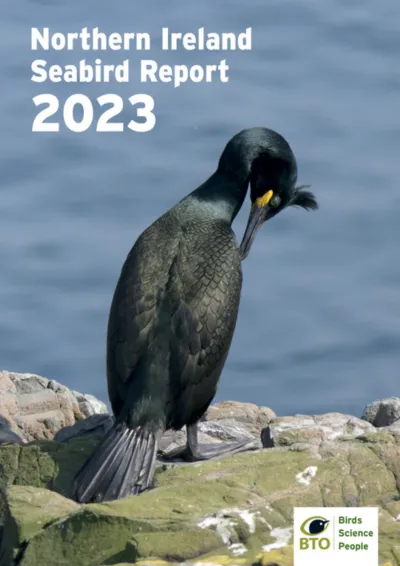
Northern Ireland Seabird Report 2023
Author:
Published: 2024
The report includes detailed information about the population trends and breeding success of seabirds in Northern Ireland, over the 2023 breeding season. Notably, Fulmar and Kittiwake populations are reported to be experiencing continued declines, while Guillemot, Common Gull and Herring Gull populations show increases at most breeding sites. Low productivity was reported in Black-headed Gulls, Sandwich Terns and Common Terns, likely due to the impacts of highly pathogenic avian influenza (HPAI). Although Black-headed Gulls make up the majority of confirmed HPAI mortality cases in Northern Ireland in 2023, other birds significantly affected include terns, Kittiwakes and auks. A contributor report about HPAI in Northern Ireland by Ronan Owens (Higher Scientific Officer, DAERA, NIEA) details developments in environmental organisations’ responses to HPAI in 2023, including cross-sector communication, improved surveillance and monitoring of HPAI impacts, and improved online systems for the public to report dead birds. Monitoring reports for Strangford Lough and the Outer Ards are included, as well as several additional contributor articles: Copeland gull censuses, by Roisin Kearney (Assistant Conservation Officer, RSPB). The Copeland Islands host one of the largest mixed gull colonies in Northern Ireland, with significant numbers of Lesser Black-backed Gulls and Herring Gulls. The annual gull census was established in 2018; the article details the refinement of the methodology to date as well as the census results so far. Manx Shearwater tracking, by Patrick Lewin (DPhil Student, OxNav, Dept. of Biology, University of Oxford). Tracking the Manx Shearwaters that breed on Lighthouse Island (one of the three Copeland Islands) began in 2007. The article describes the history of tracking Manx Shearwaters from Copeland, including recent advances in technology that have allowed the tracking of fledgling birds as well as adults of breeding age, and the impact of this research on the conservation of shearwaters. Puffin surveys on Rathlin, by Ric Else (Life RAFT Senior Research Assistant, RSPB). Rathlin Island hosts Northern Ireland’s largest seabird colony. The response of seabirds to the removal of introduced Ferrets and Brown Rats from Rathlin is currently being monitored, with a particular focus on Puffins. These birds are especially vulnerable to mammalian predators because of their burrow nests. The article describes the challenges associated with calculating a population estimate, monitoring productivity and mapping the distribution of this species, and how these are being addressed in seabird surveys on Rathlin.
15.04.24
Reports Northern Ireland Seabird Report
A crowded ocean: the need for demographic and movement data in seabird conservation
Author:
Published: 2023
High pathogencity avian influenza hitting seabird colonies and severe marine heatwaves disrupting marine food webs highlight just two of the many threats that seabirds must contend with. This BTO study examines the information needed to come up wtih effective conservation measures for seabird species.
01.09.23
Papers
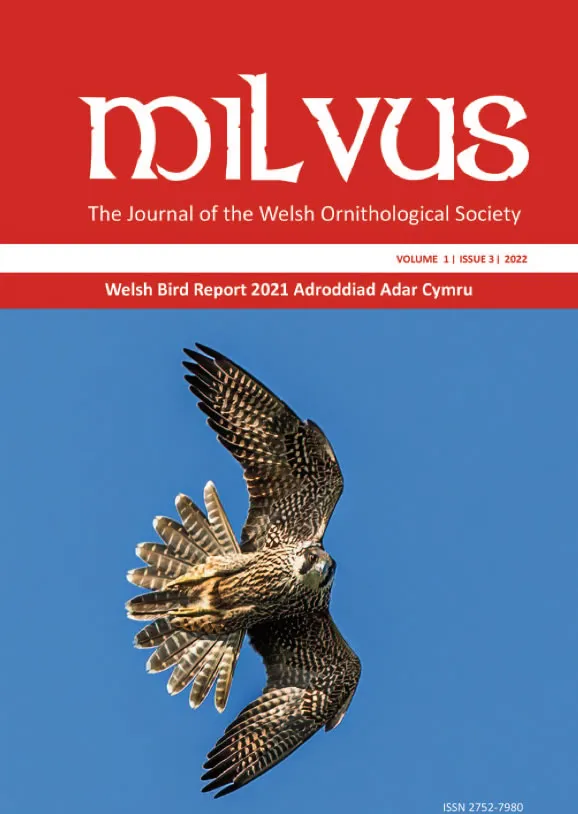
Birds of Conservation Concern Wales 4: the population status of birds in Wales
Author:
Published: 2022
The latest review of the conservation status of birds in Wales. The report assessed all 220 bird species which regularly occur in Wales. There are now 60 species of bird on the Red List, with 91 on the Amber List and just 69 - less than a third of the total number of species - on the Green List. The latest review of the conservation status of birds in Wales comes 20 years after the first, when the Red List was less than half the length it is today. The report assessed all 220 bird species which regularly occur in Wales. There are now 60 species of bird on the Red List in Wales, with 91 on the Amber List and 69 on the Green List. The Birds of Conservation Concern in Wales report assesses the status of each species against a set of objective criteria. Data sources include the BTO/JNCC/RSPB Breeding Bird Survey and the BTO/RSPB/JNCC Wetland Bird Survey, as well as Bird Atlases and other BTO-led monitoring schemes and citizen science initiatives. These are used to quantify the changing status of the species’ Welsh population. The UK, European and global conservation status of the species is also considered, placing the Welsh population into a wider context. The Red ListSwift, Greenfinch and Rook – familiar breeding species in steep decline across the UK – are among the new additions to the Welsh Red List, which now also includes Purple Sandpiper, on account of a rapidly shrinking Welsh wintering population, and Leach’s Petrel, an enigmatic seabird in decline across its global range. These species now sit alongside well-known conservation priorities, such as Curlew, Hen Harrier and Turtle Dove as birds at risk of being lost from Wales for good. Uplands and woodlands Many of the species on the Red List are found in upland and farmland habitats. Starling, Tree Sparrow, Yellow Wagtail and Yellowhammer can no longer be found in much of Wales, while iconic species of mountain and moorland, such as Ring Ouzel, Merlin and Black Grouse, remain in serious trouble. Wales is well known for its populations of woodland birds; however, many of these – including Lesser Spotted Woodpecker, Willow Warbler and Spotted Flycatcher – also feature on the Red List. Goldcrest, which has seen its Welsh population shrink alarmingly in recent decades, is another new addition. On the coast The assessment for Birds of Conservation Concern Wales 4 took place before the impacts of avian influenza could be taken into account. Breeding seabird species have been struggling in Wales for many years, however, and most were already of conservation concern before the outbreak of this disease. Kittiwake, Puffin, Black-headed Gull, and Common, Arctic and Sandwich Tern remain on the Red List. Wales holds internationally significant numbers of breeding seabirds, making the decline of these colonies a global concern. The Amber ListDeclines in Wheatear, Garden Warbler and House Martin - all migrants which breed in Europe and winter in sub-Saharan Africa - mean these species have moved from the Green List to the Amber List. Many other ‘Afro-Palearctic' migrant species are also in decline, but the potential reasons for this, such as habitat loss and reduced availability of invertebrate prey, are not well understood. Closer to home, the declines in the Welsh Chaffinch population, linked to the disease trichomonosis, have seen the species Amber-listed. A number of other species have been placed on the Amber List because of the wider importance of their Welsh populations, which in each case make up more than half the UK total. Wales is home to more than three-quarters of the UK’s Choughs, for example, so recent declines are cause for concern. The nation’s breeding populations of Manx Shearwater, Pied Flycatcher, Goshawk and Hawfinch also account for more than half the UK total, as does its wintering population of Spotted Redshank. It’s not all bad news, though: some species now on the Amber List have moved up from the Red List, indicating some positive change in their population trends. These include Common Sandpiper, Great Black-backed Gull, Bullfinch, Goldcrest and Pied Flycatcher. The Green ListWhile the report contains much cause for alarm, several conservation success stories shine through. Red Kite was almost lost as a British bird during the first half of the 20th century, when only a handful of pairs remained in remote Welsh valleys. Since then, a sustained conservation effort has brought the species back from the brink. Wales is now home to more than 2,500 pairs of Red Kite and the species has now been moved to the Green List, reflecting this incredible change in fortunes. Song Thrush, Reed Bunting, Long-tailed Tit, Redwing and Kingfisher are among the other species to have gone Green, providing much-needed hope that things can go up as well as down.
06.12.22
Reports Birds of Conservation Concern
Acute impacts from Teflon harnesses used to fit bio-logging devices to Black-legged Kittiwake Rissa tridactyla
Author:
Published: 2022
BTO research underlines the importance of assessing the impact of tagging on a species by species basis, and suggests that the tag-attachment methods successfully used on other seabird species might not be suitable for Red-listed Kittiwakes.
02.12.22
Papers
Methods to quantify avian airspace use in relation to wind energy development
Author:
Published: 2021
New research involving BTO has developed a framework to identify how wildlife might be affected by renewable energy developments. Over the past century, an accelerating pace of industrialisation has led to increasing numbers of manmade structures, including renewable energy developments (such as wind turbines) that extend into and co-occupy the airspace of birds and other airborne wildlife. In order to understand how wildlife might be affected by these structures, we need data that describes species flight characteristics, such as how high and fast they fly. However, the methods used for this data collection are often based on legislation and guidance which has not been updated for some time, and therefore does not make best use of tools and technologies currently available. In the case of bird flight heights, measurements are often based on estimates from visual observers, whilst information on flight speeds are often derived from published literature. Such data are likely to be less accurate and less representative than data collected from technologies like radar or GPS telemetry, and in turn contribute to less accurate and less representative estimates of the potential impacts of renewable energy developments. A key reason that these visual- and literature-based data collection methods have persisted may be the lack of a comprehensive understanding regarding the tools and technologies that currently exist, and how these can be applied to the collection of bird flight data in a systematic and consistent way. In order to assess the tools and technologies available, BTO scientists collaborated with colleagues at the University of the Highlands and Islands and the RSPB to carry out a systematic literature search. For each method identified, the authors considered what kind of data could collect be collected (e.g. flight characteristics, longevity of data collection), how these data were collected (e.g. via GPS devices attached to birds) and if there was any evidence that the measurements from each tool had been or could be verified through calibration or validation. Based on the results of this search, the authors developed a framework, setting out how the tools available could be used during baseline ornithological data collection as part of Environmental Impact Assessments (EIAs), which help to establish whether a renewable energy development should go ahead. This work removed some of the uncertainty around the use of the tools that are currently used. This framework can be incorporated into EIA legislation and offers guidance about the collection of bird flight data, making the best use of the technology available to ensure that decisions about which renewable energy developments receive permission to be built are based on the most accurate and representative data possible.
13.01.21
Papers
The risk of extinction for birds in Great Britain
Author:
Published: 2017
The UK has lost seven species of breeding birds in the last 200 years. Conservation efforts to prevent this from happening to other species, both in the UK and around the world, are guided by species’ priorities lists, which are often informed by data on range, population size and the degree of decline or increase in numbers. These are the sorts of data that BTO collects through its core surveys. For most taxonomic groups the priority list is provided by the International Union for Conservation of Nature (IUCN) – the IUCN Red List comprises roughly 12,000 species worldwide and their conservation status. However, for birds in the UK, most policy makers refer to the Birds of Conservation Concern (BoCC) list, updated every six years (most recently in 2015). A new study funded by the RSPB and Natural England in cooperation with BTO, WWT, JNCC, and Game & Wildlife Trust has carried out the first IUCN assessment for birds in Great Britain. The study applied the IUCN criteria to existing bird population data obtained from datasets like the BTO/JNCC/RSPB Breeding Bird Survey (BBS). The criteria take into account various factors, most notably any reduction in the size (both in abundance and range) of populations, loss of habitats key to the species, small or vulnerable population sizes, and extinction risk. Alongside this, the criteria look to see if there is a “rescue” effect – such as immigration from neighbouring populations that might boost the population’s numbers, reducing the risk of extinction. The species are then categorised into one of the threat levels below. The results of the new study show that a concerning 43% of regularly occurring species in Great Britain are classed as Threatened, with another 10% classified as Near Threatened. Twenty-three breeding or non-breeding populations of birds were classed as Critically Endangered, including Fieldfare and Golden Oriole (both possibly extinct as breeders), Whimbrel, Turtle Dove, Arctic Skua and Kittiwake, as well as non-breeding populations of Bewick’s Swan, White-fronted Goose and Smew., Over the past 200 years, seven species have gone extinct as breeders in Britain, including Serin, Temminck’s Stint and Wryneck in the past 25 years. The total percentage of threatened birds in Great Britain (43%) is high compared to that seen elsewhere in Europe (13%). Reasons for this are not entirely clear, although it may be that Britain’s island status has something to do with this, as there are fewer neighbouring “rescue” populations. Although the results from the IUCN assessment and BoCC assessment largely overlap, the IUCN assessment raises the level of concern for species such as Red-Breasted Merganser, Great Crested Grebe, Moorhen, Red-Billed Chough (all classed as Vulnerable), and Greenfinch (Endangered). These species might thus warrant closer monitoring in the near future. In contrast, the BoCC assessment identifies a number of species of concern whose declines have been more gradual but over long time periods (e.g. Skylark and House Sparrow). The authors emphasise that this assessment is not a replacement of the BoCC report, but rather that the two reports complement each other. With this new wealth of knowledge, there will hopefully be even more support for those species that need it most.
01.09.17
Papers
Urban breeding gull surveys: a review of methods and options for survey design
Author:
Published: 2016
This report was commissioned by Natural England to inform the design and implementation of future census efforts for breeding urban gulls, and to make recommendations for the most cost-effective survey strategy for delivering urban gull population estimates for the UK and Republic of Ireland, as well as any specified key sites.
07.06.16
BTO Research Reports
How high do birds fly? Development of methods and analysis of digital aerial data of seabird flight heights
Author:
Published: 2016
The purpose of this work was to develop a method for analysing digital aerial ornithology survey data, to derive species-specific flight heights. The focus of this work has been to develop an approach to analysis, rather than analysing a comprehensive dataset to derive generic flight height values. Although the project has been successful in developing such an approach to analysis, the BTO and Steering Group for the work emphasises that the values presented in this report are not intended to be used to inform assessments. Any party undertaking an ornithological collision risk assessment should seek advice from the relevant regulators and statutory nature conservation bodies on appropriate flight height values and avoidance rates to use. This report does not constitute such statutory advice.
16.03.16
BTO Research Reports
The avoidance rates of collision between birds and offshore turbines
Author:
Published: 2014
Report of work carried out by the British Trust for Ornithology in collaboration with the Environmental Research Institute on behalf of the Marine Scotland Science. Accurately estimating birds’ risk of collision with offshore wind turbines is a key part of the decision-making process for proposed renewable developments. However, the evidence base for quantifying the number of birds likely to avoid colliding with turbines is limited. Recent BTO-led work helping to fill this gap, improving the understanding of the impacts of offshore renewables on marine wildlife.
03.12.14
Reports Other reports
More Evidence
More evidence from Conservation Evidence.com
Partners

Citing BirdFacts
If you wish to cite particular content in this page (e.g. a specific value) it is best to use the original sources as linked in the page. For a more general citation of the whole page please use: BTO (20XX) BirdFacts Species: profiles of birds occurring in the United Kingdom. BTO, Thetford (www.bto.org/birdfacts, accessed on xx/xx/xxxx).