Golden Eagle
Introduction
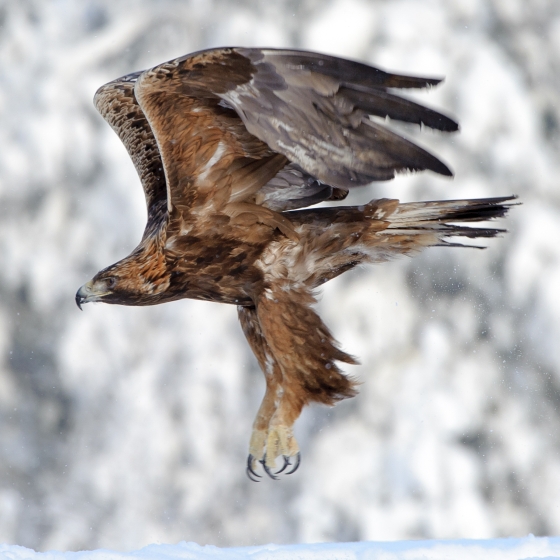
These majestic birds are restricted to the Scottish highlands and islands, with just a few pairs breeding in southern Scotland and the north of Ireland.
The Golden Eagle population remains broadly stable, despite ongoing persecution, numbering in the range of 400 to 500 breeding pairs, with a much small but growing population in Ireland – the result of a successful reintroduction programme.
Our Golden Eagle population appears to be self-contained, with no evidence of interchange with those elsewhere. The European distribution is split into two bands, running east west and associated with the upland regions at the north and south of the Continent.
Key Stats







Identification
ID Videos
This section features BTO training videos headlining this species, or featuring it as a potential confusion species.
Eagles
Songs and Calls
Call:
Alarm call:
Begging call:
Status and Trends
Conservation Status
Population Change
This species is monitored by intermittent single species surveys. The most recent of these in 2015 produced an estimate of 508 breeding pairs and suggested that numbers had increased slightly over a 33 year period (+16%) (Hayhow et al. 2017).
Distribution
Golden Eagles are found throughout the Scottish Highlands and on most Hebridean islands.
Occupied 10-km squares in UK
2007/08–10/11
or view it on Bird Atlas Mapstore.
2008–11
or view it on Bird Atlas Mapstore.
European Distribution Map
Distribution Change
Change in occupied 10-km squares in the UK
from 1981–84 to 2007–11
or view it on Bird Atlas Mapstore.
from 1968–72 to 2008–11
or view it on Bird Atlas Mapstore.
Seasonality
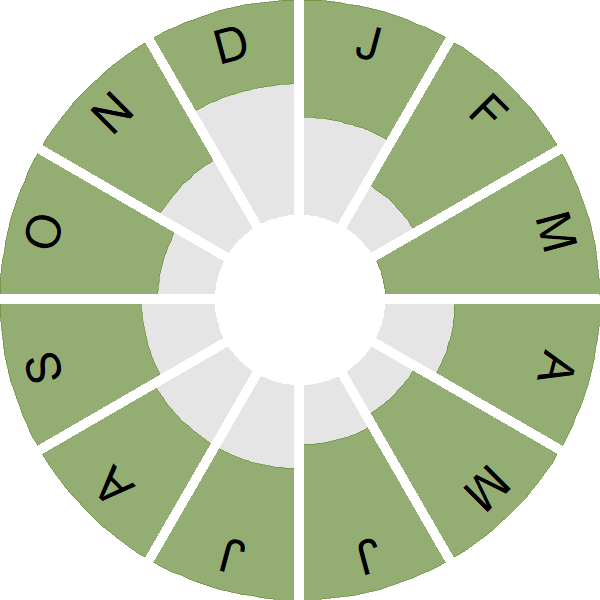
Golden Eagles are present year-round in northern strongholds.
Weekly pattern of occurrence
The graph shows when the species is present in the UK, with taller bars indicating a higher likelihood of encountering the species in appropriate regions and habitats.

Movement
Britain & Ireland movement
Foreign locations of birds ringed or recovered in Britain & Ireland
Dots show the foreign destinations of birds ringed in Britain & Ireland, and the origins of birds ringed overseas that were subsequently recaptured, resighted or found dead in Britain & Ireland. Dot colours indicate the time of year that the species was present at the location.
- Winter (Nov-Feb)
- Spring (Mar-Apr)
- Summer (May-Jul)
- Autumn (Aug-Oct)

European movements
EuroBirdPortal uses birdwatcher's records, such as those logged in BirdTrack to map the flows of birds as they arrive and depart Europe. See maps for this species here.
The Eurasian-African Migration Atlas shows movements of individual birds ringed or recovered in Europe. See maps for this species here.
Biology
Productivity and Nesting
Nesting timing
Egg measurements
Clutch Size
Survival and Longevity
Survival is shown as the proportion of birds surviving from one year to the next and is derived from bird ringing data. It can also be used to estimate how long birds typically live.
View number ringed each year in the Online Ringing Report.
Lifespan
Survival of adults
Survival of juveniles
Biometrics
Wing length and body weights are from live birds (source).
Ring Size
Classification, names and codes
Classification and Codes
- Order: Accipitriformes
- Family: Accipitridae
- Scientific name: Aquila chrysaetos
- Authority: Linnaeus, 1758
- BTO 2-letter code: EA
- BTO 5-letter code: GOLEA
- Euring code number: 2960
Alternate species names
- Catalan: àguila daurada
- Czech: orel skalní
- Danish: Kongeørn
- Dutch: Steenarend
- Estonian: kaljukotkas e. maakotkas
- Finnish: maakotka
- French: Aigle royal
- Gaelic: Iolaire-bhuidhe
- German: Steinadler
- Hungarian: szirti sas
- Icelandic: Gullörn
- Irish: Iolar Fíréan
- Italian: Aquila reale
- Latvian: klinšu erglis
- Lithuanian: kilnusis erelis
- Norwegian: Kongeørn
- Polish: orzel przedni
- Portuguese: águia-real
- Slovak: orol skalný
- Slovenian: planinski orel
- Spanish: Águila real
- Swedish: kungsörn
- Welsh: Eryr Euraid
- English folkname(s): Erne
Research
Causes of Change and Solutions
Causes of change
The increases in Golden Eagle numbers have been attributed to reduced persecution following improved legal protection and increased monitoring, but persecution may still be limiting on the population in the central and eastern Highlands (Hayhow et al. 2017). The key recent constraint on populations has been persecution associated with grouse moor management (Whitfield et al. 2004, 2006). A limited number of territories may have been abandoned due to the planting of conifer forests but there is no strong evidence to suggest that recreational disturbance or changes in carrion abundance drive population changes (Whitfield et al. 2007).
Publications (2)
Reduced breeding success consistent with effects of high pathogenicity avian influenza (HPAI) on raptors in Scotland in 2022
Author:
Published: 2025
28.04.25
Papers
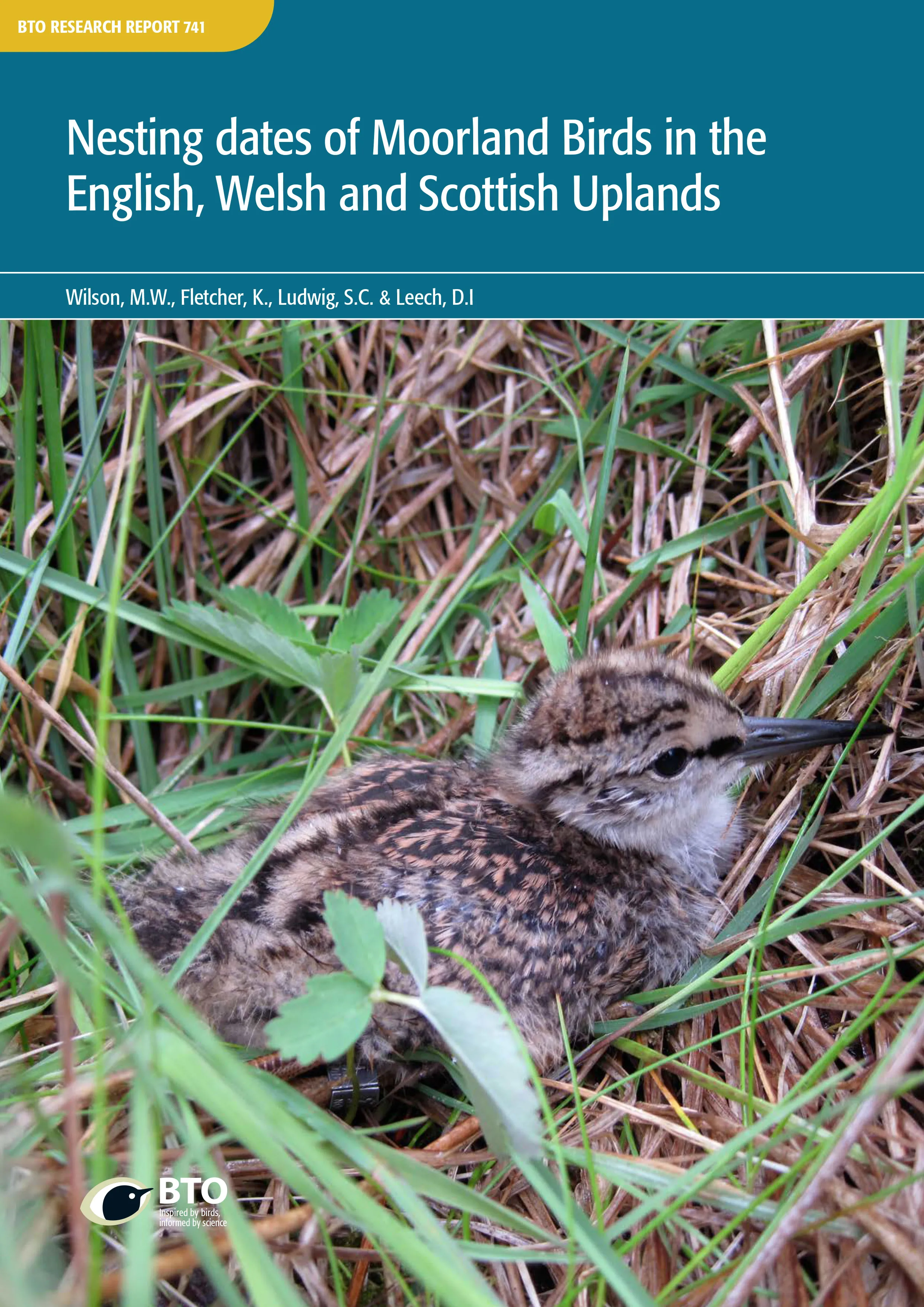
Nesting dates of Moorland Birds in the English, Welsh and Scottish Uplands
Author:
Published: 2022
Rotational burning of vegetation is a common form of land management in UK upland habitats, and is restricted to the colder half of the year, with the time period during which burning may be carried out in upland areas varying between countries. In England and Scotland, this period runs from the 1st October to 15th April, but in the latter jurisdiction, permission can be granted to extend the burning season to 30th April. In Wales, this period runs from 1st October to 31st March. This report sets out timing of breeding information for upland birds in England, Scotland and Wales, to assess whether rotational burning poses a threat to populations of these species, and the extent to which any such threat varies in space and time.
17.02.22
BTO Research Reports
More Evidence
More evidence from Conservation Evidence.com
Partners




Citing BirdFacts
If you wish to cite particular content in this page (e.g. a specific value) it is best to use the original sources as linked in the page. For a more general citation of the whole page please use: BTO (20XX) BirdFacts Species: profiles of birds occurring in the United Kingdom. BTO, Thetford (www.bto.org/birdfacts, accessed on xx/xx/xxxx).