Fulmar
Introduction
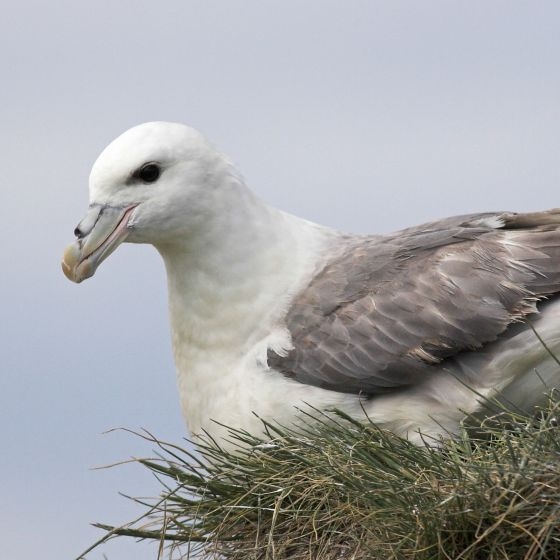
This robust-looking seabird breeds around the coasts of Scotland, Ireland, Wales, and the south-west and north-east of England, but may be encountered more widely around our shores outside of the breeding season.
Fulmar has a remarkable breeding history, its North Atlantic population originally restricted to St Kilda and an island off the coast of Iceland. The last 250 years have seen a remarkable expansion in Fulmar populations and the colonisation of suitable sites around Iceland, Britain, Ireland, northwest France and sections of the Norwegian coast. The reasons for the expansion are unclear.
Young Fulmars spend their first four or five years at sea, before visiting the colonies at which they will then breed. Even then, they will not breed themselves until they are nine years of age and reach sexual maturity.
Key Stats






Identification
Songs and Calls
Call:
Status and Trends
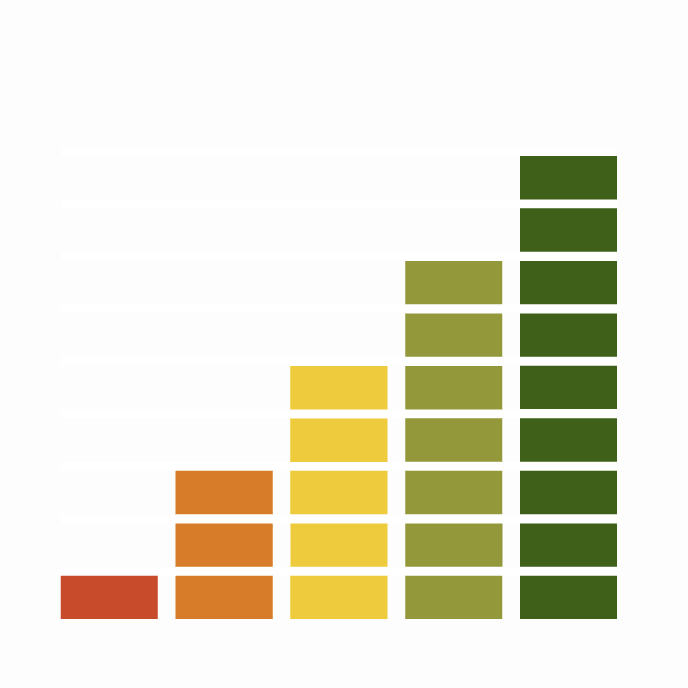
Conservation Status
Population Change
The Fulmar is monitored by Seabird Censuses and by the Seabird Monitoring Programme, with sufficient colonies monitored to produce annual trends since 1985; The population increased by 77% between the 1969–70 and 1985–88 Censuses and remained relatively stable until the early 2000s. Numbers have since declined slightly but remain above the level in 1969–70 (JNCC 2022). The Atlas maps show very little change, with a small expansion in range between 1968–72 and 1988–91 being followed by a slight contraction to 2007–11.
Distribution
Fulmars breed around almost the entire coastline of Scotland, Wales and Ireland, and in the southwest and northeast of England. They are absent from long stretches of the east and southeast coasts of England, reflecting the limited availability of suitable seacliffs for nesting. In winter, some of these gaps are filled, indicating that Fulmars disperse more widely outside the breeding season.
Occupied 10-km squares in UK
2007/08–10/11
or view it on Bird Atlas Mapstore.
2008–11
or view it on Bird Atlas Mapstore.
European Distribution Map
Distribution Change
There have been small changes in breeding distribution.
Change in occupied 10-km squares in the UK
from 1981–84 to 2007–11
or view it on Bird Atlas Mapstore.
from 1968–72 to 2008–11
or view it on Bird Atlas Mapstore.
Seasonality
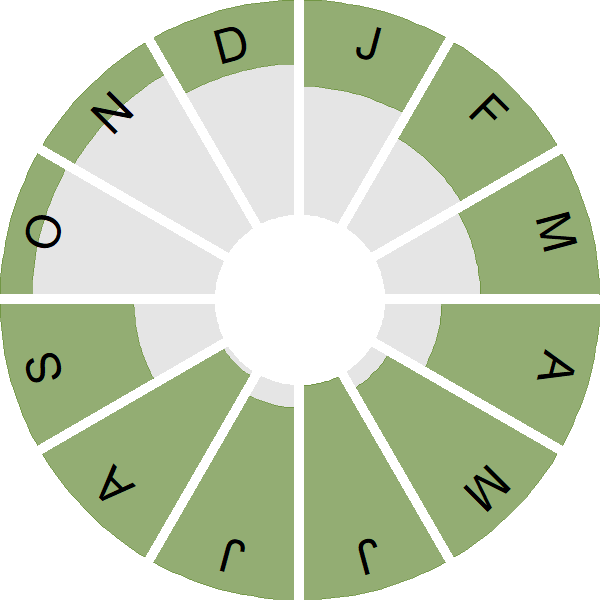
Fulmars are present year-round, most often recorded in the breeding season until the abrupt departure of the majority of birds in September, whereafter scarce.
Weekly pattern of occurrence
The graph shows when the species is present in the UK, with taller bars indicating a higher likelihood of encountering the species in appropriate regions and habitats.

Movement
Britain & Ireland movement
Foreign locations of birds ringed or recovered in Britain & Ireland
Dots show the foreign destinations of birds ringed in Britain & Ireland, and the origins of birds ringed overseas that were subsequently recaptured, resighted or found dead in Britain & Ireland. Dot colours indicate the time of year that the species was present at the location.
- Winter (Nov-Feb)
- Spring (Mar-Apr)
- Summer (May-Jul)
- Autumn (Aug-Oct)

European movements
EuroBirdPortal uses birdwatcher's records, such as those logged in BirdTrack to map the flows of birds as they arrive and depart Europe. See maps for this species here.
The Eurasian-African Migration Atlas shows movements of individual birds ringed or recovered in Europe. See maps for this species here.
Biology
Productivity and Nesting
Nesting timing
Egg measurements
Clutch Size
Survival and Longevity
Survival is shown as the proportion of birds surviving from one year to the next and is derived from bird ringing data. It can also be used to estimate how long birds typically live.
View number ringed each year in the Online Ringing Report.
Lifespan
Survival of adults
Biometrics
Wing length and body weights are from live birds (source).
Wing length
Body weight
Ring Size
Classification, names and codes
Classification and Codes
- Order: Procellariiformes
- Family: Procellariidae
- Scientific name: Fulmarus glacialis
- Authority: Linnaeus, 1761
- BTO 2-letter code: F.
- BTO 5-letter code: FULMA
- Euring code number: 220
Alternate species names
- Catalan: fulmar boreal
- Czech: burnák lední
- Danish: Mallemuk
- Dutch: Noordse Stormvogel
- Estonian: jää-tormilind
- Finnish: myrskylintu
- French: Fulmar boréal
- Gaelic: Eun-crom
- German: Eissturmvogel
- Hungarian: északi sirályhojsza
- Icelandic: Fýll
- Irish: Fulmaire
- Italian: Fulmaro
- Latvian: kilde
- Lithuanian: šiaurinis fulmaras
- Norwegian: Havhest
- Polish: fulmar (zwyczajny)
- Portuguese: pombalete
- Slovak: fulmar ladový
- Slovenian: ledni viharnik
- Spanish: Fulmar boreal
- Swedish: stormfågel
- Welsh: Aderyn Drycin y Graig
Research
Causes of Change and Solutions
Causes of change
The reasons behind changes in the Fulmar population are uncertain, but changes in the supply of food by man, e.g. discards from fishing vessels, have been suggested as a possible driver of the increases in the population until the late 1980s (JNCC 2022) and similarly the more recent slight decline may have been influenced by a reduction in the amount of discards (Bicknell et al. 2013). Data from two colonies (one in Scotland and one in Ireland) suggest that there may have been a decline in survival over the period 1974 to 2009 (Cordes et al. 2015); the reasons for this are unclear but this could be a potential consequence from reductions in prey populations and bycatch from fisheries .
Publications (8)
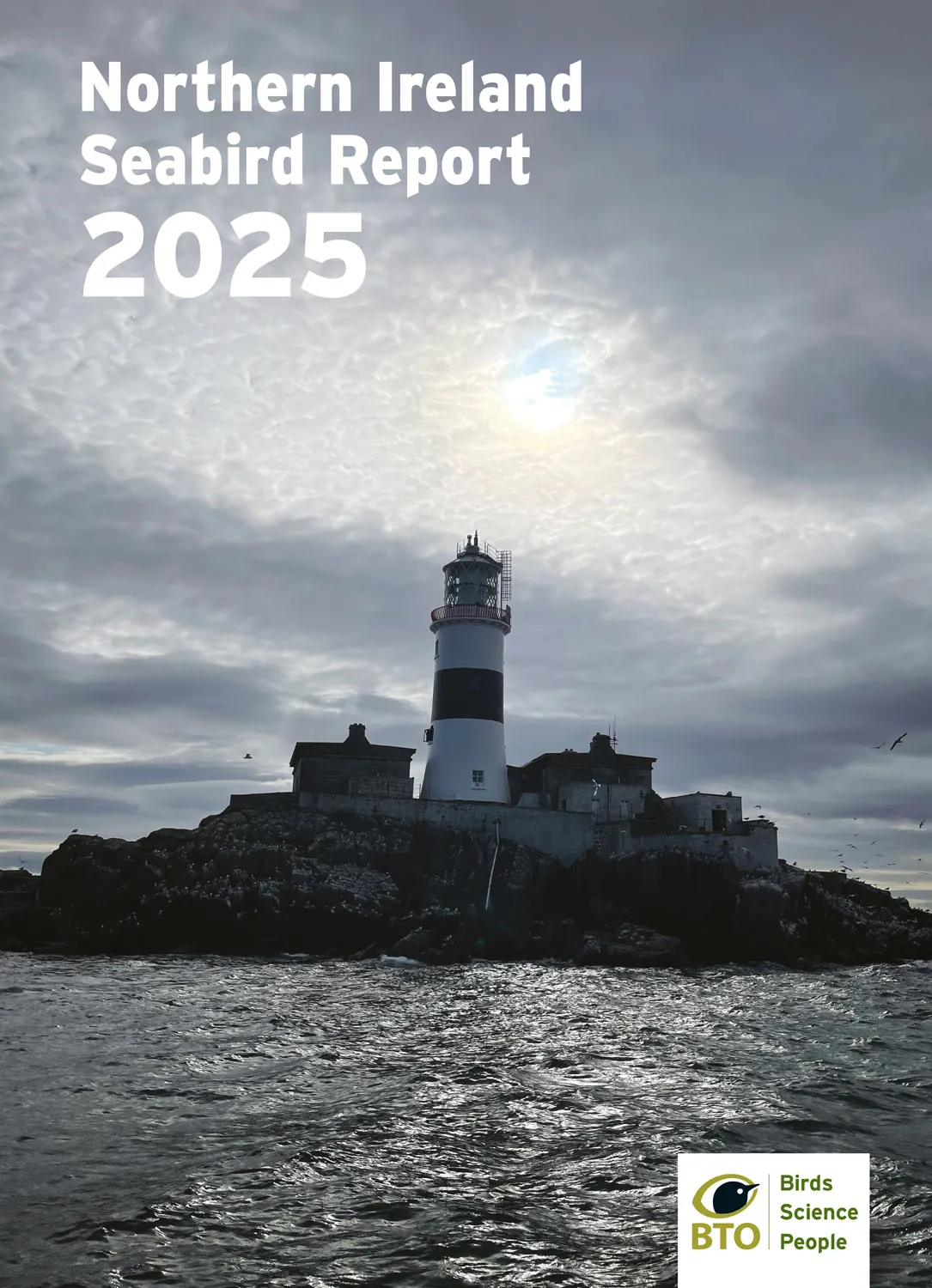
Northern Ireland Seabird Report 2025
Author:
Published: 2026
This report is the published outcome of the work of the Northern Ireland Seabird Network — a network of volunteers, researchers and organisations — coordinated by the BTO Seabird Coordinator, and funded by NIEA. It contains detailed species accounts for the 22 breeding seabird species in Northern Ireland, as well as articles on a range of topics: Manx Shearwaters nesting on Rathlin Rathlin Island Breeding Seabird Census 2025 Tracking Lesser Black-backed Gulls on Lough Neagh Puffins return to Isle of Muck Outer Ards: 2025 Seabird Nesting Report Strangford Lough: 2025 Seabird Nesting Report Forthcoming seabird research work: ACCLIMATISE project
26.03.26
Reports Northern Ireland Seabird Report
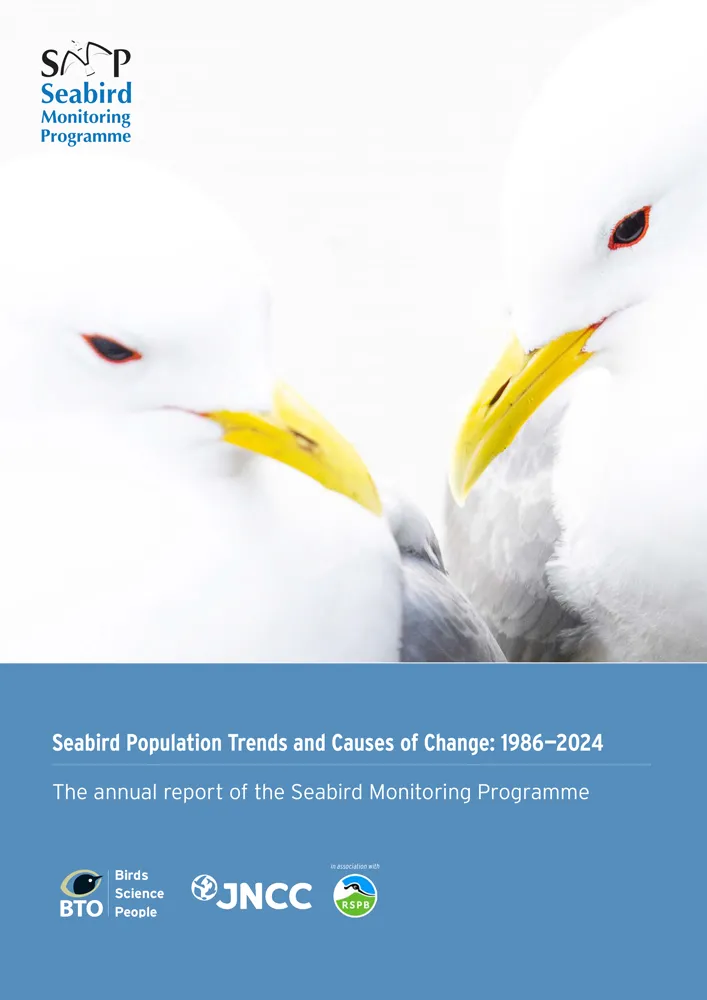
Seabird Population Trends and Causes of Change: 1986–2024
Author:
Published: 2026
The annual report of the Seabird Monitoring Programme View and download the report Read the report online This report presents the latest seabird population trends in breeding abundance and productivity using data from the Seabird Monitoring Programme (SMP). It documents changes in the abundance and productivity of breeding seabird species in Britain and Ireland from 1986 to 2024. This report includes both inland and coastal populations and trends from the Channel Islands, England, Isle of Man, Northern Ireland, Scotland, Wales and the Republic of Ireland, which are presented where sufficient data are available. The results from this report are used more broadly to assess the health of the wider environment, to inform policy and for conservation action.
19.03.26
Reports SMP Report
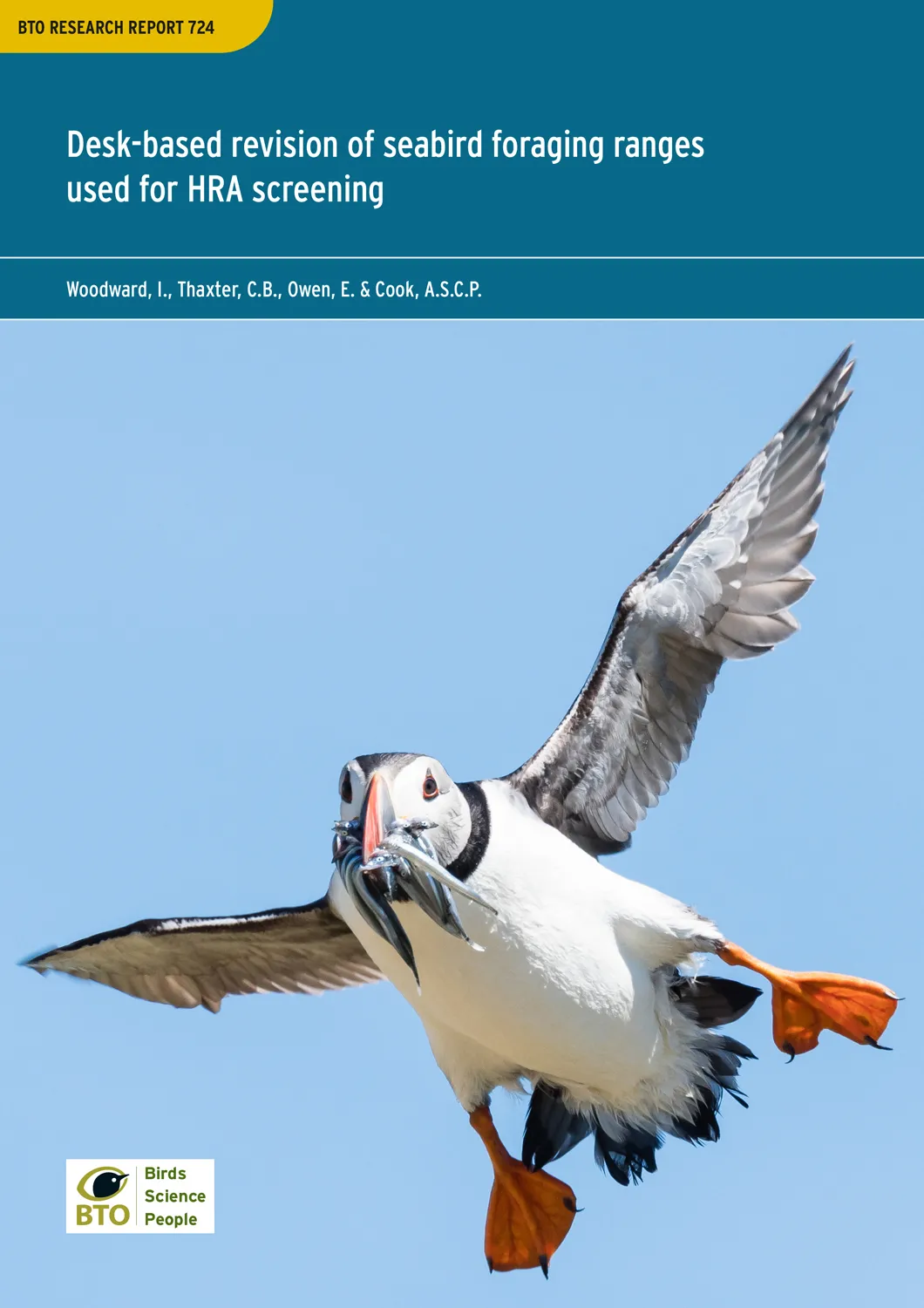
Desk-based revision of seabird foraging ranges used for HRA screening
Author:
Published: 2019
A key step in understanding the possible impacts of a proposed windfarm development is to identify potential interactions between seabird breeding colonies and the proposed development areas. Such interactions are typically assessed using generic information on foraging ranges, derived from academic studies. This report uses the latest data to provide updated estimates of foraging range, which will help to ensure that the best available information is available when new developments are being considered.
01.12.19
BTO Research Reports
The status of the UK’s breeding seabirds
Author:
Published: 2024
Five seabird species are added to the Birds of Conservation Concern Red List in this addendum to the 2021 update, bringing the total number of Red-listed seabird species to 10, up from six since seabirds were last assessed. The Amber List of seabirds moves from 19 to 14 species, and the Green List increases from one to two species.
29.09.24
Papers
Seabird Population Trends and Causes of Change: 1986–2023
Author:
Published: 2024
This report presents the latest seabird population trends in breeding abundance and productivity using data from the Seabird Monitoring Programme (SMP).The report documents changes in the abundance and productivity of breeding seabird species in Britain and Ireland from 1986 to 2023, and provides a detailed account of the 2021, 2022 and 2023 breeding seasons. This report includes both inland and coastal populations and trends from the Channel Islands, England, Isle of Man, Northern Ireland, Scotland, Wales and the Republic of Ireland, which are presented where sufficient data are available. The results from this report are used more broadly to assess the health of the wider environment, to inform policy and for conservation action.
21.11.24
Reports SMP Report
Northern Ireland Seabird Report 2023
Author:
Published: 2024
The report includes detailed information about the population trends and breeding success of seabirds in Northern Ireland, over the 2023 breeding season. Notably, Fulmar and Kittiwake populations are reported to be experiencing continued declines, while Guillemot, Common Gull and Herring Gull populations show increases at most breeding sites. Low productivity was reported in Black-headed Gulls, Sandwich Terns and Common Terns, likely due to the impacts of highly pathogenic avian influenza (HPAI). Although Black-headed Gulls make up the majority of confirmed HPAI mortality cases in Northern Ireland in 2023, other birds significantly affected include terns, Kittiwakes and auks. A contributor report about HPAI in Northern Ireland by Ronan Owens (Higher Scientific Officer, DAERA, NIEA) details developments in environmental organisations’ responses to HPAI in 2023, including cross-sector communication, improved surveillance and monitoring of HPAI impacts, and improved online systems for the public to report dead birds. Monitoring reports for Strangford Lough and the Outer Ards are included, as well as several additional contributor articles: Copeland gull censuses, by Roisin Kearney (Assistant Conservation Officer, RSPB). The Copeland Islands host one of the largest mixed gull colonies in Northern Ireland, with significant numbers of Lesser Black-backed Gulls and Herring Gulls. The annual gull census was established in 2018; the article details the refinement of the methodology to date as well as the census results so far. Manx Shearwater tracking, by Patrick Lewin (DPhil Student, OxNav, Dept. of Biology, University of Oxford). Tracking the Manx Shearwaters that breed on Lighthouse Island (one of the three Copeland Islands) began in 2007. The article describes the history of tracking Manx Shearwaters from Copeland, including recent advances in technology that have allowed the tracking of fledgling birds as well as adults of breeding age, and the impact of this research on the conservation of shearwaters. Puffin surveys on Rathlin, by Ric Else (Life RAFT Senior Research Assistant, RSPB). Rathlin Island hosts Northern Ireland’s largest seabird colony. The response of seabirds to the removal of introduced Ferrets and Brown Rats from Rathlin is currently being monitored, with a particular focus on Puffins. These birds are especially vulnerable to mammalian predators because of their burrow nests. The article describes the challenges associated with calculating a population estimate, monitoring productivity and mapping the distribution of this species, and how these are being addressed in seabird surveys on Rathlin.
15.04.24
Reports Northern Ireland Seabird Report
Seabird abundances projected to decline in response to climate change in Britain and Ireland
Author:
Published: 2023
Britain and Ireland support globally-important numbers of breeding seabirds, but these populations are under pressure from a suite of threats, including marine pollution, habitat loss, overfishing and highly pathogenic avian influenza. Climate change introduces additional threats, the magnitude of which is uncertain in the future, making it difficult to plan how to apportion conservation efforts between seabird species. Predicting how species’ numbers could change under different climate change scenarios helps clarify their future vulnerability to extinction, and thus assists in conservation planning.
05.12.23
Papers
Seabird foraging ranges as a preliminary tool for identifying candidate Marine Protected Areas
Author:
Published: 2012
The UK government is committed to establishing an ecologically coherent network of Marine Protected Areas (MPAs) to manage and conserve marine ecosystems. Seabirds are vital to such ecosystems, but until now these species have received little protection at sea. This is partly because there is scant information available on the oceanic regions they use at the different stages of their lifecycle. A new study led by the BTO, in partnership with the RSPB and Birdlife International, has sought to address this by bringing together work on how far UK-breeding seabirds travel from their colonies (typically in search of food for themselves or their chicks) during the breeding season. This study used results from tracking, indirect measures and survey-based observations of seabird movements to calculate ranges over which seabirds might forage. It also assessed the validity of these ranges based on the quality of the methods underpinning them. Manx Shearwater, Northern Gannet and Northern Fulmar had the largest maximum foraging ranges at 330, 590 and 580 km respectively, while Red-throated Diver (9 km) and Little Tern (11 km) had the smallest. The approach taken in this study can be used as a first step in identifying areas of ocean away from breeding colonies that may be crucial for sustaining seabirds. Further work would then be then required to firm up the boundaries of specific MPAs. This approach is however, relatively cheap and simple, and could easily be adopted outside the UK to become an important tool in protecting seabird habitat globally.
01.01.12
Papers
More Evidence
More evidence from Conservation Evidence.com
Partners

Citing BirdFacts
If you wish to cite particular content in this page (e.g. a specific value) it is best to use the original sources as linked in the page. For a more general citation of the whole page please use: BTO (20XX) BirdFacts Species: profiles of birds occurring in the United Kingdom. BTO, Thetford (www.bto.org/birdfacts, accessed on xx/xx/xxxx).