Eastern Black-eared Wheatear

Introduction
Recently separated as a species from the western form, this is an extremely rare spring visitor, with birds returning from their east African wintering grounds presumably overshooting their south-east European breeding sites.
Key Stats






Status and Trends
Conservation Status
Population Size
Population Change
Population trends of this scarce species are not routinely monitored.
Distribution
This vagrant is too rarely reported to map distribution.
Distribution Change
This vagrant is too rarely reported to map distribution change.
Seasonality
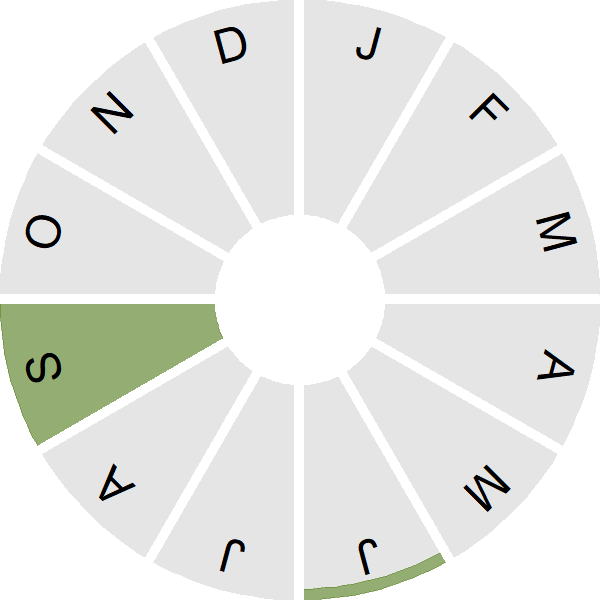
Eastern Black-eared Wheatear is a very rare vagrant.
Weekly pattern of occurrence
The graph shows when the species is present in the UK, with taller bars indicating a higher likelihood of encountering the species in appropriate regions and habitats.

Movement
Britain & Ireland movement
Biology
Survival and Longevity
Survival is shown as the proportion of birds surviving from one year to the next and is derived from bird ringing data. It can also be used to estimate how long birds typically live.
Classification, names and codes
Classification and Codes
- Order: Passeriformes
- Family: Muscicapidae
- Scientific name: Oenanthe melanoleuca
- Authority: Güldenstädt, 1775
- BTO 5-letter code: EBEWH
- Euring code number: 11482
Alternate species names
- Dutch: Oostelijke Blonde Tapuit
- French: Traquet noir et blanc
- German: Mittelmeer-Steinschmätzer
- Italian: Monachella orientale
More Evidence
More evidence from Conservation Evidence.com
Partners




Citing BirdFacts
If you wish to cite particular content in this page (e.g. a specific value) it is best to use the original sources as linked in the page. For a more general citation of the whole page please use: BTO (20XX) BirdFacts Species: profiles of birds occurring in the United Kingdom. BTO, Thetford (www.bto.org/birdfacts, accessed on xx/xx/xxxx).