Please note: this project is now complete. Thank you to everyone who took part.
The Winter Gull Survey (WinGS) was a long-running monitoring programme which has taken place approximately every ten years since 1953. The project’s overarching aim was to provide robust information on the numbers and distributions of wintering gulls, many of which were/are Amber- or Red-listed, and to inform their conservation.
History of the Winter Gull Survey
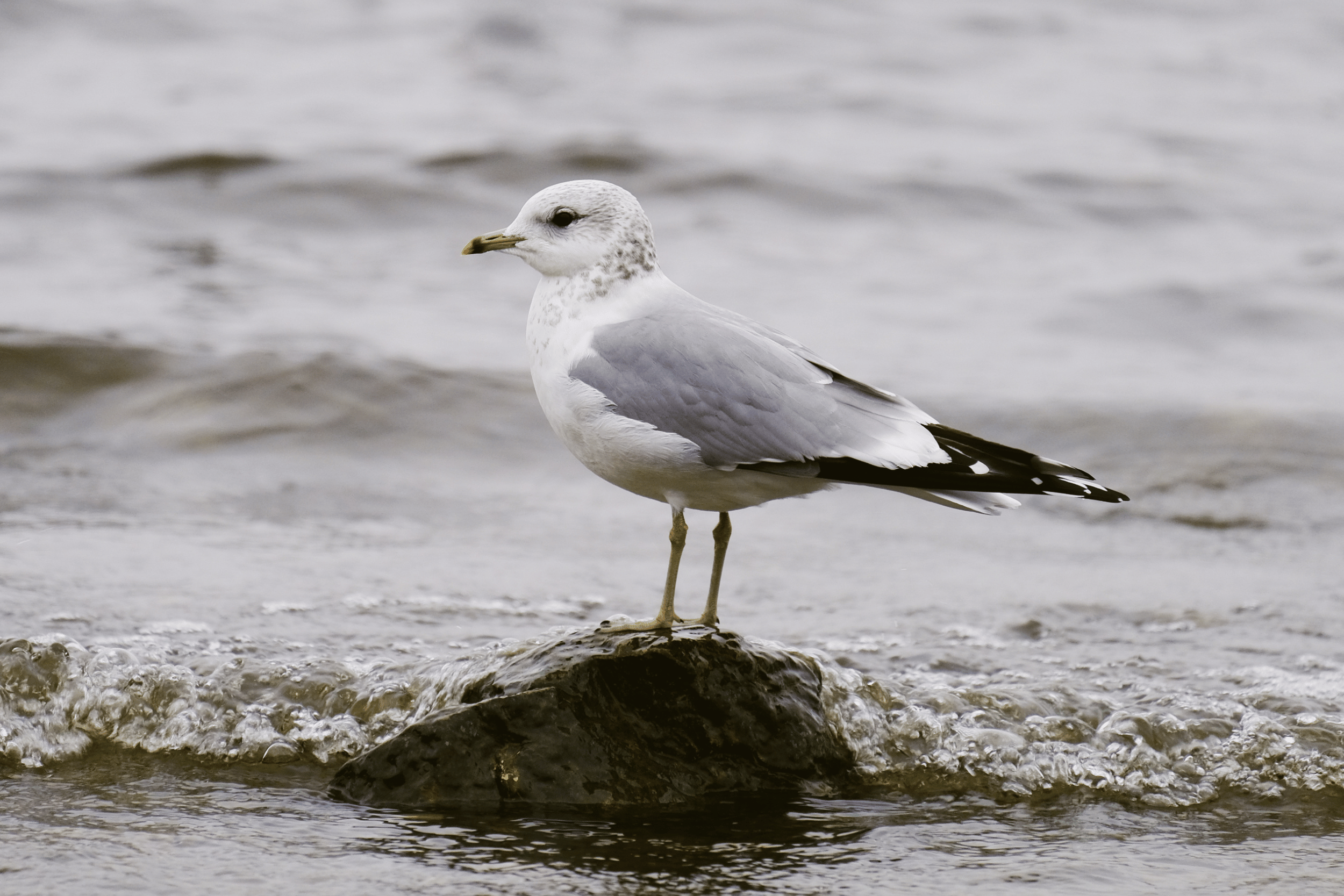 BTO carried out the first Winter Gull Survey (WinGS) in the winter of 1952/53, to collect data on wintering gull populations in the UK. Since then, the survey has been carried out around every 10 years. The most recent WinGS ran over the winters of 2023/24 and 2024/25, to collect up-to-date information about the six most common gull species in the UK in winter. In 2024, WinGS also collected data during the autumn, which is a new aspect of the survey compared to previous years.
Aims of the Winter Gull Survey
The project’s overarching aim is to provide updated information on the numbers and distributions of wintering gulls in the UK, its constituent countries, the Channel Islands and the Isle of Man.
The most recent WinGS focused on the six most numerous and widespread gull species in the UK during the winter months: Black-headed Gull, Mediterranean Gull, Common Gull, Herring Gull, Lesser Black-backed Gull and Great Black-backed Gull.
Information collected in the latest surveys will start to fill the gaps in our knowledge which have developed since previous survey 20 years before. This is particularly important given that gulls have been impacted by the ongoing outbreak of highly pathogenic avian influenza (HPAI), and we are still seeking to understand the full implications of this.
The updated information will help our scientists to:
- Understand how wintering populations of gulls have changed over the last 20 years
- Identify key autumn and wintering sites for these species, and inform their conservation
- Determine how gulls have been impacted by HPAI.

Core data collected by Winter Gull Survey counts
The 2023–2025 WinGS involved one core count in January 2024 or 2025, at known major – ‘key’ – roost sites, most of which were also covered by previous surveys. Key roost sites included large estuaries, lakes and reservoirs.
Gulls were counted as they arrived to roost at dusk, and volunteers (often working as part of a team) recorded the six most common gull species in the UK (Black-headed Gull, Common Gull, Mediterranean Gull, Lesser Black-backed Gull, Herring Gull and Great Black-backed Gull) as well as less numerous gull species.
In order to generate complete population estimates, additional visits to sample stretches of coastline and sample inland squares were also be carried out to understand numbers and distributions outwith key sites.
Funding organisations
The Winter Gull Survey is supported by Defra, Country Nature Conservation Agencies and BTO.
Get in touch
Email us
Would you like to find out more about WinGS?
Drop us a line: wings@bto.org