Goldcrest
Introduction
Widely distributed throughout Britain & Ireland, this tiny songbird vies with the closely-related Firecrest for the title of our smallest breeding bird.
Being so small (5-6 g), Goldcrests are vulnerable in cold weather, and as such numbers fluctuate depending on the harshness of the seasons. In winter, the resident Goldcrest population is bolstered by arrivals from Fennoscandia, and impressive numbers can sometimes be found on the east coast in the autumn, recovering in the dunes after their long flight across the North Sea.
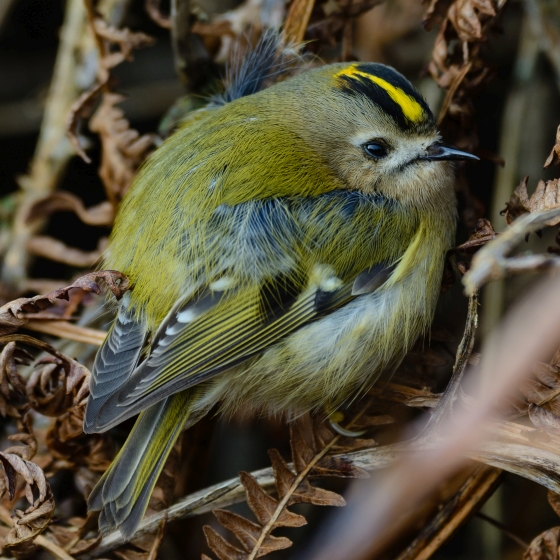
Despite their small size, female Goldcrests can lay up to 12 eggs in a clutch (one and a half times an adult's bodyweight). Goldcrests have an overall olive appearance, with their eponymous stripe on the top of their heads, which is more orange in males and yellow in females. Goldcrests can often be seen searching trees, especially conifers, for small invertebrate prey. Their high-pitched, repetitive song can also be a good way to find one.
- Our Trends Explorer gives you the latest insight into how this species' population is changing.
Key Stats








Identification
ID Videos
This section features BTO training videos headlining this species, or featuring it as a potential confusion species.
Goldcrest & Firecrest
#BirdSongBasics: Goldcrest and Treecreeper
Songs and Calls
Song:
Call:
Begging call:
Status and Trends
Conservation Status
Population Change
Goldcrest abundance is affected unusually severely by winter weather, and the strong increase in the species' CBC/BBS index up to the mid 1970s can be interpreted as recovery from the cold winters of the early 1960s. The subsequent decline temporarily moved the species to the amber list, but its status has now been restored to green. The long-term trend looks very much like a series of damped oscillations following recovery from the 1962/63 winter. BBS has recorded some initial increase in all UK countries, followed by a long decline that ended around 2010, although a further decline has occurred in Wales since 2015 and the overall decline in Wales from 1995-2018 is of sufficient magnitude to trigger a higher level alert. The BBS map of change in relative density between 1994-96 and 2007-09 indicates that decrease occurred over that period in southwestern England, Wales and Caithness but that increases occurred elsewhere, especially in Northern Ireland and western Scotland. There has been a decline across Europe since 1980 (PECBMS: PECBMS 2020a>).
Distribution
Winter and breeding-season distributions of the Goldcrest are similar with birds found in 90% of 10-km squares in winter and 88% of squares in the breeding season. The main gaps in distribution occur in the treeless landscapes of the Scottish Highlands, Outer Hebrides, Northern Isles and the Fens in England. The highest densities in both seasons are found in Ireland.
Occupied 10-km squares in UK
2007/08–10/11
or view it on Bird Atlas Mapstore.
2008–11
or view it on Bird Atlas Mapstore.
European Distribution Map
Distribution Change
Modest gains in the number of occupied 10-km squares have been recorded in both winter and the breeding season.
Change in occupied 10-km squares in the UK
from 1981–84 to 2007–11
or view it on Bird Atlas Mapstore.
from 1968–72 to 2008–11
or view it on Bird Atlas Mapstore.
Seasonality
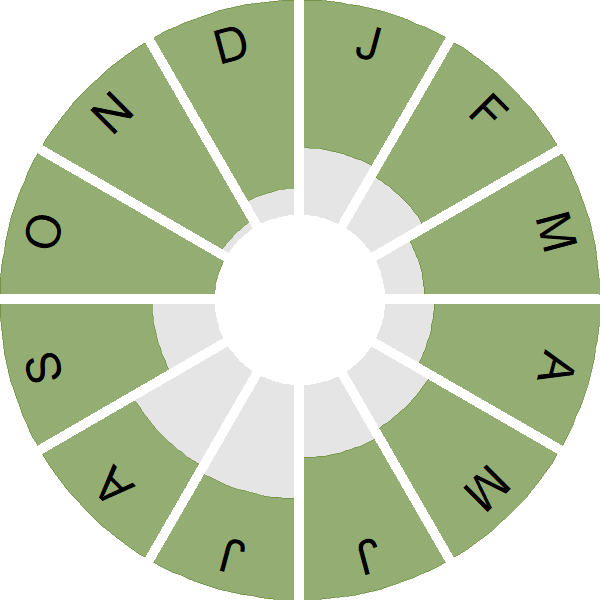
Goldcrest is recorded year-round on around 15% of complete lists, increasing to almost 30% in autumn when there is a large arrival of birds from the continent.
Weekly pattern of occurrence
The graph shows when the species is present in the UK, with taller bars indicating a higher likelihood of encountering the species in appropriate regions and habitats.

Habitats
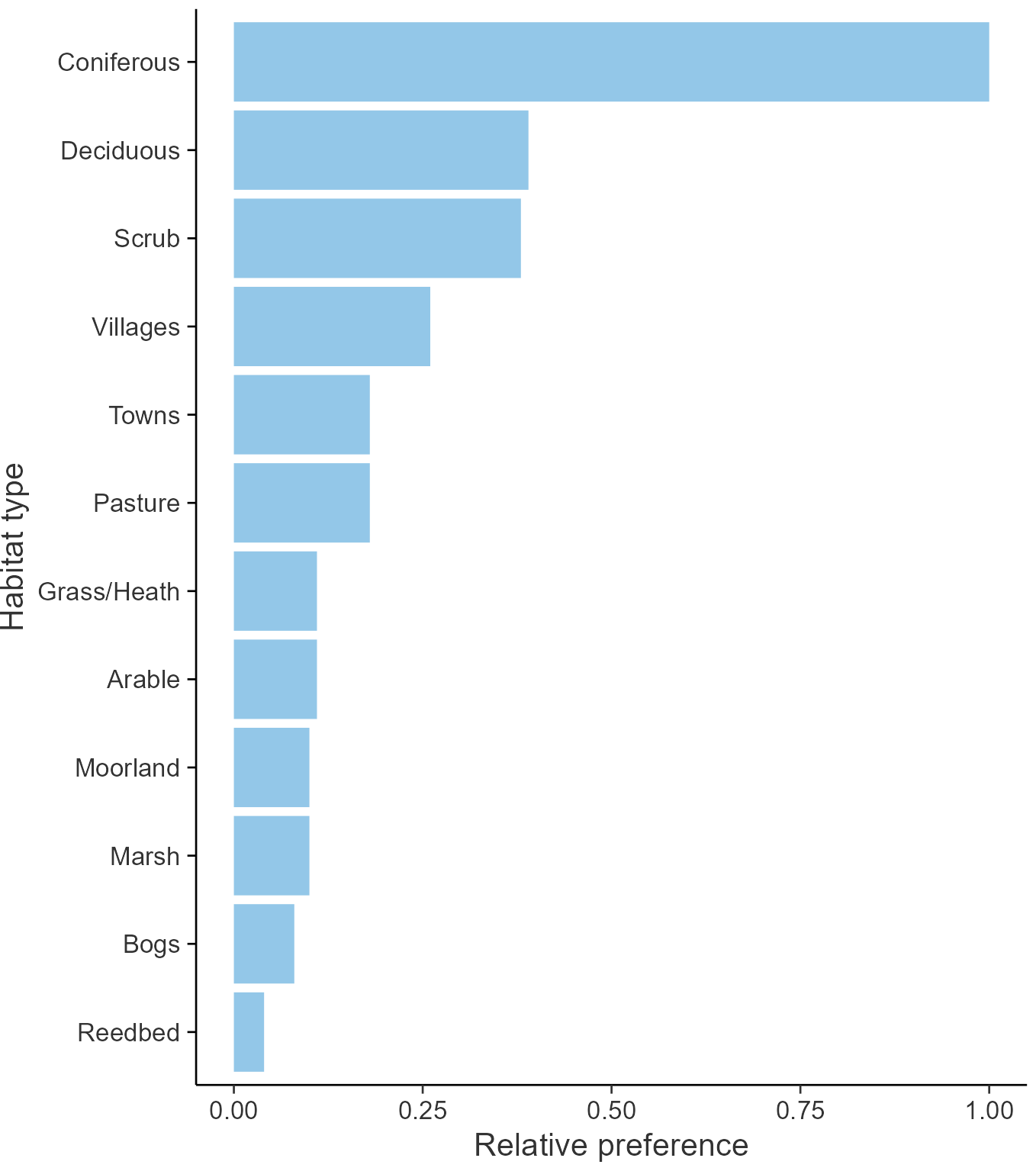
Breeding season habitats
Relative frequency by habitat
The graph shows the habitats occupied in the breeding season, with the most utilised habitats shown at the top. Bars of similar size indicate the species is equally likely to be recorded in those habitats.
Movement
Britain & Ireland movement
Foreign locations of birds ringed or recovered in Britain & Ireland
Dots show the foreign destinations of birds ringed in Britain & Ireland, and the origins of birds ringed overseas that were subsequently recaptured, resighted or found dead in Britain & Ireland. Dot colours indicate the time of year that the species was present at the location.
- Winter (Nov-Feb)
- Spring (Mar-Apr)
- Summer (May-Jul)
- Autumn (Aug-Oct)

European movements
EuroBirdPortal uses birdwatcher's records, such as those logged in BirdTrack to map the flows of birds as they arrive and depart Europe. See maps for this species here.
The Eurasian-African Migration Atlas shows movements of individual birds ringed or recovered in Europe. See maps for this species here.
Biology
Productivity and Nesting
Nesting timing
Egg measurements
Clutch Size
Incubation
Fledging
Survival and Longevity
Survival is shown as the proportion of birds surviving from one year to the next and is derived from bird ringing data. It can also be used to estimate how long birds typically live.
View number ringed each year in the Online Ringing Report.
Lifespan
Survival of adults
Biometrics
Wing length and body weights are from live birds (source).
Wing length
Body weight
Ring Size
Classification, names and codes
Classification and Codes
- Order: Passeriformes
- Family: Regulidae
- Scientific name: Regulus regulus
- Authority: Linnaeus, 1758
- BTO 2-letter code: GC
- BTO 5-letter code: GOLDC
- Euring code number: 13140
Alternate species names
- Catalan: reietó eurasiàtic
- Czech: králícek obecný
- Danish: Fuglekonge
- Dutch: Goudhaan
- Estonian: pöialpoiss
- Finnish: hippiäinen
- French: Roitelet huppé
- Gaelic: Crìonag-bhuidhe
- German: Wintergoldhähnchen
- Hungarian: sárgafeju királyka
- Icelandic: Glókollur
- Irish: Cíorbhuí
- Italian: Regolo
- Latvian: zeltgalvitis
- Lithuanian: paprastasis nykštukas
- Norwegian: Fuglekonge
- Polish: mysikrólik (zwyczajny)
- Portuguese: estrelinha-de-poupa
- Slovak: králik zlatohlavý
- Slovenian: rumenoglavi kraljicek
- Spanish: Reyezuelo sencillo
- Swedish: kungsfågel
- Welsh: Dryw Eurben
Research
Causes of Change and Solutions
Causes of change
Severe weather is likely to have caused wide short-term variability in abundance, but there is little good evidence available regarding the drivers of the longer-term breeding population change in this species in the UK, although
Further information on causes of change
The high amplitude of year-to-year change reflects the species' high breeding potential, and its sensitivity to cold winter weather. Modelling suggests that climate change may have had a positive impact on the long-term trend for this species (Pearce-Higgins & Crick 2019). CBC had relatively poor coverage of conifer plantations, in which Goldcrests occur at increasing densities as the trees mature. A general increase in the area of prime habitat has therefore been poorly reflected in the long-term trend.
Information about conservation actions
Annual changes in Goldcrest abundance are probably driven mainly by winter weather and hence specific conservation options for this species may be limited. Numbers may increase in the future due to warming from climate change, although this is uncertain as the effects of climate change could include increased frequency of severe weather events.
Publications (1)
Birds of Conservation Concern Wales 4: the population status of birds in Wales
Author: Johnstone, I.G., Hughes, J., Balmer, D.E., Brenchley, A., Facey, R.J., Lindley, P.J., Noble, D.G. & Taylor, R.C.
Published: 2022
The latest review of the conservation status of birds in Wales. The report assessed all 220 bird species which regularly occur in Wales. There are now 60 species of bird on the Red List, with 91 on the Amber List and just 69 - less than a third of the total number of species - on the Green List. The latest review of the conservation status of birds in Wales comes 20 years after the first, when the Red List was less than half the length it is today. The report assessed all 220 bird species which regularly occur in Wales. There are now 60 species of bird on the Red List in Wales, with 91 on the Amber List and 69 on the Green List. The Birds of Conservation Concern in Wales report assesses the status of each species against a set of objective criteria. Data sources include the BTO/JNCC/RSPB Breeding Bird Survey and the BTO/RSPB/JNCC Wetland Bird Survey, as well as Bird Atlases and other BTO-led monitoring schemes and citizen science initiatives. These are used to quantify the changing status of the species’ Welsh population. The UK, European and global conservation status of the species is also considered, placing the Welsh population into a wider context. The Red ListSwift, Greenfinch and Rook – familiar breeding species in steep decline across the UK – are among the new additions to the Welsh Red List, which now also includes Purple Sandpiper, on account of a rapidly shrinking Welsh wintering population, and Leach’s Petrel, an enigmatic seabird in decline across its global range. These species now sit alongside well-known conservation priorities, such as Curlew, Hen Harrier and Turtle Dove as birds at risk of being lost from Wales for good. Uplands and woodlands Many of the species on the Red List are found in upland and farmland habitats. Starling, Tree Sparrow, Yellow Wagtail and Yellowhammer can no longer be found in much of Wales, while iconic species of mountain and moorland, such as Ring Ouzel, Merlin and Black Grouse, remain in serious trouble. Wales is well known for its populations of woodland birds; however, many of these – including Lesser Spotted Woodpecker, Willow Warbler and Spotted Flycatcher – also feature on the Red List. Goldcrest, which has seen its Welsh population shrink alarmingly in recent decades, is another new addition. On the coast The assessment for Birds of Conservation Concern Wales 4 took place before the impacts of avian influenza could be taken into account. Breeding seabird species have been struggling in Wales for many years, however, and most were already of conservation concern before the outbreak of this disease. Kittiwake, Puffin, Black-headed Gull, and Common, Arctic and Sandwich Tern remain on the Red List. Wales holds internationally significant numbers of breeding seabirds, making the decline of these colonies a global concern. The Amber ListDeclines in Wheatear, Garden Warbler and House Martin - all migrants which breed in Europe and winter in sub-Saharan Africa - mean these species have moved from the Green List to the Amber List. Many other ‘Afro-Palearctic' migrant species are also in decline, but the potential reasons for this, such as habitat loss and reduced availability of invertebrate prey, are not well understood. Closer to home, the declines in the Welsh Chaffinch population, linked to the disease trichomonosis, have seen the species Amber-listed. A number of other species have been placed on the Amber List because of the wider importance of their Welsh populations, which in each case make up more than half the UK total. Wales is home to more than three-quarters of the UK’s Choughs, for example, so recent declines are cause for concern. The nation’s breeding populations of Manx Shearwater, Pied Flycatcher, Goshawk and Hawfinch also account for more than half the UK total, as does its wintering population of Spotted Redshank. It’s not all bad news, though: some species now on the Amber List have moved up from the Red List, indicating some positive change in their population trends. These include Common Sandpiper, Great Black-backed Gull, Bullfinch, Goldcrest and Pied Flycatcher. The Green ListWhile the report contains much cause for alarm, several conservation success stories shine through. Red Kite was almost lost as a British bird during the first half of the 20th century, when only a handful of pairs remained in remote Welsh valleys. Since then, a sustained conservation effort has brought the species back from the brink. Wales is now home to more than 2,500 pairs of Red Kite and the species has now been moved to the Green List, reflecting this incredible change in fortunes. Song Thrush, Reed Bunting, Long-tailed Tit, Redwing and Kingfisher are among the other species to have gone Green, providing much-needed hope that things can go up as well as down.
06.12.22
Reports Birds of Conservation Concern

More Evidence
More evidence from Conservation Evidence.com
Partners




Citing BirdFacts
If you wish to cite particular content in this page (e.g. a specific value) it is best to use the original sources as linked in the page. For a more general citation of the whole page please use: BTO (20XX) BirdFacts Species: profiles of birds occurring in the United Kingdom. BTO, Thetford (www.bto.org/birdfacts, accessed on xx/xx/xxxx).