Read reviews of the books we hold in the Chris Mead Library, written by our in-house experts. A selection of book reviews also features in our members’ magazine, BTO News.
Featured review
All the Birds of the World
Lynx have had a long-term project to produce an exhaustive guide to the birds of the world. It started out with the 17 volumes of the Handbook of the Birds of the World (1992–2013) which has family and species accounts for all birds. This was followed by the two volumes of the Illustrated Checklist of the Birds of the World (2014–2016). They have now published the third and final stage of this avian odyssey with this current book.

Search settings
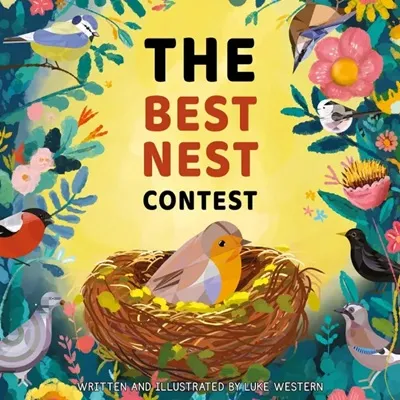
The Best Nest Contest
Author: Luke Western
Publisher: Brown Dog Books, Bath
Published: 2024
Luke Western was inspired to produce this charming book, which he wrote and illustrated, upon introducing garden birds to his baby daughter. The book itself is aimed at slightly older children – aged four to eight. Fortuitously enough, I have a six-year-old son who was on hand to help me write this review. First impressions were good. My son could confidently identify all the birds from the illustrations, which include examples in the author’s signature ‘geometric birds’ style. I found the accuracy of the details a refreshing change from many of the illustrations in books for younger children, which often have generic ‘birdy’ images, or perhaps even worse, biologically misleading ones. For example, I remember once flicking through a book designed to engage children with nature published by none other than the National Trust, and noticing a depiction of Blue Tits raising chicks in an open nest on a tree branch. I returned it to its shelf. In terms of the text, my son enjoyed the “my nest is the best” refrain, and appreciated the rhymes. It was pitched just right for children of his reading age and understanding. Having said I valued the book’s accuracy, I did have a few minor gripes. On one page for instance, a male Chaffinch is shown sitting on a nest, when nest building and incubation in this species is carried out exclusively by females. On another, there’s a mention of Blackbirds’ nests being mud-lined, when this is the case for the closely-related Song Thrush. Speaking of Song Thrushes, this was my son’s only criticism. Admittedly, he’s not the most typical six-year-old, having been coming out nest recording since he was a babe in arms. However, he said he was disappointed that Song Thrush and Dunnock didn’t feature in the book, as those are his favourite species to look in the nests of. He also asked why the Barn Owl and House Sparrow were simply called ‘owl’ and ‘sparrow’ respectively! That said, he did love the story and the artwork, especially the picture of the Chaffinch nest with eggs, and the jewel-like Jay’s eggs. All in all, The Best Nest Contest is a brilliant idea, and we wish the author luck sending copies to schools around the UK to spark children’s interest and educate them about nesting birds.
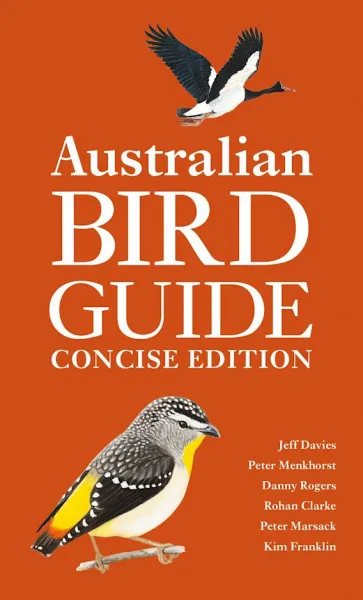
Australian Bird Guide: Concise Edition
Author: Jeff Davies, Peter Menkhorst, Danny Rogers, Rohan Clarke, Peter Marsack & Kim Franklin
Publisher: Christopher Helm, London
Published: 2022
Although there are many bird books available for birders visiting Australia, the best by far is The Australian Bird Guide. However, this book is somewhat too large, heavy and bulky for use in the field. Even taking with you would add weight to your luggage. Thankfully, a concise version of this field guide has now been released and I was fortunate enough to visit northern Queensland earlier this year and have a copy of this book to take with me. The main thing to notice about this concise guide is the difference in size, being about half the size and thickness of the original guide. It also weighs less than 500 g compared with the original being about three times this, making it much easier to slip into a pocket or backpack without adding any noticeable bulk. The plates, as in the original, are superb and although the species accounts are much reduced in this version, this doesn’t take anything away from the usability of the guide in the field. Each still gives a distribution map, a brief text description covering distribution and habitat, a succinct description of voice (including transcription of sound), and illustrations with notes on age, sex, and identification characteristics. The taxonomy is more up to date that the original guide, with newly split species such as the Hornbill Friarbird and Torresian Kingfisher, both of which I was lucky enough to see, included. In order to make this book more concise, there are around 200 species fewer included than in the original, though these are vagrants and species with very restricted ranges on less visited Australian territories such as the Lord Howe Woodhen, and so these aren’t noticeable for the majority of visiting birders. Although the original The Australian Bird Guide is still worthy of a place on any birder’s bookshelf as a reference when they are revising for a trip or on returning and want to check their photos or notes, this concise guide is an invaluable piece of kit that no birder undertaking a trip to Australia should be without. Now, if they could just follow in the Collins Bird Guide’s footsteps and bring out an app version too …
From Wasteland to Wetland: A History of Woolston Eyes
Author: Brian Martin
Publisher: Privately published
Published: 2023
As a birder growing up in Greater Manchester in the 1990s, I would regularly phone Birdline Northwest (remember those days of having to phone up for bird news?!) and very often, the site Woolston Eyes, in Cheshire, would feature. Although I never had the chance to visit the site as it requires a permit to access, the name has always been a familiar one to me, and in my role as one of the Wetland Bird Survey (WeBS) team, I have had a few phone conversations with Brian Martin about a few of his WeBS records on that site over the years. Even before he published this book of the history of the site, from its beginnings as a desolate wasteland just a couple of miles from the centre of Warrington to the amazing wetland reserve it is today, the enthusiasm in which he spoke of the site was always evident and this book captures that love and dedication. The first chapter tells of the history of the area, which sits underneath the busy M6 Thelwall Viaduct, which many will have driven over without realising what was below them. The next few chapters detail the development of the habitat of the reserve which today is a Site of Special Scientific Interest and has a nationally important breeding population of Black-necked Grebes, among other rare breeding species. The final part of the book has short stories detailing certain species which have been conservation successes on the site, including the grebes and also Willow Tits which are declining at an alarming rate (90% decline in England since 1995) but this site remains as a stronghold. The site is not only important for birds, but also invertebrates and they are covered in this book too. The book gives a thorough overview of the reserve’s history and its birds and even for those who may never get the chance to visit the site, it will be a fascinating read on what can be done with a bit of vision and a dedicated group of volunteers successfully managing a site over 40 years.

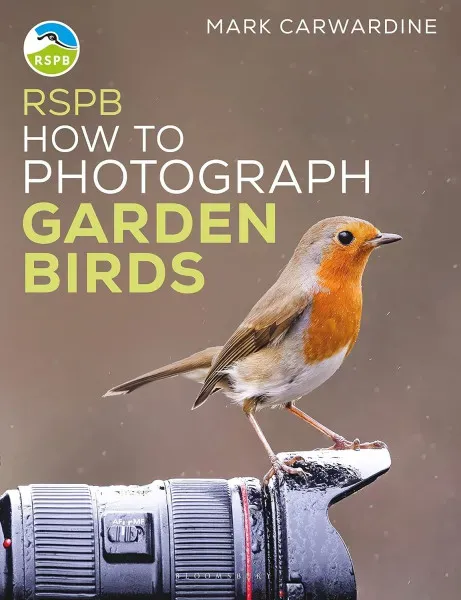
RSPB How to Photograph Garden Birds
Author: Mark Carwardine
Publisher: Bloomsbury Publishing, London
Published: 2023
During my 20 years of birding, I have only modestly dabbled in bird photography (with the same camera from the 2000s I’ve had since school), so when beginning to read this new RSPB book by Mark Carwardine I was curious to see how well it would read to a beginner such as myself, and whether it would inspire me to join the growing photographer community and to properly partake in this popular pastime. I was pleased by Mark’s clear message that you don’t need to travel to far-flung and exotic locations to take effective photographs. Focusing on your garden birds can offer a great source of enjoyment as well as a much more convenient opportunity to practise and hone your photography skills. As long as you remember a small number of core principles, there is nothing stopping you from taking professional-quality snaps from your doorstep. To emphasise this, the photographs in the book primarily come from Mark’s garden, and I particularly liked his inclusion of purposely-taken ‘bad’ shots, to reinforce his tips on what not to do when starting off. The pages are full of useful tactics to enhance your photography, as well as subtle tricks to make your photographs look as though they were taken during the all-too-brief ‘golden hours’ of the day, when natural light is at its best for taking effective shots. There is also a section on taking impressive photographs by producing your very own ‘artificial rain’ - though admittedly after the winter we’ve just had I think I’ll be passing on that particular trick for the foreseeable future! This book is certainly beginner-friendly, with Mark’s writing style coming across as a friendly mentor giving tips by your side. For those of you who are completely new, however, I would perhaps recommend reading the glossary at the back before commencing the book, as there might be some words and phrases that could be unfamiliar to you. I was also somewhat surprised not to see any diagrams of camera apparatus or accessories, though of course we have our phones and/or laptops to quickly look these up. Overall, I thoroughly enjoyed this book and would highly recommend it to those wishing to explore and develop their photography skills. I certainly came to better appreciate the skill of taking good-quality shots which, like all hobbies, requires lots of practice and patience to master. With Mark’s helpful pointers, you’ll certainly get a head start, and I look forward to having them in mind myself when I’ll next have my camera while enjoying my garden birds.
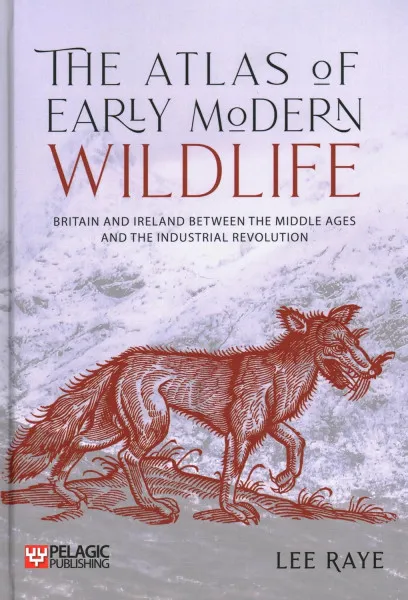
The Atlas of Early Modern Wildlife: Britain and Ireland between the Middle Ages and the Industrial Revolution
Author: Lee Raye
Publisher: Pelagic Publishing, London
Published: 2023
As the title suggests, this book is presented as an atlas of the wildlife on our ‘Atlantic Archipelago’ from roughly 1519 to 1772. The term ‘wildlife’ covers a range of vertebrate species (from mammals to fish) together with a scatter of predominantly marine invertebrates, which together cover 151 species or grouped taxa. The mapped records and accompanying text draw on a few dozen key regional texts, largely produced by gentleman naturalists, such as Thomas Browne’s Notes and Letters on the Natural History of Norfolk, supported by material from a significant number of other sources. While the species accounts provide some fascinating insight into the challenges of securing an identification for a species from these historical sources, it is difficult to see the value of the maps or the statistical treatment of what are typically very sparse data. In some cases the maps are misleading; that for Grayling, for example, shows records at river level by shading every county with similar topography which that river runs through. With so few records, it might have been better to use some of the 398 pages to provide more detail on the sites mentioned within the original records. The attempts to provide information on the trend since 1772 for each species also feel unwarranted, largely because most of these simply say ‘uncertain’ or ‘probably increased/decreased’. In some cases it is difficult to see how the stated trend since 1772 aligns with data from other sources. How valid, for example, is the use of ‘No change’ for Eel, when there is documented evidence of Eel fisheries from the Domesday Book through to the 19th century, and a decline of c.70% in numbers since the 1970s in our remaining fisheries? The book provides valuable insight into how individual species were identified, named and viewed during the period of interest. You learn, for example, that the spelling ‘capercalze’ for Capercaillie in older texts stems from printers not having access to a separate character to represent the Older Scottish letter ‘yogh’ (derived from a ‘g’ but pronounced like a ‘y’). At times, however, the text sections are frustrating, either lacking additional detail on the records mentioned or including unhelpful and unsupported throwaway comments like ‘... possibly with a small year-round population in the Norfolk wetlands.’ (White Stork) and ‘It may have been a common vagrant.’ (Eagle Owl). Overall, this book feels like a missed opportunity. The period in question is of interest and importance to those looking to re-establish lost species, and I feel that had more of the book been devoted to exploring the individual records and the nature of the sources, then it would have been far more helpful in this regard. A more rigorous academic treatment, much like the approach adopted by Michael Warren in his Birds in Medieval English Poetry, would have delivered a more useful book. The sloppy unsupported statements and attempts to apply a statistical rigour to such sparse data suggests that a stronger editorial hand might have helped to steer this book to a more helpful place. Further evidence of this comes from things like the Great Grey Shrike account being accompanied by an obvious Red-backed Shrike illustration, and the Wheatear by what appears to be a Jay. This is a shame, particularly given the author’s clear knowledge of the central subject, as evidenced by their peer-reviewed publication record.
The Painted Stork: Exploring Ecology and Conservation in India
Author: Abdul Jamil Urfi
Publisher: Pelagic Publishing, London
Published: 2024
Abdul Jamil Urfi’s latest work on his beloved Painted Storks takes us to India and provides an accessible but richly informative account of the lives of these globally Near Threatened birds. Urfi has a deep association with the wild colony of Painted Storks that breed within the Delhi Zoo, and the chapters draw on his years of careful observation of this interesting urban population. He also takes us to humid swamps, marshes and woodlands in the wider Indian countryside, where as well as Painted Storks, a cast of other long-legged birds; herons, ibises and other stork species, wade through the pages. Far from being a single species account, Urfi paints a picture of Indian wetlands and the wildlife that inhabit them through the eyes of storks and the people who work to understand and conserve them. The introduction alone shines with Urfi’s enthusiasm for the species and gives his rationale for choosing Painted Storks as a single species to study. Using the stork as an example, Urfi walks the reader through concepts in ornithology such as nesting behaviour, foraging ecology, and why some large waterbird species like storks form colonies. I particularly enjoyed the chapter on storks and people, which was not just limited to how Painted Storks are received and the folklore surrounding them in India but gives an Asian perspective of European stork folklore as well. Arguably the most important chapter is the last, devoted to conservation. Although Painted Storks appear to be adaptable birds that have in places gone along with increasing urbanisation, there remain many challenges to both the storks and the wetlands that they depend on. While the book is very nicely laid out, with high-quality pictures and illustrations, I had one small gripe; the text is peppered with interesting and informative boxes that present asides from the main body of the chapter, but sometimes these are quite long, and in at least one case a text box extends over three pages! That makes it pretty much a section in the book in its own right, and by the time I had finished reading it I had forgotten what I was reading before. This book mixes carefully conducted field research and intimate knowledge of single species’ ecology, with a wider appreciation for Indian natural history. The book serves as both a detailed account of the lives of Painted Storks, and also as an introduction to Indian wetland ecology that will appeal to professional ecologists and students in India, and those with an enthusiasm for Indian wildlife.

The Vanishing Mew Gull: A Guide to the Bird Names of the Western Palaearctic
Author: Ray Reedman
Publisher: Pelagic Publishing, London
Published: 2024
At first glance, this book might appear to be another volume exploring the declines of bird species, as a result of Anthropocene activity. But reading beyond the title, it soon becomes clear that the eponymous gulls are disappearing in name only. There is currently a great deal of debate surrounding the names of birds, much of which is focused on the controversial announcement by the American Ornithological Society that it will be renaming species which bear names honouring historical figures. Developments in taxonomy too have impacted on scientific and common names as orders, families and species become redefined and renamed in the wake of genetic insights. But bird names have long been the subject of change, for one reason or another, and many birders find this an engaging and fascinating topic. With so much interest in the nomenclature of birds, Ray Reedman’s latest book provides a timely addition to the genre. Personally, I love these kinds of books, and, like many birdwatchers, I have several titles on my shelves which explore and celebrate the etymology of bird names, both vernacular and scientific. The Vanishing Mew Gull seems to combine the best parts of these existing volumes, also adding to them, providing a very accessible, informative, and genuinely enjoyable read. The book follows modern taxonomic standard, starting with wildfowl and ending with buntings, followed by a small number of American blackbirds, warblers, and grosbeaks. Each family section is prefaced by a general overview of the origins of the scientific name of the group, followed by individual species accounts. Both scientific and common names are dealt with, and Reedman also treats us to occasional historical names and those found in folklore. All birds recorded in the Western Palearctic are covered, including such soon-to-be-renamed Nearctic vagrants as Wilson’s Warbler and Swainson’s Thrush. Both widespread and locally common feral species and frequent escapees are also included, for those who like that kind of thing. While one could sit and read this from cover to cover, for me the beauty of this book lies in its value as a source of frequent reference and as something to simply dip into. Opening the book at random pages, the reader is likely to be met with something that raises an eyebrow, or a smirk, or solicits an involuntary noise that implies “well I didn’t know that.” For example, I was rather charmed to discover that the name Linnet (and indeed the Linaria component of the bird’s scientific name) is derived from Linum or Flax, a plant whose seeds are favoured by the finch (the second part of its scientific name cannabina, refers similarly to hemp for the same reason). And I was greatly amused, perhaps childishly, to discover that Stercorarius (skuas) means ‘dung eater,’ after the birds’ proclivity for carrion and regurgitated food items. My only slight gripe was not in the written content but the actual book itself. The ivory-coloured pages and rather old-fashioned layout and monochrome images somehow lend the book a sense of ‘first draft’ rather than completed work. But, that minor aesthetic consideration aside, The Vanishing Mew Gull contains a wealth of information that is certain to educate and entertain anyone with an interest in birds and language.

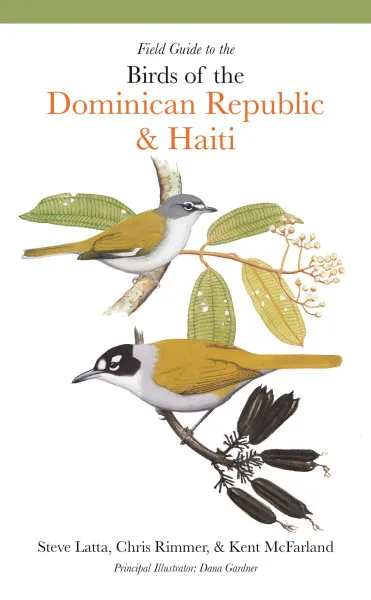
Field Guide to the Birds of Dominican Republic and Haiti
Author: Steven Latta, , Chris Rimmer , Kent McFarland & Dana Gardner (principal illustrator)
Publisher: Princeton University Press, Princeton
Published: 2022
The island of Hispaniola, comprised of the Dominican Republic and Haiti, is among the Caribbean’s most exciting birding destinations. With an excess of 300 species recorded, the island is home to an impressive 30+ endemics (more than any other Caribbean island) with all but one of those, Grey-crowned Palm-tanager, found in the accessible Dominican Republic. One of the most celebrated endemic birds of the region is the Palmchat, which is the sole representative of its genus and is the national bird of the Dominican Republic. This new slimmed-down update of the first edition, published back in 2007, is eminently more portable and it has also been revised and updated to reflect recent taxonomic changes. The authors have also opted to split two species yet to be formally acknowledged (Hispaniolan Kingbird and Hispaniolan Eleania) and use the less familiar, though to my mind more appropriate and evocative, Hispaniolan Highland-Tanager and Green-tailed Ground-Tanager for White-winged Warbler and Green-tailed Warbler, respectively. This book follows the standard layout of similar contemporary field guides, with colour plates facing the species text. Overall the illustrations by Dana Gardner are good, and more than adequate for identifying most birds in the field, while the concise text provides information on status, distribution, habits, vocalisation and identification. The introductory chapters are excellent, giving the reader and prospective visitor a sense of what to expect when birding on the island, plus highlights the value of eco-tourism to this relatively under-visited tropical gem. The authors also hope that the book will continue to inspire island residents to appreciate local bird life and work towards helping conserve the countries’ natural treasures. Reading this guide made me long to return to the Caribbean, and indeed to Hispaniola which I last visited in 2000, to soak up its many avian and cultural delights.
Best Bird Book of the Year 2023
The British Trust for Ornithology and British Birds are delighted to announce the winner of the award for Best Bird Book of the Year 2023. The prestigious Best Bird Book of the Year award is open to all books reviewed by BTO and British Birds in the year of consideration. Entries range from identification guides and ornithological science to culture and art, and are judged by a diverse panel from BTO and British Birds. This year, Lesley Hindley, Hazel McCambridge and Anthony Wetherill (representing BTO) and Paul French, Stephen Menzie and Thom Shannon (representing British Birds) made up the judging panel.