Read reviews of the books we hold in the Chris Mead Library, written by our in-house experts. A selection of book reviews also features in our members’ magazine, BTO News.
Featured review
All the Birds of the World
Lynx have had a long-term project to produce an exhaustive guide to the birds of the world. It started out with the 17 volumes of the Handbook of the Birds of the World (1992–2013) which has family and species accounts for all birds. This was followed by the two volumes of the Illustrated Checklist of the Birds of the World (2014–2016). They have now published the third and final stage of this avian odyssey with this current book.

Search settings
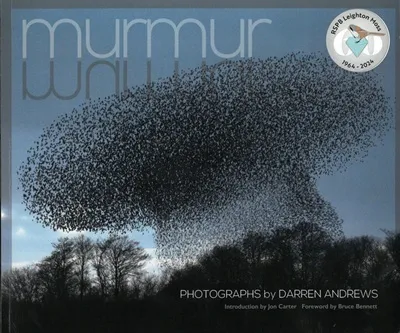
Murmur (second edition)
Author: Darren Andrews
Publisher: Self-published
Published: 2024
Books are usually filled with an abundance of words, but Murmur holds a wealth of images featuring Starling murmurations from Leighton Moss, Blackpool North Pier and Carnforth in Lancashire. The words that do appear in the introduction atmospherically set the scene, with the first few images featuring a small number of birds gathering on rooftops. Then you turn a page and are within the flock of thousands of Starlings. Every page is adorned by a photo of Starling murmurations and captures a different moment of this spectacle. I wondered how many birds were in each photo, too many to count. In some pictures, the landscape takes the lead as murmurations fly against the blue, yellow and orange sky of the RSPB nature reserve Leighton Moss. The skill of the photographer is evident throughout the book. The black and white images make you focus intently on the Starlings, their shapes so precisely captured, while on other pages flocks appear in motion like they could take flight from the book into the room with you. The way the photographs are ordered also takes the viewer on an immersive journey of anticipation, to awe and then calm. The last image is of a single Starling. In the dusk of the images, the time of day the Starlings gather to murmurate, you could almost feel the message within the photos, set out by the introduction. It is the warning that Starlings are in trouble, featuring on the UK’s Red List of Birds of Conservation Concern. It reminds us that though numbers may seem extraordinary in these photos, we shouldn’t take their presence for granted. Ending with an afterword by the photographer, Darren, the book captures the emotional relationship humans have with birds. Here, the photographer describes how sharing these images with his mum was a vital last connection for her with the joy of nature. This book with its compilation of photographs is absorbing to look through. It would appeal to those with a love of photography or nature in general, and by the end, you’ll certainly have a love for Starlings and an overwhelming desire to see a murmuration for yourself.
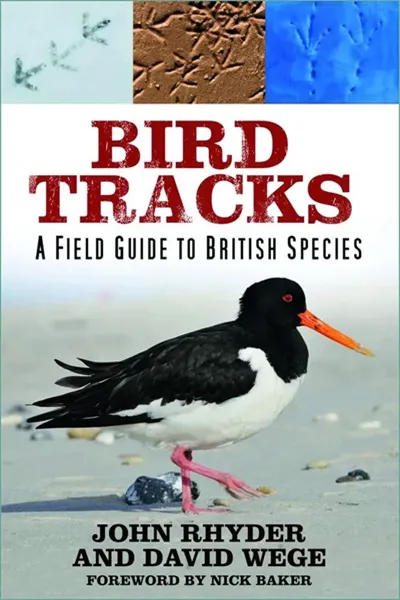
Bird Tracks: A Field Guide to British Species
Author: John Rhyder & David Wege
Publisher: The History Press, Cheltenham
Published: 2024
Quite often, a bird does not need to be seen to prove its presence. Many birders are adept at identifying birds by sound, or can confidently assign a nest or errant eggshell to species. But how many of us spend much time investigating the ground beneath us, looking for clues of avian activity? Most BTO members will be familiar with those established and useful books about tracks and signs, which often include more obvious or unusual features that birds and other animals leave behind. This new book, however, by John Rhyder and David Wege, focuses entirely on birds and their footprints. No nibbled acorns, discarded hair, or droppings are to be found in these pages. Covering 139 species, most of which occur naturally in the UK, this guide allows active birders to delve into the often-subtle world of avian prints, and how to determine just what left them behind. I am sure we’ve all come across curious tracks in snow, sand, or mud, and while we may have been able to assign the transient creature to a family, or ‘type’ of bird, we might have struggled to confirm the departed owner’s specific identity with confidence. This is where Bird Tracks comes in, detailing the exquisite differences between, say a Rook and Carrion Crow print, or those of Grey and Golden Plover. It does take quite a level of dedication to get down to the sometimes-indistinct differences between some of the featured footprints, but overall, the book is an absorbing collection of images and detailed text that takes the identification of bird tracks into fresh territory. I for one, had no clue about the syndactyl foot of the Kingfisher, and I was intrigued by the totipalmate structure of Gannet and Cormorant feet. Delving into this book, one may not become an expert in the identification of birds’ feet overnight, but there is a great deal in which to delight and discover.
Ten Birds That Changed the World
Author: Stephen Moss
Publisher: Faber & Faber, London
Published: 2024
In Ten Birds That Changed the World author Stephen Moss succinctly explores our relationship with birds over 10 chapters. He cleverly uses their charm and approachability to show how our actions have shaped the natural world, and how it has shaped our society in return. History geeks, this is for you! I read with fascination the snippets of ancient folklore surrounding the Raven, and was surprised by the buried story of China’s sparrow campaign. Each chapter could be read on its own, opening with a scene-setting vignette before a whirlwind exploration of the role of each species in human character development. But I’d argue the book is more enjoyable to read from start to finish. This way you can feel the contrast between the free- spirited Raven and the meek dove, baulk at our brushes with extinction and witness some of humanity’s darkest hours from a bird’s perspective. From Snowy Egrets and organised protests, to cormorants and an agricultural revolution, you marvel at the myriad consequences of birdwatching. The book ends with the Emperor Penguin and a familiar refrain on our position at a climate crossroads. After reading the previous nine chapters, this could seem tired and worn. However, it brings hope that we will learn from our mistakes, and save birds and ourselves. How else in the future could we read more of these stories?

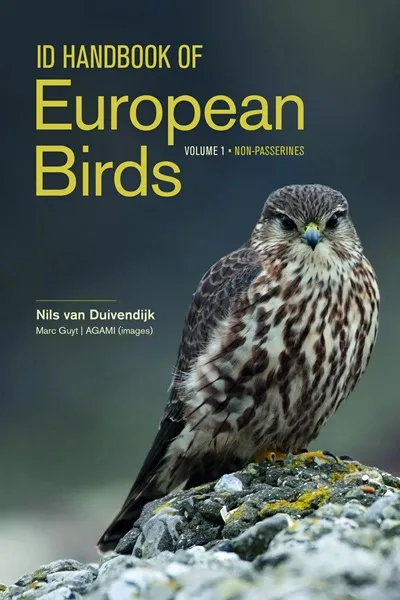
ID Handbook of European Birds
Author: Nils van Duivendijk
Publisher: Princeton University Press, Princeton
Published: 2024
The ID Handbook of European Birds is divided into two volumes, covering non-passerines and passerines. The first thing apparent is the sleek design and the number of high-quality photographs. Every species covered has several photographs of birds at different ages. It's impressive how much space is given over for ageing birds, with pictures of birds in the hand showing ID features clearly for clear illustration. Some difficult species groups have well-illustrated comparison tables, but there are good numbers which don’t and maybe would benefit from them. The choices for which species deserve these more thorough approaches seem based on the advanced level of birder this book is aimed at. It is likely many birders will be tempted to buy these weighty tomes simply to have them sitting prettily on their shelves. This is, however, not an identification guide for beginners. Nor is it for the person who wishes to know more about the lifestyle or behaviour of a bird (unless it aids identification). Even song and call, useful identification features for many birds, get only the occasional mention. There are two likely intended audiences for these books. The first is for those who like to finish their birding sessions by spending several hours pouring over photographs, getting as much information from their photos as possible. In this regard the book is likely the finest of its kind out there. The second audience would be bird ringers who would appreciate the wide variety of species shown, with in-the-hand pictures and morphometric measurements of key ID features. Though a perennial problem for many identification guides, it is a shame that this book has come out at a time when the taxonomy has seen a few major changes, making some pages already feeling dated, however this cannot be blamed on the authors rather than poor luck. If you are simply trying to improve your knowledge of birds seen while out and about, there are certainly cheaper ways to do this. With that in mind, for their size and quality, these books are very reasonably priced. Before purchasing these books you may want to consider if they match your style of birding and will you benefit from owning them.
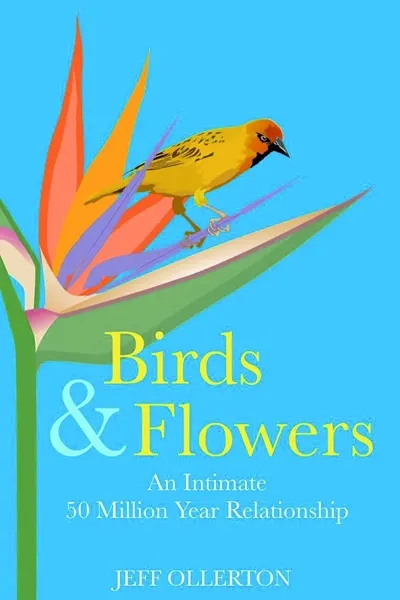
Birds & Flowers: An Intimate 50 Million Year Relationship
Author: Jeff Ollerton
Publisher: Pelagic Publishing, Exeter
Published: 2024
Perhaps because I don’t have much of a scientific background, I picked up this book and assumed that it was ‘just’ about the link between birds and flowers. However, it is about so much more about that! I have been a birdwatcher for most of my adult life, and I have been into botany for the last decade or so. However, until I read this book, I admit I had never really given much thought to the link between birds and flowers, above and beyond the fact that they are both crucial parts of our ecosystem. One of the main themes of this book is birds as pollinators. Again, I naively assumed that it was only really invertebrates that pollinated flowers. Whilst to a certain extent, this is the case where I live in England, it certainly isn’t the case elsewhere in the world. I have been fortunate enough to see hummingbirds on a couple of occasions whilst visiting friends in the USA. They mesmerised me with their brightly coloured plumage and their incredible ability to almost fly backwards. However, I never really made the connection that by feeding on the nectar from flowers, they were also performing a very important function as pollinators. What this book aims to prove is that in fact, a significantly higher proportion of bird species across the world than many people, including myself, assume actually perform roles as pollinators. This does not just include exotically coloured species in far flung corners of the world, it also includes several common and familiar bird species to many of us in the UK! To my considerable shame, I never knew that Blue Tit, Chaffinch and Chiffchaff for example all perform roles as pollinators. There is in fact a very interesting list early in the book, which details just how many members of different bird families from across the world have been observed acting as pollinators for flowers. I thoroughly recommend you take a look at this, as you are very likely to be surprised by what you find! The book is mainly text, but there are some lovely photographs in the middle pages. As well as showing exotically coloured species from far flung corners of the world, it also includes some species that are more familiar to us in the UK. If you are interested in the link between birds and flowers, I would recommend this book!
Aves Elektron: Death of the Nightingale
Author: MiE Fielding
Publisher: Voert Digital, New York
Published: 2024
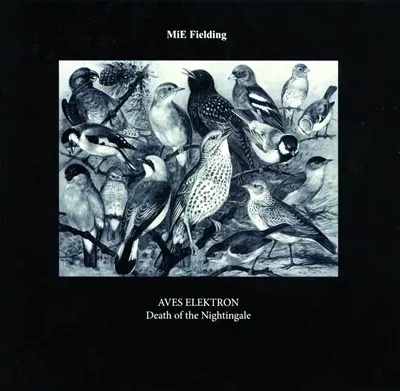
At first glance this book appears to be a somewhat random collection of black and white photographs of, mostly, dead birds, litter, and housing developments. But as one delves deeper, it becomes apparent that this is not simply a bird book. Or at least, not a bird book by normal standards. With Aves Elektron: Death of the Nightingale, author / creator MiE Fielding sets out to “outline the sorry tale of the UK’s catastrophic loss of biodiversity and particularly its bird life over the past forty years and offer an explanation as to why this has happened.” And it is certainly a product which not only invites, but demands, your unwavering attention. The book itself is merely a component of the experience. An accompanying CD (remember those?) is to be listened to, according to Fielding, via headphones for maximum impact, as one is immersed fully in the created soundscape while leafing through the hardback volume. With cues to turn the pages at specific times, the listener is taken through the creator’s journey exactly as he intended. Combining his own sound recordings of bird song with an electronic sound composition, Fielding tells a story of greed and exploitation of the natural world. MiE Fielding is primarily an avant-garde musician and artist, with a lifelong passion for birds. Here in Aves Elektron: Death of the Nightingale he combines these interests to explore his concerns about UK biodiversity and the associated loss of bird life. I expect there will be a limited audience for such a product, and it isn’t the sort of thing one will dip in and out of on a regular basis, but Aves Elektron: Death of the Nightingale does beg to be taken notice of, for all the right reasons.
Maurice Bird: The Gilbert White of The Broads
Author: James Parry
Publisher: Norfolk & Norwich Naturalists’ Society
Published: 2024
The name Maurice Bird might not the most instantly recognisable, but it may be familiar to anyone who has read the author James Parry’s 2020 work (co-written with former BTO Director Dr Jeremy Greenwood) Emma Turner: A Life Looking at Birds. The Reverend Maurice Bird (1857–1924) was the Rector of Brunstead in Norfolk for over 30 years, and as a neighbour with shared interests in photography, ornithology, and natural history, he and his family were close friends with the pioneering photographer and ornithologist Emma Turner. The Reverend Bird was a polymath, whose Norfolk-based interests ranged from birdlife to snakes, meteorology, and gardening (including his unsuccessful attempts to grow wild rice in the Norfolk Broads). He left behind an extensive archive of newspaper cuttings, photographs, notes, letters, and, most significantly, an almost unbroken run of diaries covering more than half a century. The archive has remained within the Bird family, and work on this biography was begun by the Reverend Bird’s great-granddaughter Alison Horne, who sadly passed away in 2014. Maurice Bird: The Gilbert White of The Broads is the latest in the Norfolk & Norwich Naturalists’ Society’s series of occasional publications, and James Parry uses the Reverend Bird’s own archive to tell the story of an intriguing figure who meticulously recorded his varied interests. The comparison to the Selborne naturalist of the title was first made by the Norfolk ornithologist Bernard Riviere in 1924, and parallels between the two become apparent throughout. Coming in at 140 pages it is a short book, but its six chapters (focusing on the Reverend Bird’s personal life, his role in the community, his published writings, his diaries, the significant people who feature in his writing, and his legacy) bring to life the words of a skilled observer of natural history, who for many years was an important fixture in the landscape of The Broads.

Bird Pellets: A Complete Photographic Guide
Author: Ed Drewitt
Publisher: Pelagic Publishing, Exeter
Published: 2024
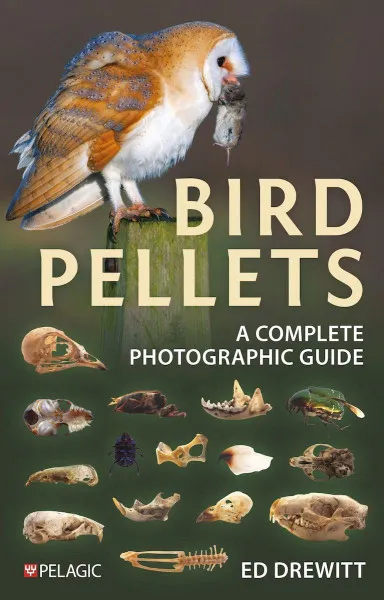
Many of us will have found owls pellets while on a walk, and some may have even extracted the contents to see what has been eaten, but most will be unfamiliar with the range of species which produce pellets and how to go about finding them. Ed Drewitt’s Bird Pellets: A Complete Photographic Guide aims to fill this gap and goes about doing so in a thorough and digestible manner on a (literally) indigestible subject. The book is mainly divided into two parts, the first helping to identify the maker of a pellet, while the latter half shows the likely contents of pellets and which animal they might have come from. Both sections are filled with high-quality images, allowing for detailed inspection of the minutiae needed to identify a vole skull to species level, and are accompanied by detailed text, especially so for many of the mammal skulls. While by no means aimed at children, and a useful reference guide for any field naturalists, I’d imagine many young naturalists will get a lot from this book (didn’t we all start with collections of skulls, feathers, pellets and bits of bone?), whether from the many pictures of birds coughing up pellets or the access into a different aspect of these birds’ lives. The range of bird species covered is insightful, with even rare and unusual birds, such as European Bee-eater, being given an entry.
Call of the Kingfisher
Author: Nick Penny
Publisher: Bradt Guides, Chesham
Published: 2023
Following the author’s journey along the River Nene at Oundle in Northamptonshire, this book is set out in specific months of the year. The reader can fall into step with the writer as he explores the river habitat, along with explorations further afield, and watches the unfolding lives of Kingfishers over the changing seasons. As a musician, it may not be surprising that the author has added an element of audio into his work. Throughout the book there are numbered speaker icons that allow the reader to listen to the birdsong described that the author recorded himself. This can be done by either visiting the Bradt Guides website or scanning the QR code included within the book on a smartphone. The recordings cover specific species and events like the dawn chorus, with the richly recorded birdsong allowing you to appreciate the environment the author is writing about. It is a novel way to experience the sounds of birds and not be confined to the silence of a paperback book. The addition of this audio element also opens accessibility of the experience for readers who cannot access the countryside or who may not know what the birds’ songs mentioned sound like. This book would suit readers who enjoy the nature writing style of prose, with this work dotted with quotes and experiences from other writers and naturalists throughout history too, including Gilbert White, John Clare and Peter Scott. It may be of particular interest to those who are drawn to riverine habitats, local history and of course Kingfishers.
