Read reviews of the books we hold in the Chris Mead Library, written by our in-house experts. A selection of book reviews also features in our members’ magazine, BTO News.
Featured review
All the Birds of the World
Lynx have had a long-term project to produce an exhaustive guide to the birds of the world. It started out with the 17 volumes of the Handbook of the Birds of the World (1992–2013) which has family and species accounts for all birds. This was followed by the two volumes of the Illustrated Checklist of the Birds of the World (2014–2016). They have now published the third and final stage of this avian odyssey with this current book.

Search filters
Feathers: An Identification Guide to the Feathers of Western European Birds
Author: Fraigneau. Cloé
Publisher: Helm, London
Published: 2021
The pattern and colouration of feathers provide valuable and often memorable clues to bird identification. Taken in isolation, however, feathers can be surprisingly hard to identify, particularly for those who do not have experience of birds in the hand. If you have even the slightest inclination to identify the feathers that you come across, this reference guide is a revelation – not to mention a thing of great beauty! The book comprises eight chapters, including introductory sections on feather collection and preservation, the identification process and feather adaptations, and an extensive appendix. The introductory chapters are all packed with useful information and practical tips that help to narrow down the options when faced with an unfamiliar feather. After these come a series of identification exercises, an inspired inclusion that adds a genuinely interactive element to aid learning and prepare the reader for the challenges of identifying lone feathers. The species descriptions that follow account for about two-thirds of the content and cover more than 400 species. These are treated in groups of birds with similar feathers and/or lifestyles: passerines, near-passerines, aquatic birds, terrestrial birds of dry habitats (galliformes, bustards) and birds of prey. Whilst this arrangement is at odds with the way standard bird identification guides tend to be organised, it makes perfect sense when faced with a feather in isolation: convergent evolution has led to many examples of quite distantly-related species having similar-looking feathers. The distinctive criteria of the feathers of each group are presented, before a detailed description of the characteristics of those of each species within it. There are comparison tables of measurements of the larger feathers (typically wing and tail) for sub-groups of species, for example the flycatchers, the buntings, and pipits and wagtails. Other helpful tables include ones that compare primaries and secondaries separately, and the colour characteristics of feathers of birds from the same grouping. Finally come the plates, which are a joy to behold! These feature high-quality photographs of the most distinctive feathers, typically from between two and six species per page, with each page being just under A4 dimensions. For many species, there are also smaller photographs of a whole wing which provide valuable context, particularly for readers who are not familiar with the typical shapes of the different wing feathers. It is impossible to do this book justice in a short review but suffice to say that it is the most visually appealing, informative and educational bird book I have opened in a very long time!

The Role of Birds in World War Two: How Ornithology Helped to Win the War
Author: Milton, Nicholas
Publisher: Pen & Sword History, Barnsley
Published: 2022
Stories such as War Horse have brought the history of animals in warfare into the public consciousness. Their significant contribution was formally recognised in 1943 through the creation of the PDSA Dickin Medal awarded for gallantry and devotion to duty, and the important role played by birds in World War Two is clear from the fact that pigeons are the most numerous recipients. You would be forgiven for thinking this will be a book about messenger pigeons. Whilst individuals such as Winkie, who delivered a message leading to the rescue of an aircrew who had crash-landed in the North Sea, are included, Nicholas Milton’s fascinating work goes beyond individual tales of feathered valour. From the avian origins of the Government’s Mass Observation programme to record everyday life in Britain, to military personnel and Prisoners of War enjoying birdwatching in times of adversity, this book explores the numerous ways in which birds had an impact in the Second World War. Amongst the stories of birdwatchers there is welcome mention of several key figures in BTO history. Max Nicholson, the central founder of BTO, held important positions during the war in the Ministries of Shipping and Transport, but would break away from meetings to listen to a Black Redstart singing outside his office. Bernard Tucker, the first BTO Secretary, makes an appearance in a story about Peter Scott’s discovery of a White-fronted Goose on the Severn Estuary. One of Tucker’s successors, James Fisher, published the guide Watching Birds during the Blitz in 1940 which went on to sell over three million copies. As the author notes in his preface, nature was as important to people’s mental well-being during the Blitz as it has been during the COVID-19 pandemic. In addition to the direct contribution made by birds themselves, The Role of Birds in World War Two also highlights their more indirect impact on the lives of those who studied them. It is an unusual and informative approach to a subject about which not much has previously been written, which should appeal to anyone with an interest in history as much as birds.

Short-eared Owls
Author: Bryan Benn
Publisher: Bryan Benn
Published: 2021
This book is a remarkable achievement. It describes one man’s study of Short-eared Owls over 10 years across different parts of Britain. While the main strengths of the book are those personal observations supported by a collection of stunning photographs (again the work of one man), Bryan Benn has put these into context in a series of carefully thought out chapters. Subjects covered include appearance, habitats, behaviour (including breeding, hunting and social), movements, voice and conservation. While some observations are placed successfully into context, only a limited amount of literature appears to have been reviewed. As a result this is not a definitive monograph but as Short-eared Owls remain poorly understood, it is a valuable source of information. I will certainly be using it repeatedly. It is even more remarkable when you consider this is the result of one man’s work, not just the observations and photographs but notably the determination to write and self-publish what is a very attractive book. Not only a valuable addition to information about a poorly understood species, this book also demonstrates many things that others could aspire to – tenacity to study a bird, meticulous recording of observations and determination to make it all accessible. The book is available from the cafe at Elmley NNR at £30 per copy to visitors, or £35 plus P&P for online sales.

The Wryneck: Biology, Behaviour, Conservation and Symbolism of Jynx torquilla
Author: Gerard Gorman
Publisher: Pelagic Publishing, Exeter
Published: 2022
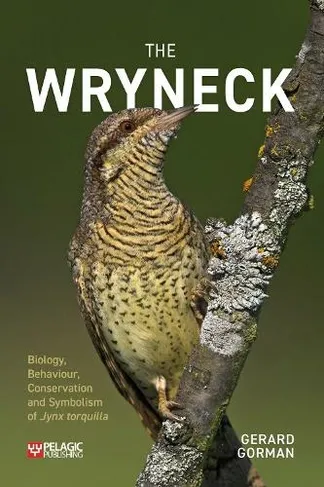
The Wryneck is one of our weirdest birds and it is hard to believe it really is a woodpecker. Gerard Gorman is a global authority on woodpeckers and combines the extensive literature with his knowledge of this species in this beautifully written and produced monograph. It is a worthy addition to his six previous books on the Picidae and the latest in the excellent Pelagic Monographs series. Wryneck occur extensively across Northern Europe and Asia. They have been lost as a breeding bird in Britain but occur on passage with around 300 recorded in spring and autumn. My closest encounter was a pair nesting in the wooden wall above the balcony of our hotel room in Briancon in the French Alps, they just ignored our presence. The early chapters describe the bird itself with in depth coverage of its origins, taxonomy, sub-species, plumage, moult, aging, sexing and communication. Unusually Wryneck sing as well as call and do not communicate by drumming. Interesting sonograms (spectrograms) are included. There is also a chapter on its closest relative, the Red-throated Wryneck, a native of Southern Africa The mid chapters cover distribution, status, population estimates, migration and habitats. Gerard does not shy away from the gaps in the literature, particularly the mystery of migration and whether some are resident in southern Europe. Wryneck feed exclusively on ants and the presence and abundance of ants determines their seasonal movements. The later chapters discuss conservation and breeding. Who knew they laid such a large clutch? But more surprisingly, unlike other woodpeckers, Wryneck do not excavate their own nesting cavity. They exploit existing holes and burrows and will even use nest boxes. Breeding success, where monitored, seems good, so this does not explain the gradual decline of the species across its range. The final chapters are a fascinating account of relationships, folklore, mythology and symbolism. It is worth buying the book for these chapters alone. These mysterious ‘Snake birds’ with their head- and neck-contorting displays were considered close to the gods 2500 years ago in Babylonia and captivated the ancient Greeks. They still intrigue people across Europe today as harbingers of spring and bringers of good health. The Wryneck is a thoroughly researched, comprehensive, well-written and beautifully illustrated portrait of these enigmatic birds. To quote Gerard himself "time in the field is the only way to get to know them" – he certainly does know them.
European Breeding Bird Atlas 2
Author: Verena Keller, Sergi Herrando, Petr Voříšek, Martí Franch, Marina Kipson, Pietro Milanesi, David Martí, Marc Anton, Alena Klvaňová, Mikhail V. Kalyakin, Hans-Günther Bauer & Ruud P. B. Foppen
Publisher: Lynx Edicions
Published: 2020
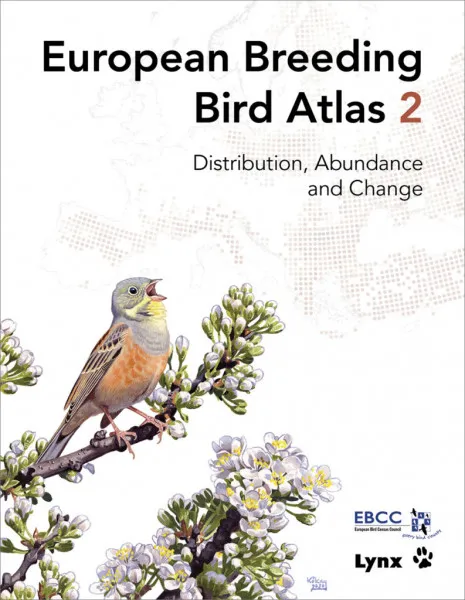
Considered by the judges of British Bird Book of the Year 2021 to be the most significant, influential and far-reaching title of the past 12 months, all six awarded their top marks to EBBA2. The book’s wide appeal, broad application and significant contribution to science were all commended. The judges praised both the high value of the publication’s content and the accessible way in which information was presented, from the readable texts to the different maps, which deliver data in clear and easy-to-interpret ways. With a growing number of species showing changes in population and distribution, this title not only offers an up-to-date overview of the current situation for each species but will also act as a vital checkpoint to look back on and compare against over the coming decades.
Multimedia Identification Guide to North Atlantic Seabirds: Shearwaters, Jouanin’s & White-Chinned Petrels
Author: Bob Flood(Author), Ashley Fisher(Author) & John Gale(Illustrator)
Publisher: Scilly Pelagics
Published: 2020
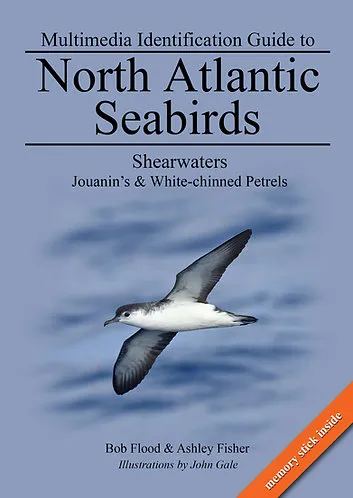
Those who have seen previous titles in the Guide to North Atlantic Seabirds series will not be surprised to see this latest offering score highly in Bird Book of the Year 2021. The text, the photographs, the artwork and the accompanying video footage were all praised by the judges for being of exceptional quality, with much of the material in the book presented for the first time. This is the definitive guide for the identification of shearwaters in the North Atlantic and sets a high bar for coverage of seabirds across the world’s other oceans.
Human, Nature
Author: Ian Carter
Publisher: Pelagic Publishing
Published: 2021
The judges of Bird Book of the Year 2021 enjoyed the straight-talking and balanced approach taken by the author in addressing issues that others may have skirted. Ian’s personal knowledge around the complexities of many of the subjects shines through, as does his personal passion and love for the natural world. Since the book is part autobiographical, part philosophical and part practical, the judges felt that every reader would find something here that they were interested in – or something they didn’t know.
The Glitter in the Green
Author: Jon Dunn
Publisher: Bloomsbury
Published: 2022
Another journey of discovery, in this title the author goes in search of hummingbirds. For those judges who have been fortunate enough to see hummingbirds, this book brought back many fond memories; while one judge who hadn’t seen a hummingbird in the flesh commented that this book ‘really brought the Natural History Museum’s famous hummingbird cabinet to life’ by putting some real-world context onto the species it contains.
Vagrancy in Birds
Author: Alexander Lees & James Gilroy
Publisher: Helm, London
Published: 2021
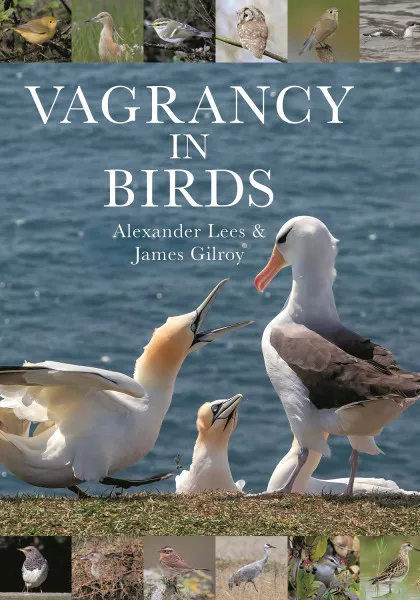
Avian vagrancy is a phenomenon that has fascinated natural historians for centuries. From Victorian collectors willing to spend fortunes on a rare specimen, to today’s high-octane bird-chasing ‘twitchers’, the enigma of vagrancy has become a source of obsession for countless birders worldwide. The ‘twitching’ scene in Britain is well established with reports of large numbers gathering at the site of a rare bird often being reported in the mainstream press. However, this practice isn’t confined to Britain and vagrancy in birds occurs across the globe. For the first time, this book, in no short order, explores the how and the why of bird vagrancy on a global scale, exploring in great detail how birds navigate and the driving forces that find some birds thousands of kilometres from their intended location, and even on different continents from the one they set out for. My personal favourite chapter, Vagrancy Through Compass Errors, works through the various vagrancy hypotheses and makes for fascinating reading. I really enjoyed reading through the ideas on how reverse migration, mirror-image misorientation, compass errors and the axis of migration might work on a migrant bird and how each of these might explain how ‘lost’ birds end up where they do. The first 71 pages takes us through all of the possible causes of vagrancy in birds, from compass errors, wind drift and overshooting to extreme weather, irruptions and human-driven vagrancy and sets the scene for the bulk of the book, where the authors look at vagrancy family by family, exploring why some are more prone to vagrancy than others – ever thought why Nearctic herons are so rare here and yet are frequent visitors to the Azores out in the mid-Atlantic? The authors suggest that their southerly breeding distribution in the States may well be why – eight species of Nearctic herons have been found on the Azores, compared to four in Britain. There are over 300 mouthwatering photographs of rare birds from across the globe illustrating the various sections of the book and these are stunning, making me go back to the book again and again just to look through them. However, this is a book that should be read from cover to cover, to not do so would be to miss out on an awful lot, that said, the way the book is put together does mean that it can be dipped into. I found myself skipping to a family of birds to see which species were most likely to be prone to vagrancy, and when and where they might turn up. Being able to look at bird families from across the globe and the chances of vagrancy affecting individual birds within them is one of the most interesting things I have read on birds for a long time. This is a book I will definitely add to my bookshelf.