Read reviews of the books we hold in the Chris Mead Library, written by our in-house experts. A selection of book reviews also features in our members’ magazine, BTO News.
Featured review
All the Birds of the World
Lynx have had a long-term project to produce an exhaustive guide to the birds of the world. It started out with the 17 volumes of the Handbook of the Birds of the World (1992–2013) which has family and species accounts for all birds. This was followed by the two volumes of the Illustrated Checklist of the Birds of the World (2014–2016). They have now published the third and final stage of this avian odyssey with this current book.

Search filters
The Eternal Season: Ghosts of Summers Past, Present and Future
Author: Stephen Rutt
Publisher: Elliott and Thompson Ltd, London
Published: 2021
The Eternal Season is an exploration of the British summer, framed within the 2020 global pandemic but reaching back in time through reference to the writings of others, the author’s recollections of younger years, and the stark figures presented from BTO’s long-term monitoring schemes. This is a book about change and the disturbances that we are now seeing in the patterns and rhythms of the natural world; from the changing arrival and departure dates of summer migrants, through the declines evident across many different taxa, and on to the climate-driven colonisation of Britain by others. Through accessible and engaging narrative, Rutt picks out examples of these changes, each viewed through personal experience and encounter. There is a poignancy to this book, something that could easily come across as pain and make this a difficult and upsetting read. In response to the experiences of communities living through devastating changes to their environment in the Upper Hunter Valley region of New South Wales, the Australian environmental philosopher and activist Glenn Albrecht coined the term ‘Solastalgia’. Albrecht described this as "… the lived experience of negative environmental change" and it is this experience that is the central theme of this book. The honesty of the text and the way in which we can see the author through his words, balances any pain that might come from the discussion of so much loss. It is the joy that the author experiences from his wildlife experiences that counters the underlying sense of loss. As a result the book feels more immediate and more hopeful, with that hope coming from the experiences of the natural world so eloquently presented. Rutt avoids any sense of elegy but still manages to underline the loss that we have seen in just a few generations. The book starts like much nature writing and feels little different from the myriad of works that now crowd this space, but as you progress further into the text you see it pull away from the crowd to deliver something more meaningful, something that lingers longer. The last proper chapter – the main chapters are intercut with shorter sections that describe particular wildlife encounters – brings the author’s thoughts on the changes we are seeing in the natural world to the fore. It highlights the importance of thinking locally – a theme most eloquently presented by the writer Barry Lopez – and the need for ecoliteracy, among others, and draws the text to its logical conclusion. A well-written, accessible and engaging book containing some real gems.

Swifts and Us: The Life of the Bird that Sleeps in the Sky
Author: Sarah Gibson
Publisher: William Collins, London
Published: 2021
Just as the May return of our breeding Swifts delivers a feeling of reassurance, so their late summer departure leaves a sense of loss. That loss, repeated each year, now carries the greater weight that comes from knowledge of the decline in UK Swift populations, evident in BTO’s long-term datasets. Sarah Gibson came to Swifts late but is a passionate local advocate for this long-distance traveller, involved in efforts to identify and protect breeding sites and increase awareness. Through this book she recounts her travels across Europe to watch Swifts; from the Little Swifts she encounters in the Spanish seaside town of Sanlúcar de Barrameda, to the Alpine Swifts of Saluzzo in Italy. Central to these trips are the encounters with those, like her, who dedicate time to these wonderful birds. Although the text jumps around a little, the book is broadly split into two sections; the first covers Swift behaviour and ecology and the second the encounters with Swifts and those who study them. As you might expect, there is a chapter dedicated to the Swifts that breed in the tower of the Oxford Museum of Natural History, so famously brought to wider attention by David Lack and the film by Derek Bromhall. Other chapters highlight much of the conservation work that is taking place across the UK, from Edward Mayer and Jake Allsop in England to Mark Smyth and others active in Northern Ireland. There is even a short section on what to do if you find a grounded Swift, which basically says don’t do anything – just get it to a Swift rehabilitator. A short series of excellent photographs, including one of Laurent Godel’s dynamic portraits of Swift flights, sits at the centre of the book. Overall an enjoyable read which, while it lacks the compelling narrative of David Lack’s classic on the species or the lyricism of essays by Richard Mabey or Helen Macdonald, delivers an engaging portrait of the world of Swift conservation.

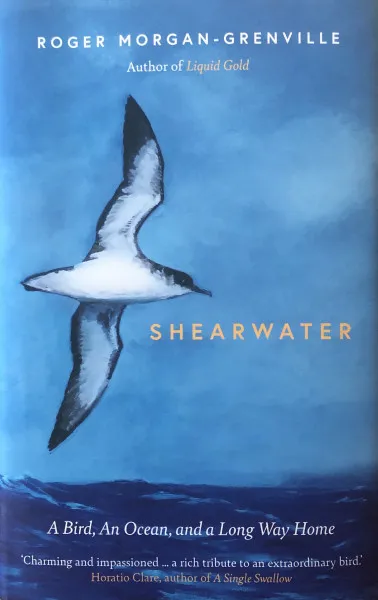
Shearwater: A Bird, an Ocean, and a Long Way Home
Author: Roger Morgan-Grenville
Publisher: Icon Books, London
Published: 2021
Part travelogue, part memoir, Morgan-Grenville’s book delivers an engaging account of one of our least accessible breeding birds, the Manx Shearwater. The 13 chapters are structured around a narrative journey, beginning under the watchful gaze of a grandmother whose strong presence shapes the remainder of the book. The story of the Manx Shearwater, both in its breeding colonies and out on the open ocean, is told in a way that brings together the bird’s ecology with acutely judged but lightly handled human observation. Through this approach we follow the author as he experiences the nocturnal arrivals of shearwaters at their breeding sites and meets the seabird ecologists working to understand this rather enigmatic bird. From the islands of Rum and Skomer, to the Península Valdés in Argentina, Morgan-Grenville’s travels follow those of our Manx Shearwaters as they return to their true home, a life on the wing that takes them across huge distances of ocean. This very well written book, touched with humour and presenting knowledge that is lightly-worn, provides an accessible and engaging introduction to this wonderful bird and to those remote places on the margins of our archipelago where, for a few brief weeks, it is tied to a terrestrial existence.
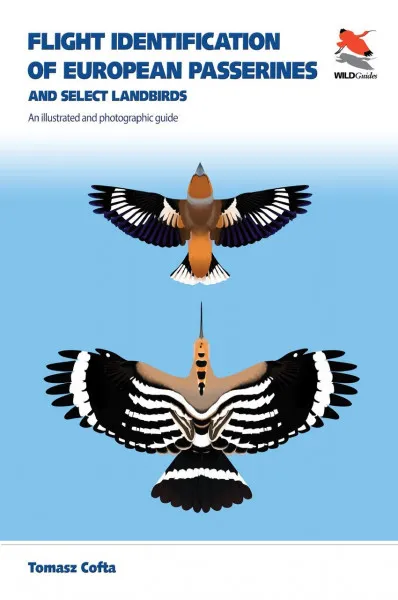
Flight Identification of European Passerines and Other Selected Landbirds: an Illustrated and Photographic Guide
Author: Tomasz Cofta, photographs by Michal Skakuj
Publisher: Princeton University Press, Princeton & Oxford
Published: 2021
Vis-migging, the art of watching, identifying and recording all of the birds seen flying through and over a particular watchpoint is better known as recording visible migration. The ability to accurately identify what often amount to little more than smallish dots is something that can only be gained by spending time vis-migging – lots and lots of time, learning the different flight patterns of the different families and the individual species. There is a short-cut to gaining the huge amount of knowledge and experience needed and that is to learn from someone else who has that knowledge and experience. In this book Tomasz aims to do just that, provide the reader with a mentor and a useable toolkit to help begin to tease apart the intricacies of the flight patterns of 237 European and Turkish birds. Each species is assigned an F-wave category (the undulating flight pattern of a bird), ranging from none - no discernible F-wave – to very distinctive, high F-wave, as seen in woodpeckers. Where it is a useful feature, the flight calls are also described phonetically and accompanied by a spectrogram of each call. At the front of the book there is a QR code that links to recordings of the flight calls described for each species, which alone is a very useful resource. Each of the species is illustrated by the most beautiful, original artwork by the author and accompanied by several photographs showing the features that are most encountered in flight. The artwork is sublime and shows each species in great detail from above, below and in profile. Each species is also accompanied by several in flight photographs and though I am not too sure how useful these are, they do provide another point of reference. Would I buy this book? Absolutely, it is a book I wouldn’t want to be without and I have found myself reading through it again and again, sometimes just to enjoy the wonderful illustrations.
All the Birds of the World
Author: Josep del Hoyo (editor)
Publisher: Lynx Edicions, Barcelona
Published: 2020
Lynx have had a long-term project to produce an exhaustive guide to the birds of the world. It started out with the 17 volumes of the Handbook of the Birds of the World (1992–2013) which has family and species accounts for all birds. This was followed by the two volumes of the Illustrated Checklist of the Birds of the World (2014–2016). They have now published the third and final stage of this avian odyssey with this current book. The publishers state that the book’s aim is “to bring the extraordinary richness and diversity of the world’s avifauna closer to a wider audience.” They do not see it as just an extension to the earlier works but believe they can give access to more people by concentrating on illustrations and range maps for all species, rather than delving too much into the subspecies level. The layout starts with an introduction followed by 800 pages comprising individual species illustrations and maps. There are also Appendices covering extinct species, differences in nomenclature, country codes, reference maps and one country endemics. The introduction sets out what to expect from each species account. As well as one or more illustrations for each species there is a range map showing wintering, breeding and residency areas. In addition, the body length of the species and its altitudinal range are given along with the current IUCN Red List of Extinction Risk category (ranging from Least Concern to Extinct in the Wild). The number of subspecies is given and distinct subspecies are also illustrated. There is a square checkbox for you to keep a personal record if required. There are two other key pieces of information in the species accounts. The first is a four segment circle called the taxonomic circle. The introduction goes into some detail about the four different world checklists that currently exist and how, whilst largely overlapping, they each have their own approach to the splitting and lumping of species based on different criteria. The taxonomic circle aims to summarise the differences between the four lists. This probably is more of interest to those with a deeper interest in ornithological taxonomy and does take a bit of scrutiny to understand. The second is the QR code for each species. This links via a smart phone app to the online resources of the Cornell Lab of Ornithology and it gives you access to all sorts of detailed information including photos, calls and video recordings. This links the book with the increasingly digital world many people live in. The more I looked at this book the more I liked it. I am going to use it to keep my world list and will use the QR codes to get more detailed info on any species I am interested in. For those who cannot afford or do not want all the previous volumes this might indeed open up access to the fascinating world of bird species.

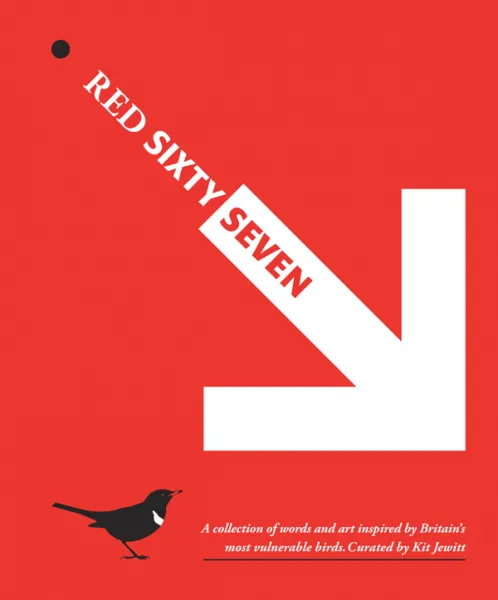
Red Sixty Seven
Author: 67 authors and 67 artists & curated by Kit Jewitt
Publisher: British Trust for Ornithology
Published: 2020
While public support for conservation continues to grow, the funding provided by governments has fallen away. Within the UK, public sector spending on biodiversity, expressed as a proportion of GDP, has fallen by 42% since 2008/09. This means conservationists have to prioritise where their limited funds should be spent, typically directing resources to either the best places for nature or the species in most need of our help. The identification of places and species is made possible by monitoring data, much of it collected by organisations like BTO. Identifying species in need The standard global approach to identifying species in need is to assess their risk of extinction (the IUCN’s Red List approach). For UK birds, however, we consider a broader range of issues and use these to assign each native species to one of three Birds of Conservation Concern (BoCC) categories based on strict criteria. These relate to whether or not the species is listed as ‘Globally Threatened’ on the IUCN Red List; whether there has been a historical decline in the breeding population; a more recent decline in the breeding population; a decline in the non-breeding population; a decline in breeding range; or a decline in non-breeding range. For each of these criteria there are thresholds. If the species meets the ‘Red’ thresholds then it is placed on the Red List; if not, then it might meet lower thresholds and be placed on the Amber List. If a species does not meet any of the thresholds then it is reenlisted. The BoCC review, published in 2015, made for sobering reading, with 67 species on the Red List (27.5% of the 244 species assessed). Raising awareness While the BoCC process provides a focus for conservation practitioners, researchers and policy-makers, it is also important to increase wider engagement with our most at-risk birds. Some Red-listed species are familiar ‘garden’ or ‘farmland’ birds, such as House Sparrow, Song Thrush, Lapwing and Yellowhammer, but many people will be unaware of the challenges they face. A new project, called Red Sixty Seven, has addressed this. Red Sixty Seven is the brainchild of Kit Jewitt, who many will know through his online alter ego YOLOBirder. The concept was simple; a book featuring all 67 Red-listed birds, each illustrated by a different artist and accompanied by a personal story from a diverse collection of writers. In addition to the money raised from book sales, the 67 artworks were auctioned, with all proceeds split between BTO and RSPB. The whole project was made possible because of the generosity of the writers and artists, who included Ann Cleeves, Patrick Barkham, Mark Cocker, Darren Woodhead, Carry Akroyd and Derek Robertson, all of whom gave their work for free. The success of Red Sixty Seven has been staggering, the artworks selling out within just a few hours. The entire first print run sold out in under a month, and two-thirds of the second print had sold before the books had even been delivered by the printer. A third print run followed. Importantly, the project has achieved significant reach across social media and in the press, introducing new audiences to these 67 birds and the work being done to conserve them. The book has been described as ‘67 love letters to our most vulnerable species’. It is a project of which we are rightly proud.
Fragile: Birds, Eggs and Habitats
Author: Colin Prior
Publisher: Merrell Publishers, London
Published: 2020
The acclaimed Scottish photographer Colin Prior is more usually associated with stunningly evocative panoramic landscapes of his homeland and further afield, but for his latest project the artist has returned to one of his first loves, birds; a passion nurtured while growing up on the edge of a Glasgow suburb. Like many however, Colin is acutely aware of the staggering decline of many species and the loss of the habitats they depend upon. Fragile is both inspired by and acts as a metaphor highlighting such demise. Fragile presents exquisite images of the eggs of a diverse range of bird species found throughout Scotland, paired with carefully chosen photographs of the landscapes in which they may be found. With incredibly detailed photographs of mostly a single egg for each species, prominently displayed on a white page uncluttered with extensive text, opposite the earthy hues of the Scottish landscape, the result really is eye-catching and quite unique. As a work of art Fragile represents a meticulous labour of love, with Colin’s passion for the natural world clearly evidenced in the colours of the landscapes, captured at just the right time of year to perfectly complement the markings of the eggs themselves. The maroon speckling overlaying the pale blue of a Bullfinch egg for example, pleasingly matches the purple and silver hues of winter birch and ash trees on the hillside of Glen Shira, Inveraray. Amazingly, every egg photograph is a focus stack of between 40 and 80 individual shots, combined using specialist software to produce images that are breathtakingly sharp throughout. The diptychs of eggs and their landscapes are organised into chapters according to habitat, ranging from mountain to rocky coast. For most, it is likely that Fragile would be considered a 'coffee table' book, making a worthy addition to any collection; yet this beautifully presented work is, in many ways, so much more than that. Instead, Fragile not only documents a remarkable project ten years in the making, but also that of the delicate connections between the implicitly fragile eggs featured therein, the vulnerability of so many of our bird populations, and the threatened habitats within which they are found. These connections are ably examined in an introductory essay by Professor Des Thompson, principal advisor on Science and Biodiversity with NatureScot, in which he considers the fascinating form and vital function of birds’ eggs, the rapidly changing landscapes that our birds inhabit, and the damage that humanity has caused to those environments as evidenced through eggs themselves. The eggs photographed for the book are sourced from the collection held by National Museums Scotland in Edinburgh and the scientific value of such collections is discussed by Bob McGowan, a Senior Curator in the Department of Natural Sciences. He sensitively reviews the history of egg collecting and the unquestionable ethics outlawing what was once a legitimate pursuit in the UK. This narrative is framed by the opportunity museum collections provide for conservation research, most notably that describing the precipitous decline of raptor populations resulting from widespread organochlorine pesticide use in agriculture during the previous century. Fragile is first and foremost a book of photography, and devotees of Colin’s Scottish landscapes will not be disappointed. On the other hand, readers hoping to gain further insight into the nesting ecology of the included species will find themselves left wanting. The essays are insightful, and along with Colin’s account of his lifelong inspiration for the project and the creative process, add the necessary scientific context to the work. Sadly, there are one or two issues with the book, not least of which is the thickness of the paper stock used throughout, the lack of any FSC certification, and the printing outsourced to China; this disappoints and grates slightly with the intended environmental message. Concerning the contents, it would perhaps have been useful to have included, for each egg, an indication of their life-size, perhaps by including a scale bar below the caption; and whilst the duplication of some species within the same habitat chapter may serve to highlight the bewildering variety of colouration and marking, this comes at the expense of excluding others.

Lincolnshire Bird Atlas 1980-1999
Author: Lincolnshire Bird Club
Publisher: Lincolnshire Bird Club
Published: 2020
Published soon after the series of local atlases that coincided with Bird Atlas 2007–11, you might think the Lincolnshire Bird Atlas would span a similar period. You might expect a lavishly illustrated atlas with up to date distribution maps. You’d be wrong on both counts because this is a very different atlas, one from a different era. An atlas that nearly never was. There’s a temptation with any atlas to jump straight to the maps but I always recommend readers look carefully at the introductory chapters so they understand how to interpret what follows. This is especially important with the Lincolnshire Bird Atlas because it details the rocky road this project took, from inception in 1980, mothballing in the late 1990s, and three failed revivals in the 2000s before the project was finally brought to publication during 2017–20. It describes how ‘IT archaeology’ was required to access and extract maps and species accounts produced in the late 1990s. These have been faithfully reproduced, providing a snapshot into the past – not only revealing what bird distributions looked like in the late 20th century, but also what the experts of the day knew about the birds of their county. It documents the distribution of 129 breeding species based on fieldwork between 1980 and 1995, plus short accounts for a further 241 non-breeding species recorded up to 1999. Without the benefit of latterly arriving egrets, buzzards and kites, it is a stark reminder of what we have lost - wall-to-wall Turtle Doves, Redshanks breeding in every saltmarsh-dominated tetrad, and Swallows in over 90% of tetrads. This book is an important baseline documenting the status and fine-scale distribution of birds in England’s second largest county. I grew up in the Lincolnshire Fens, and fieldwork for this atlas was the first systematic surveying I ever did, so I am delighted to see it published. It brings back memories of finding breeding Lesser Spotted Woodpeckers and searching for Long-eared Owls in Fenland spinneys. The Lincolnshire Bird Atlas may not be as colourful or elegantly designed as some modern atlases, but there are very good reasons for that and I think it would be a mistake to judge it harshly. It contains a wealth of information that was almost lost, but here it is preserved for future generations of researchers and birders I recommend this book to everyone who took part and to anyone with an interest in Lincolnshire’s birds.

My Birding Life
Author: Moss Taylor
Publisher: Wren Publishing, Sheringham
Published: 2020
Ask any birder or naturalist that lives in Norfolk if they know the name Moss Taylor and invariably, they will say "yes", and I suspect the majority will have met him too, and of these many know him as a friend. He is a man, on first meeting, you are unlikely to forget! Moss has been a keen birder since 1953 and a Norfolk resident from 1969 to the present day. He has also been a qualified ringer for over 50 years, only recently surrendering his permit after some of the most pioneering ringing endeavours seen in Norfolk in the 1970s and 80s. He is perhaps best known though through his prolific publishing efforts – some 10 book titles to date not to mention 850 other articles for magazines and newspaper columns. It would be a mistake to think that his latest offering My Birding Life is no more than a birder reminiscing about the past and the good old days! Having said that it is very obvious from his accounts of birding in Norfolk in the 1970s that they were indeed glorious, good old days. The history of Norfolk birding on the North Norfolk coast is rich and extraordinary as illustrated in Moss’s accounts and I defy even the hardest nosed young birder not to be amazed by the birds recorded in that decade but also by the events and personalities involved in establishing what we now take for granted as the mainstream channels for our birding news. What is important in these historic accounts (chapters 4,5 and 6) is that they are now documented for posterity’s sake, rather than lost and forgotten, thanks to Moss’s detective work and his obsessive interest in finding and obtaining historic documents, photographs and artefacts – everything from notebooks from Nancy’s Café (Cley) and Richard Richardson illustrations and paintings to old and rare Norfolk natural history books. Moss is also a much-travelled birder to many parts of the world. His early excursions were to remote parts of North Africa as part of ringing expeditions to study migration, where members, on one expedition, came perilously close to losing their lives due to flash flooding, His later travels were tame and more measured by comparison, either on organised birding tours or as a lecturer on cruise ships. Even if organised tour trips and cruise ships aren’t your thing you will still find these accounts fascinating and full of incidents and humour! Although I have known Moss for nearly 50 years, what I had not appreciated about him is his phenomenal ability to recall detail of a story or event, as witnessed throughout the book. It must surely be a result of extensive note taking (though I have never seen him write a dot of a note when I have been birding with him!), which, if true, must take up more time than his birding! It’s almost as if he decided in his early birding career that "one day I will write a book on My Birding Life!" In the unlikely event that you have never heard of Moss Taylor I guarantee that you will find this a fascinating read.
