Gannet
Introduction
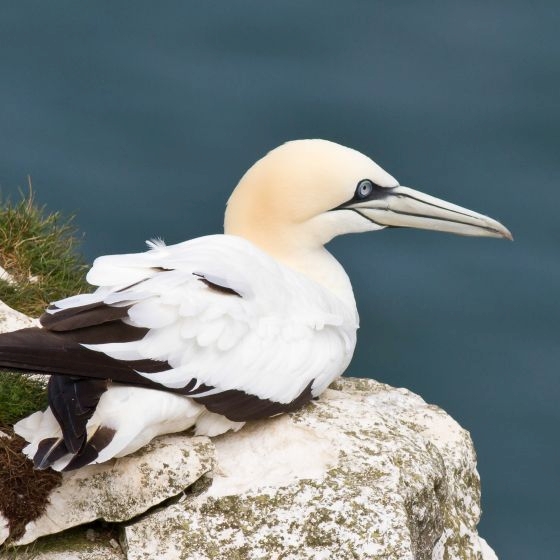
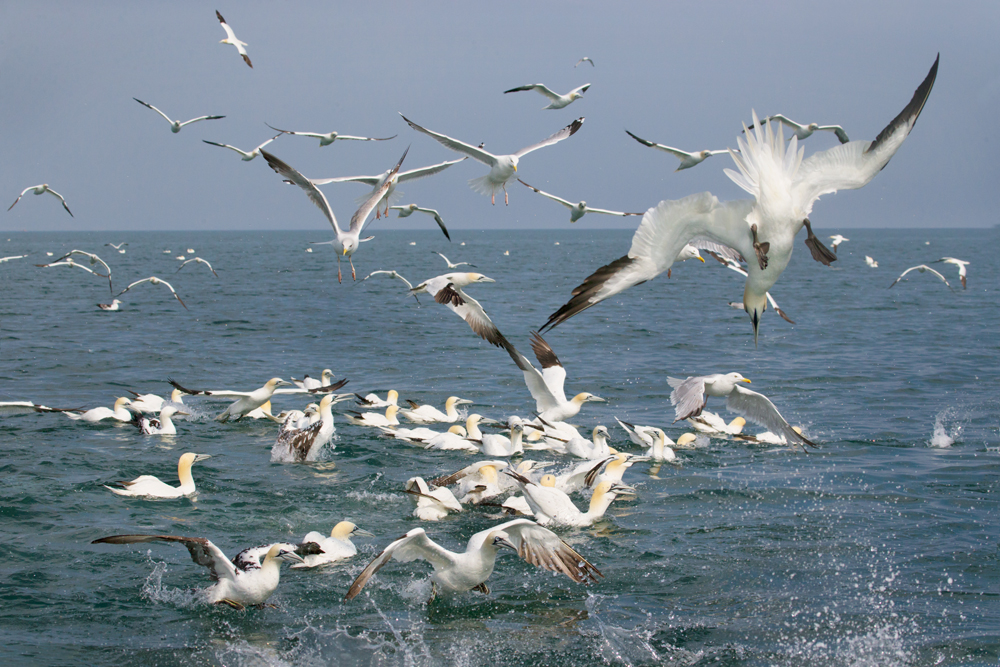
With its two metre wingspan, warm yellow head, white body and black wingtips, this impressive bird will be familiar to most birdwatchers.
Even though the Gannet is restricted to a couple of dozen breeding colonies, individuals may be seen anywhere around our coast throughout the year. The breeding colonies are noisy, pungent affairs, the birds packed together with each individual just out of beak reach of its neighbours.
After the breeding season, most of our Gannets move to winter in the Bay of Biscay or further south to the coasts of west Africa, with some individuals crossing the Equator.
Key Stats





Identification
Songs and Calls
Call:
Status and Trends
Conservation Status
Population Change
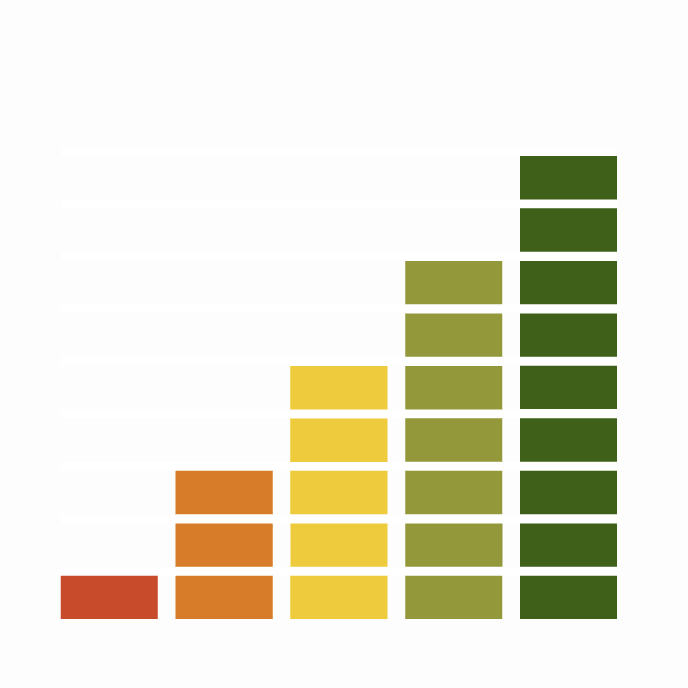
Much of the world population of this species breeds in the UK or Republic of Ireland,with most colonies located on offshore islands. Gannet colonies have been censused regularly with the last Census in 2013–15 and have increased consistently since 1969–70 by around 2% per annum (JNCC 2022).
Distribution
The Gannet breeding distribution map shows that birds were recorded from virtually every coastal 10-km square in Britain and Ireland, representing a combination of adult birds ranging widely on foraging trips from colonies, non-breeding adults and immature birds. Confirmed breeding was confined to 32 10-km squares. In winter, Gannets were widely recorded around the entire coastlines of Britain and Ireland, with highest concentrations around the Northern Isles, off southeast Scotland, northwest and southwest England, and southwest Ireland.
Occupied 10-km squares in UK
2007/08–10/11
or view it on Bird Atlas Mapstore.
2008–11
or view it on Bird Atlas Mapstore.
European Distribution Map
Distribution Change
Change in occupied 10-km squares in the UK
from 1981–84 to 2007–11
or view it on Bird Atlas Mapstore.
from 1968–72 to 2008–11
or view it on Bird Atlas Mapstore.
Seasonality
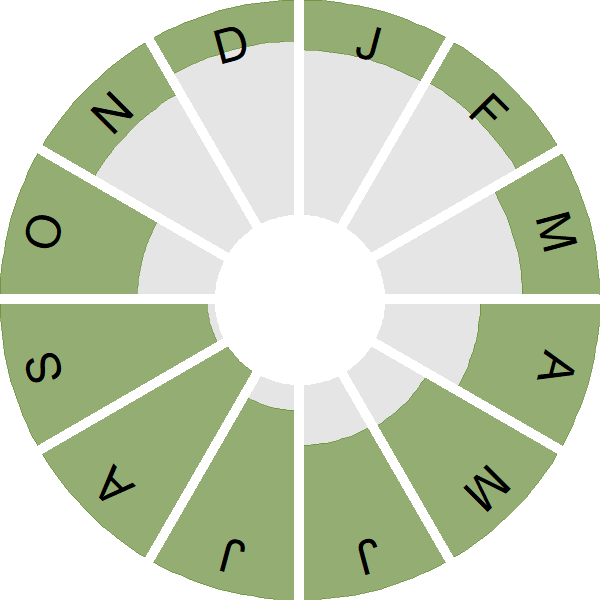
Gannets can be seen year-round, though more often recorded in the breeding season and in early autumn.
Weekly pattern of occurrence
The graph shows when the species is present in the UK, with taller bars indicating a higher likelihood of encountering the species in appropriate regions and habitats.

Movement
Britain & Ireland movement
Foreign locations of birds ringed or recovered in Britain & Ireland
Dots show the foreign destinations of birds ringed in Britain & Ireland, and the origins of birds ringed overseas that were subsequently recaptured, resighted or found dead in Britain & Ireland. Dot colours indicate the time of year that the species was present at the location.
- Winter (Nov-Feb)
- Spring (Mar-Apr)
- Summer (May-Jul)
- Autumn (Aug-Oct)

European movements
EuroBirdPortal uses birdwatcher's records, such as those logged in BirdTrack to map the flows of birds as they arrive and depart Europe. See maps for this species here.
The Eurasian-African Migration Atlas shows movements of individual birds ringed or recovered in Europe. See maps for this species here.
Biology
Productivity and Nesting
Nesting timing
Egg measurements
Clutch Size
Survival and Longevity
Survival is shown as the proportion of birds surviving from one year to the next and is derived from bird ringing data. It can also be used to estimate how long birds typically live.
View number ringed each year in the Online Ringing Report.
Lifespan
Survival of adults
Survival of juveniles
Biometrics
Wing length and body weights are from live birds (source).
Ring Size
Classification, names and codes
Classification and Codes
- Order: Suliformes
- Family: Sulidae
- Scientific name: Morus bassanus
- Authority: Linnaeus, 1758
- BTO 2-letter code: GX
- BTO 5-letter code: GANNE
- Euring code number: 710
Alternate species names
- Catalan: mascarell atlàntic
- Czech: terej bílý
- Danish: Sule
- Dutch: Jan-van-gent
- Estonian: suula
- Finnish: suula
- French: Fou de Bassan
- Gaelic: Sùlaire
- German: Basstölpel
- Hungarian: szula
- Icelandic: Súla
- Irish: Gainéad
- Italian: Sula
- Latvian: ziemelu sulla
- Lithuanian: šiaurinis padukelis
- Norwegian: Havsule
- Polish: gluptak (zwyczajny)
- Portuguese: alcatraz
- Slovak: sula biela
- Slovenian: strmoglavec
- Spanish: Alcatraz atlántico
- Swedish: havssula
- Welsh: Hugan
- English folkname(s): Solan Goose
Research
Causes of Change and Solutions
Causes of change
There are no clear reasons for the substantial increases in Gannet numbers. Like other seabird species, fisheries discards may have played a role in the second half of the twentieth century. Gannets have high survival rates, can fly long distances to forage and are adaptable and these factors may also have helped drive increases (JNCC 2022), which have continued (at least so far) in spite of reductions in fisheries discards which are affecting other species (Bicknell et al. 2013). However, a north American study has found that increasing sea surface temperatures (due to climate change) and over-exploitation by fisheries may be affecting productivity and causing declines at the southernmost colonies in Canada (d'Entremont et al. 2022). Hence, it is possible that similar issues could affect UK colonies in the future.
Publications (14)
Seabird Population Trends and Causes of Change: 1986–2024
Author:
Published: 2026
The annual report of the Seabird Monitoring Programme View and download the report Read the report online This report presents the latest seabird population trends in breeding abundance and productivity using data from the Seabird Monitoring Programme (SMP). It documents changes in the abundance and productivity of breeding seabird species in Britain and Ireland from 1986 to 2024. This report includes both inland and coastal populations and trends from the Channel Islands, England, Isle of Man, Northern Ireland, Scotland, Wales and the Republic of Ireland, which are presented where sufficient data are available. The results from this report are used more broadly to assess the health of the wider environment, to inform policy and for conservation action.
19.03.26
Reports SMP Report
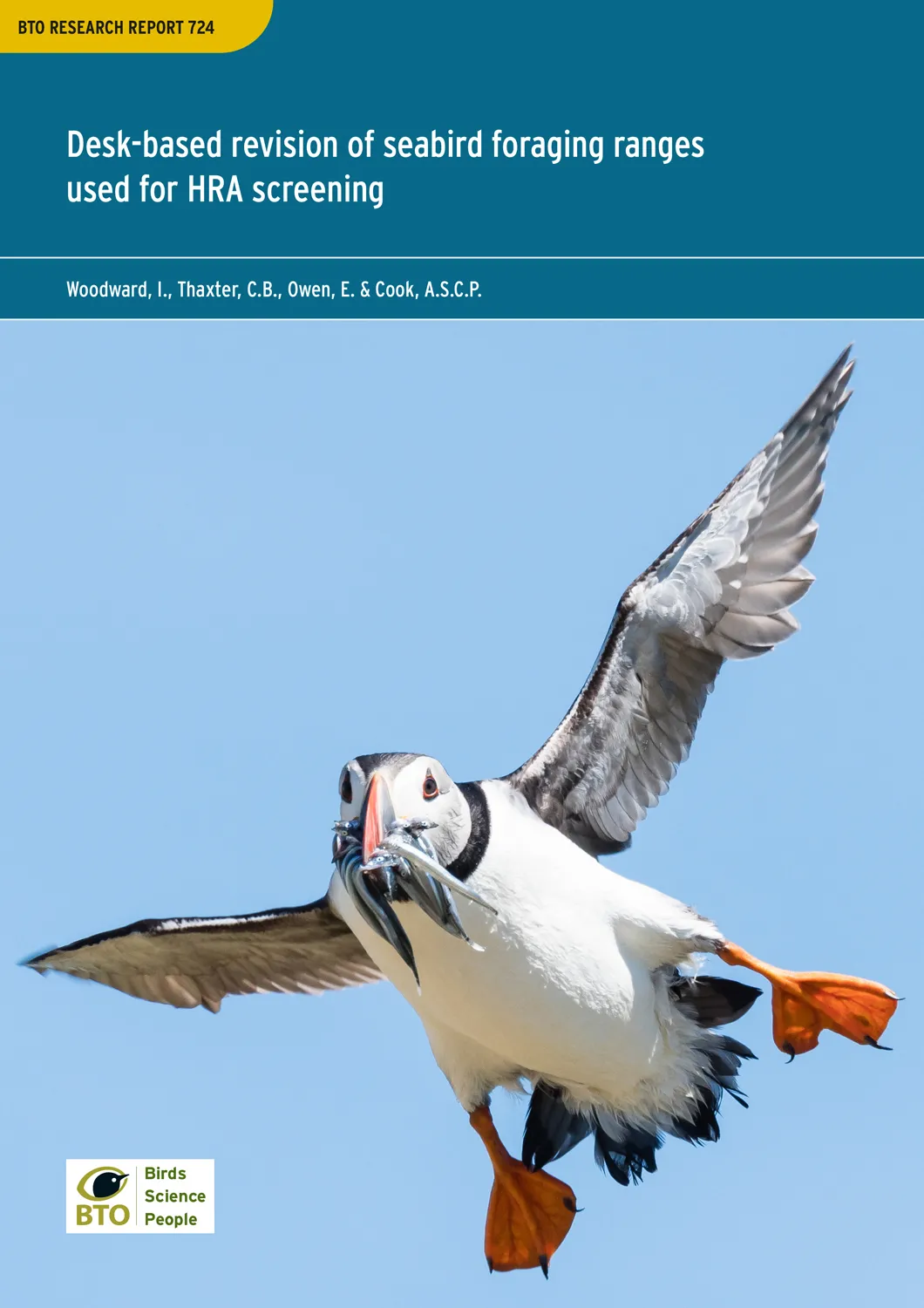
Desk-based revision of seabird foraging ranges used for HRA screening
Author:
Published: 2019
A key step in understanding the possible impacts of a proposed windfarm development is to identify potential interactions between seabird breeding colonies and the proposed development areas. Such interactions are typically assessed using generic information on foraging ranges, derived from academic studies. This report uses the latest data to provide updated estimates of foraging range, which will help to ensure that the best available information is available when new developments are being considered.
01.12.19
BTO Research Reports
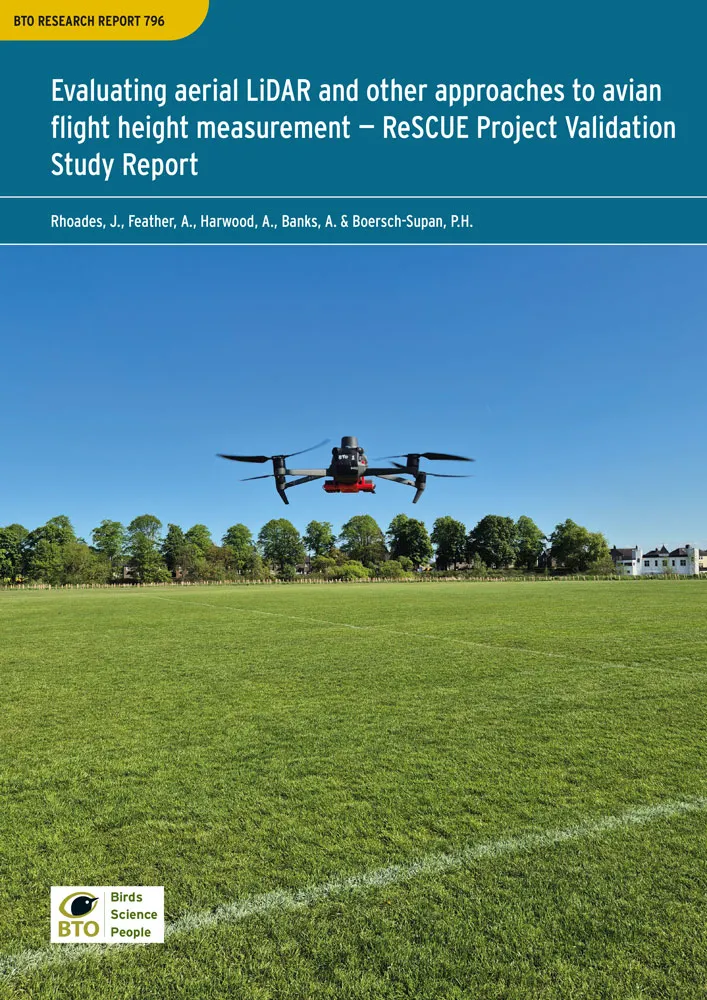
Evaluating aerial LiDAR and other approaches to avian flight height measurement – ReSCUE Project Validation Study Report
Author:
Published: 2025
This report investigates the accuracy and reliability of seabird flight height data that are used to mitigate impacts of offshore wind farms on seabird populations. Through a set of trials, we set out to validate Light Detection and Ranging (LiDAR)-coupled Digital Aerial Surveys (DAS), and to a lesser extent size-based methods. Additional technologies evaluated in the trials included bird-borne Global Positioning System (GPS) telemetry tags and human-operated laser rangefinders. We found that the comparative performance of the two LiDAR-coupled Digital Aerial Survey suppliers varied based on system differences and weather conditions during surveys, particularly in terms of detection rates from different sensors. LiDAR flight height measurements, however, proved to be accurate and precise for both suppliers, with measurement uncertainties on the scale of centimetres. In contrast, size-based DAS estimates had uncertainties on the order of tens of metres. Findings from this study will directly inform the development of best practice guidance for seabird flight height data collection and analysis, supporting impact assessments for offshore wind farms while minimising ecological risks to seabird populations.
14.10.25
BTO Research Reports
The status of the UK’s breeding seabirds
Author:
Published: 2024
Five seabird species are added to the Birds of Conservation Concern Red List in this addendum to the 2021 update, bringing the total number of Red-listed seabird species to 10, up from six since seabirds were last assessed. The Amber List of seabirds moves from 19 to 14 species, and the Green List increases from one to two species.
29.09.24
Papers
Seabird Population Trends and Causes of Change: 1986–2023
Author:
Published: 2024
This report presents the latest seabird population trends in breeding abundance and productivity using data from the Seabird Monitoring Programme (SMP).The report documents changes in the abundance and productivity of breeding seabird species in Britain and Ireland from 1986 to 2023, and provides a detailed account of the 2021, 2022 and 2023 breeding seasons. This report includes both inland and coastal populations and trends from the Channel Islands, England, Isle of Man, Northern Ireland, Scotland, Wales and the Republic of Ireland, which are presented where sufficient data are available. The results from this report are used more broadly to assess the health of the wider environment, to inform policy and for conservation action.
21.11.24
Reports SMP Report
Mismatches in scale between highly mobile marine megafauna and marine protected areas
Author:
Published: 2022
Marine Protected Areas are designated to protect marine fauna, such as whales, sharks, turtles and seabirds, but are we getting them right? Tracking data provide valuable information on the movements and space use of species, so can these be used to help us plan and deliver better protected areas for marine magafauna and their habitats?
20.07.22
Papers
Predicting the impacts of wind farms on seabirds: An individual-based model
Author:
Published: 2017
1. Individual-based models (IBMs) are a powerful tool in predicting the consequences of environmental change on animal populations and supporting evidence-based decision making for conservation planning. 2. There are increasing proposals for wind farms in UK waters and seabirds are a vulnerable group, which may be at risk from these developments. 3. We developed a spatially explicit IBM to investigate the potential impacts of the installation of wind farms in the English Channel and North Sea on body mass, productivity and mortality of a breeding population of Northern gannets for which we have tracking data. 4. A baseline model with no wind farms accurately represented the status of a sample of tracked gannets at the end of the 90-day chick-rearing period, and the behaviourtime budget was similar to that of tracked gannets. 5. Model simulations in the presence of wind farms indicated that installations should have little impact on the gannet population, when either avoidance behaviour or collision risk scenarios were simulated. Furthermore, wind farms would need to be ten times larger or in more highly used areas in order to have population-level impacts on Alderney’s gannets. 6. Synthesis and applications. Our spatially explicit individual-based models (IBM) highlight that it is vital to know the colony-specific foraging grounds of seabirds that may be impacted, when identifying potential wind farm sites, in order to account for cumulative impacts from multiple sites. Avoiding areas highly used for foraging and commuting, and avoiding large-scale developments should be effective in limiting gannet mortality as a result of collision, competition and energy expenditure. Our IBM provides a robust approach which can be adapted for other seabird populations or to predict the impacts from other types of spatial change in the marine environment. 1. Individual-based models (IBMs) are a powerful tool in predicting the consequences of environmental change on animal populations and supporting evidence-based decision making for conservation planning. 2. There are increasing proposals for wind farms in UK waters and seabirds are a vulnerable group, which may be at risk from these developments. 3. We developed a spatially explicit IBM to investigate the potential impacts of the installation of wind farms in the English Channel and North Sea on body mass, productivity and mortality of a breeding population of Northern gannets for which we have tracking data. 4. A baseline model with no wind farms accurately represented the status of a sample of tracked gannets at the end of the 90-day chick-rearing period, and the behaviourtime budget was similar to that of tracked gannets. 5. Model simulations in the presence of wind farms indicated that installations should have little impact on the gannet population, when either avoidance behaviour or collision risk scenarios were simulated. Furthermore, wind farms would need to be ten times larger or in more highly used areas in order to have population-level impacts on Alderney’s gannets. 6. Synthesis and applications. Our spatially explicit individual-based models (IBM) highlight that it is vital to know the colony-specific foraging grounds of seabirds that may be impacted, when identifying potential wind farm sites, in order to account for cumulative impacts from multiple sites. Avoiding areas highly used for foraging and commuting, and avoiding large-scale developments should be effective in limiting gannet mortality as a result of collision, competition and energy expenditure. Our IBM provides a robust approach which can be adapted for other seabird populations or to predict the impacts from other types of spatial change in the marine environment.
10.08.17
Papers
Predictive modelling to identify near-shore, fine-scale seabird distributions during the breeding season
Author:
Published: 2016
27.05.16
Papers
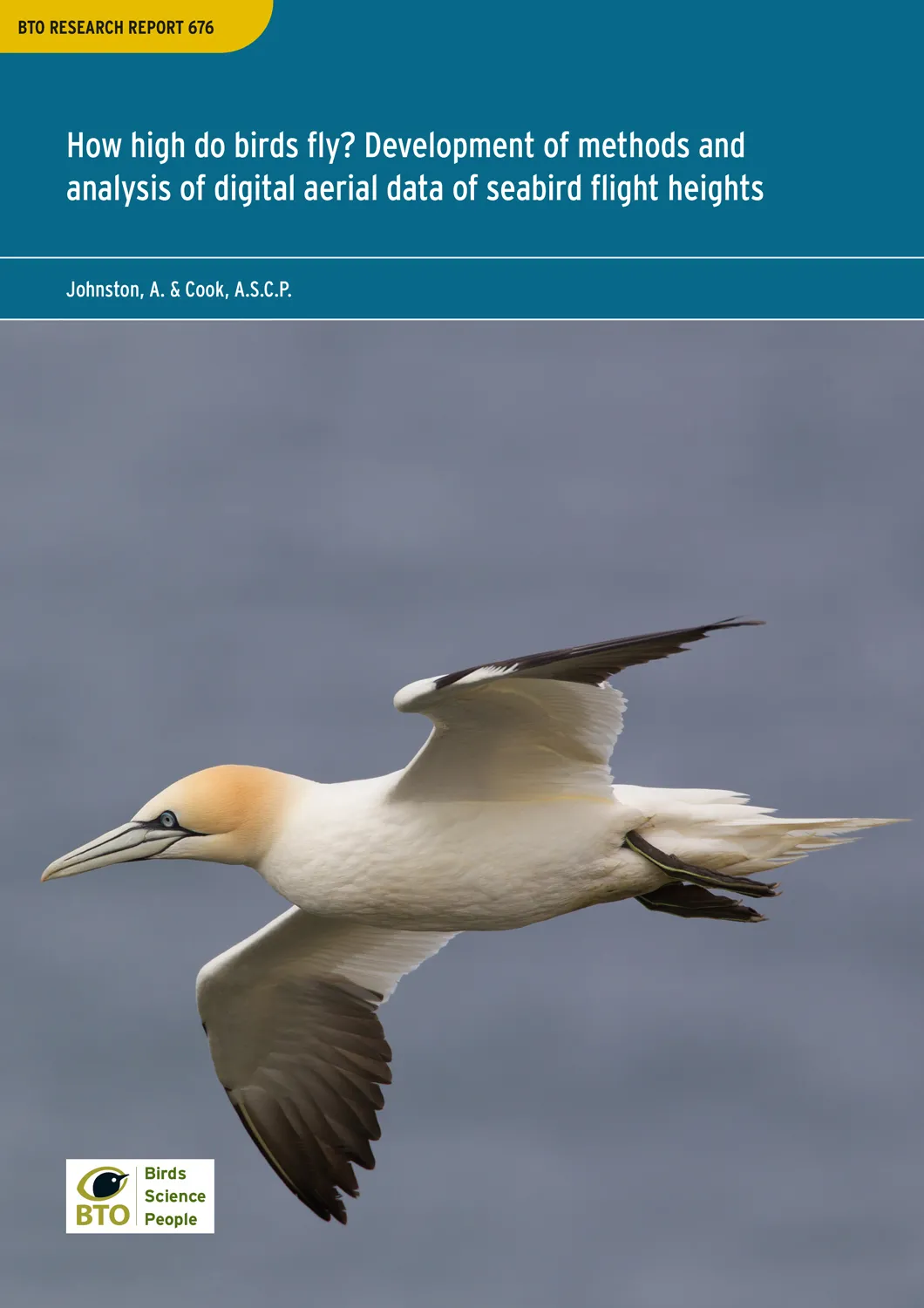
How high do birds fly? Development of methods and analysis of digital aerial data of seabird flight heights
Author:
Published: 2016
The purpose of this work was to develop a method for analysing digital aerial ornithology survey data, to derive species-specific flight heights. The focus of this work has been to develop an approach to analysis, rather than analysing a comprehensive dataset to derive generic flight height values. Although the project has been successful in developing such an approach to analysis, the BTO and Steering Group for the work emphasises that the values presented in this report are not intended to be used to inform assessments. Any party undertaking an ornithological collision risk assessment should seek advice from the relevant regulators and statutory nature conservation bodies on appropriate flight height values and avoidance rates to use. This report does not constitute such statutory advice.
16.03.16
BTO Research Reports
The avoidance rates of collision between birds and offshore turbines
Author:
Published: 2014
Report of work carried out by the British Trust for Ornithology in collaboration with the Environmental Research Institute on behalf of the Marine Scotland Science. Accurately estimating birds’ risk of collision with offshore wind turbines is a key part of the decision-making process for proposed renewable developments. However, the evidence base for quantifying the number of birds likely to avoid colliding with turbines is limited. Recent BTO-led work helping to fill this gap, improving the understanding of the impacts of offshore renewables on marine wildlife.
03.12.14
Reports Other reports
Seabird foraging ranges as a preliminary tool for identifying candidate Marine Protected Areas
Author:
Published: 2012
The UK government is committed to establishing an ecologically coherent network of Marine Protected Areas (MPAs) to manage and conserve marine ecosystems. Seabirds are vital to such ecosystems, but until now these species have received little protection at sea. This is partly because there is scant information available on the oceanic regions they use at the different stages of their lifecycle. A new study led by the BTO, in partnership with the RSPB and Birdlife International, has sought to address this by bringing together work on how far UK-breeding seabirds travel from their colonies (typically in search of food for themselves or their chicks) during the breeding season. This study used results from tracking, indirect measures and survey-based observations of seabird movements to calculate ranges over which seabirds might forage. It also assessed the validity of these ranges based on the quality of the methods underpinning them. Manx Shearwater, Northern Gannet and Northern Fulmar had the largest maximum foraging ranges at 330, 590 and 580 km respectively, while Red-throated Diver (9 km) and Little Tern (11 km) had the smallest. The approach taken in this study can be used as a first step in identifying areas of ocean away from breeding colonies that may be crucial for sustaining seabirds. Further work would then be then required to firm up the boundaries of specific MPAs. This approach is however, relatively cheap and simple, and could easily be adopted outside the UK to become an important tool in protecting seabird habitat globally.
01.01.12
Papers
Survival of Gannets Morus bassanus in Britain and Ireland, 1959-2002
Author:
Published: 2006
01.01.06
Papers
Use of gannets to monitor prey availability in the NE Atlantic Ocean: colony size, diet and foraging behaviour
Author:
Published: 2006
01.01.06
Papers
More Evidence
More evidence from Conservation Evidence.com
Partners




Citing BirdFacts
If you wish to cite particular content in this page (e.g. a specific value) it is best to use the original sources as linked in the page. For a more general citation of the whole page please use: BTO (20XX) BirdFacts Species: profiles of birds occurring in the United Kingdom. BTO, Thetford (www.bto.org/birdfacts, accessed on xx/xx/xxxx).