BTO Senior Research Ecologist Nina O’Hanlon teams up with BTO’s People and Inclusion Officer Anna Dupont-Crabtree to communicate science through the medium of a comic!
Nina O’Hanlon sets out the science
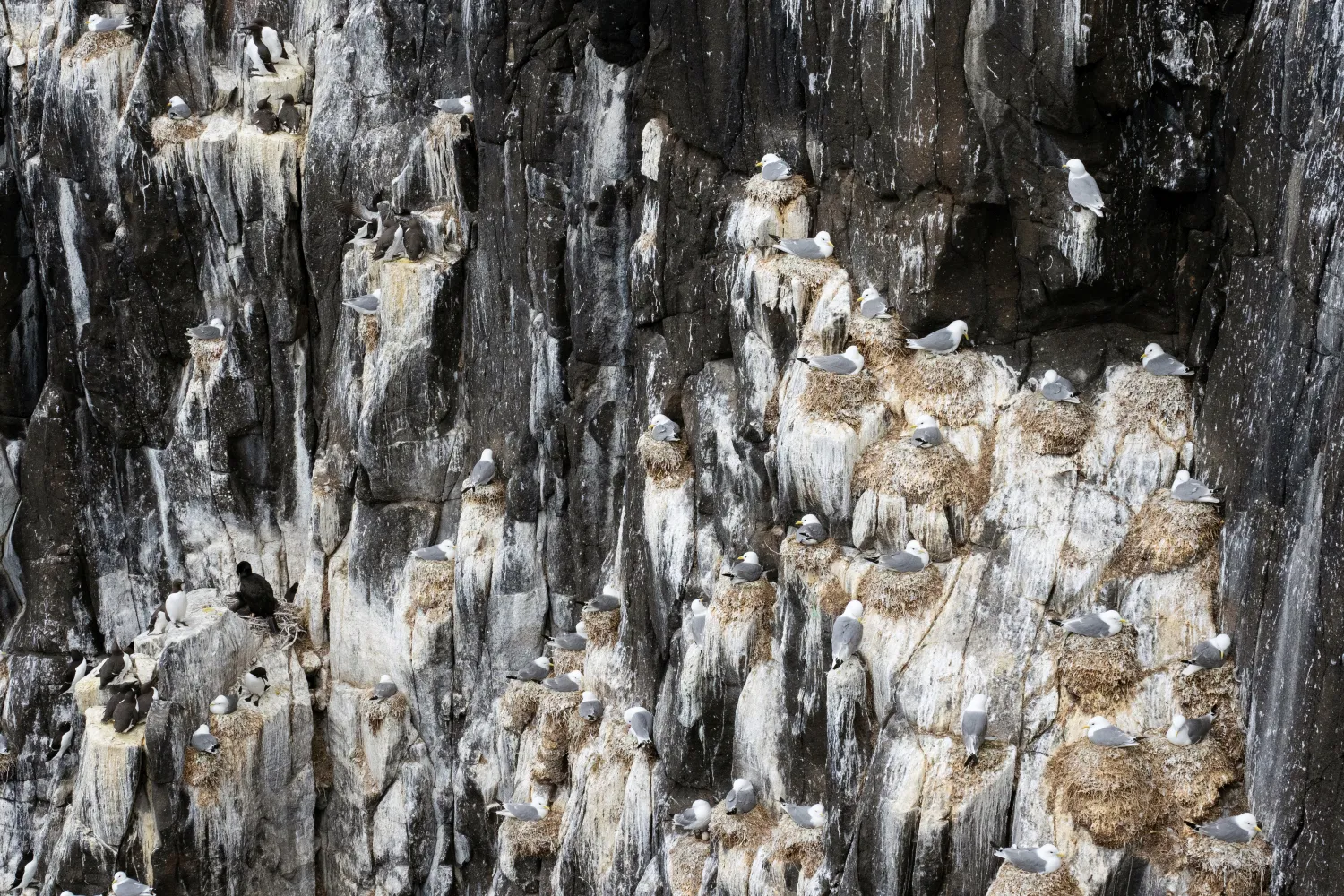
Seabirds across the UK, and globally, are in trouble. Many species, from Puffins and Fulmars to gulls and terns are experiencing declines in their breeding numbers. A key reason is that seabirds rely on both marine and terrestrial habitats to forage and raise their chicks. Therefore, they can encounter multiple pressures and threats across both landscapes.
 Understanding what seabirds eat is an important part of understanding these declines, as their diet is closely linked to how many chicks they raise and their own chances of survival. However, monitoring seabird diet can be difficult, especially where they breed on offshore islands and inaccessible cliffs. To try and improve our knowledge of seabird diet, we have been trialling a different way of identifying what seabirds eat. Instead of spending hours at the colony, observing what adults are bringing back to their chicks or searching for regurgitated food, we have been collecting seabird poo – something which seabird colonies are usually full of!
During the 2023 breeding season, we collected fresh faeces from Kittiwakes and Shags across four locations along the west coast of Scotland. We mostly scraped faeces from rocks, nests or clothing whilst birds were being ringed, but Kittiwake faeces from one site was collected from birds roosting on a beach (eliminating the need to enter the colony completely!).
All these opportunistically collected faeces were then sent off to a laboratory to extract and identify DNA of prey species within it (through a process called DNA metabarcoding). We awaited the results with bated breath! A few months later we got a list of fish and marine invertebrate (crab and squid) species that the Shags and Kittiwakes had been eating. Sandeels, Atlantic Herring and European Sprats were common in the Kittiwake faeces, whilst cod species were also common in the Shag faeces; agreeing with previous diet studies of these species in Scotland. This study confirms that extracting DNA from faeces provides a non-invasive and practical method to better understand seabird diet, especially from colonies that are logistically challenging to visit.
We followed the typical path for research studies in making sure our results reached those that would find them useful, i.e. other seabird researchers and conservationists, And published the study as a paper in a peer-reviewed journal. However, as all the faeces in this study was collected by volunteer bird ringers we also wanted to make sure that our paper was freely accessible to anyone to read, not just other scientists. Therefore, we submitted it to the open-access journal Seabird. However, although anyone who has online access can go and read the paper, it is still written in quite a formal way for a scientific audience.
Whenever BTO research is published we always aim to write a more general, non-scientific summary on our website, which is publicised through the BTO’s social media channels (i.e. Bluesky, Facebook, Instagram and LinkedIn). However, while many of our followers are nature enthusiasts and are highly informed, the majority are not scientists. So, how might we engage the broadest possible audience with our research to get people excited about seabirds, and therefore potentially support their conservation? There’s something about talking about poo, whatever the species, that piques people’s interest, however young or old, even if it is to just laugh at the idea. The concept of collecting poo and then identifying the remains of what birds have been eating is also pretty simple. This led us to think that we could be a bit more creative in telling people about this research – through the creation of a comic. The most important piece of this coming together was that we also have a fantastic illustrator within the BTO staff, Anna!
Anna Dupont-Crabtree explores the art
I was delighted when Nina got in touch with a proposal to work together on making a more creative and accessible version of her paper. At BTO, part of our focus on Becoming (more) Inclusive is to explore new ways of making our science outputs more engaging to a wider audience, so this felt like a perfect opportunity to pilot this approach.
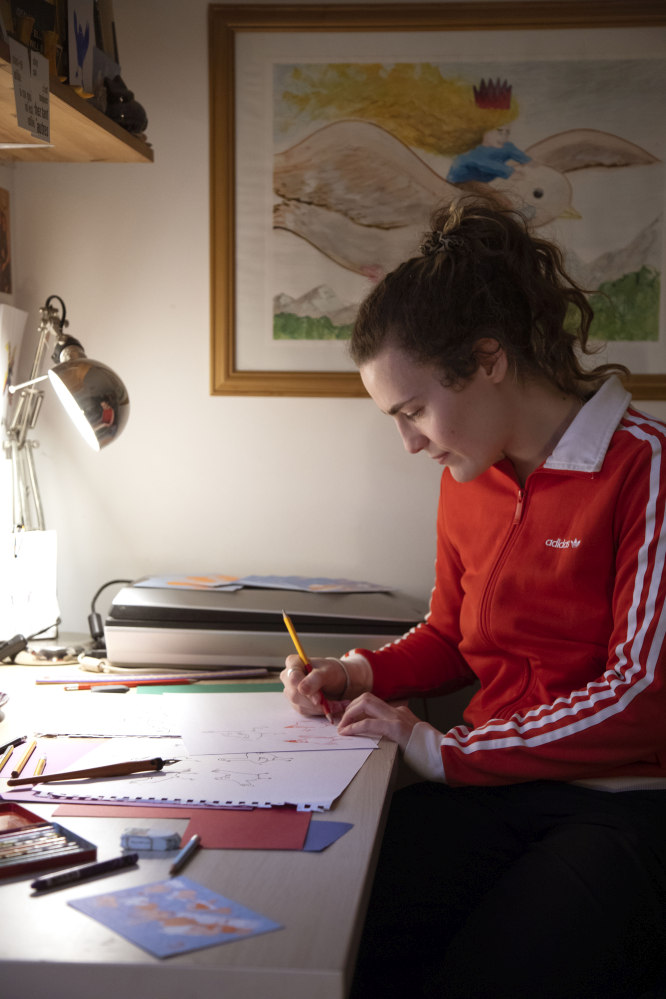 The process for creating the comic began by discussing the key elements of the paper with Nina, and working out which could easily be translated into visuals. I wanted these to follow the same trajectory as the text, while skipping the more data-heavy sections: giving context to the research, explaining the method, giving an insight into the fieldwork, revealing the results and finally giving the pros and cons of the method. Next, I designed some illustrations for each of these sections, which I always do by hand, using China ink. Finally, I scanned my drawings, so I could edit and colour them in using my computer.
I believe that art can be used as a tool to enhance our imagination and receptiveness towards what might otherwise feel quite abstract or heavy subjects, such as discussing the impacts of climate change or biodiversity loss. Moreover, adding humour to the comic offers common-ground, giving everyone an opportunity to engage with the content – starting with me, as a non-scientist! Although the comic is simplified enough for a younger audience to understand, I don’t think there is an age limit for enjoying it, which is why I think this medium is particularly relevant and appropriate for translating science – it can be read by all and hopefully will inspire and influence a few people to find out more about seabirds and the work of BTO. I am adamant that art can participate in transforming and rebuilding our relationships with nature and birds, so it seems to me that allying art and science is one of the most powerful ways forward to convey the important work of BTO, and to open up discussions and opportunities for everyone to be involved.
View Anna’s artwork
O’Hanlon, N.J. et al. 2025. Diet analysis of Kittiwake Rissa tridactyla and Shag Gulosus aristotelis using DNA metabarcoding of faeces. Seabird 37: 58–77.
Thanks to Mark Constantine for funding this research.