Behaviour
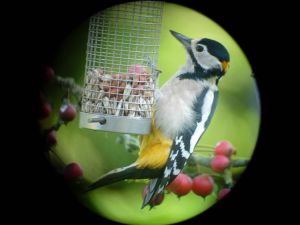
In the majority of cases, the behaviour of abnormal-looking birds has been described as being very similar to that of 'normal' individuals of the same species. This is interesting, as there is reason to suspect that differences might be detected. For example, abnormal birds might not be accepted by a potential mate or might give the wrong signals to other birds, causing communication problems. Despite some reports of abnormal birds being loners, sometimes even 'bullied' by others of the same or of different species, there are equivalent numbers of reports of abnormal individuals being more aggressive, apparently even dominant over others, and plenty that behave and are treated normally.
Of those birds that were seen during the spring and summer, only 12% were confirmed to be breeding. This is perhaps understandable given that appearance plays a significant part in choosing a mate so those that are drastically different may struggle to find a mate. Once breeding, abnormal plumage made little difference – of those breeding, 64% seemed to do so successfully (e.g. seen bringing food to young).
Perhaps the most significant behavioural effect is, in fact, in people. Being easily identifiable, garden bird enthusiasts often develop a special bond with abnormal-looking birds and chart their fortunes with particular interest. One survey participant in Birmingham, after seeing a leucistic Blackbird, commented: “Handy to have the white tail as it makes her easy to spot – children love seeing her.” Some birds have been described as appearing to wear “a scarf”, “an Elizabethan Ruff” or “a white helmet”. Other birds have had patches of white as if they “had been painting” or “rolled in flour”. One Blackbird was described as having “go faster stripes!”
Have you ever seen a bird with unusual plumage characteristics in your garden? Was it behaving unusually? Please let us know by taking part in our Abnormal Plumage Survey.

Share this page