Core surveys

BirdTrack logo

BirdTrack

Time commitment & skill level

BirdTrack is a great way for you to keep a record of the birds you have seen whilst contributing to our knowledge of Britain and Ireland's birds. Taking part in BirdTrack is easy and fun. There are a series of simple forms for you to fill in which will give us information about you, the sites where you go birdwatching, the time you go birdwatching and most importantly the birds you see! Find out more...

Skill level & time commitment iconsThere is no minimum time commitment.

Ideally you will have fairly good bird identification skills.

Breeding Bird Survey logo

Breeding Bird Survey

Time commitment & skill level

The BTO/JNCC/RSPB Breeding Bird Survey is the major national survey for measuring the populations of widespread breeding bird species in the UK. The survey involves recording all birds seen and heard in randomly selected one-kilometre transect squares. Find out more...

Skill level & time commitment iconsAble to identify birds by sight, song and call.

3 site visits between April and June:
1 'recce' visit to set up counting routes and describe habitat details
2 morning visits to record bird numbers. The average visit takes approximately an hour and a half to complete.

Garden BirdWatch logo

Garden BirdWatch

Time commitment & skill level

By joining Garden BirdWatch you can make your garden birdwatching count. 16,000 Garden BirdWatchers around the country already record the birds using their gardens each week throughout the year. This information tells us which birds are becoming dependent on our gardens. This is a survey that anyone can take part in, whether you have a window box or a mansion. Find out more...

Skill level & time commitment iconsAble to identify common birds by sight.

No minimum time commitment.

Garden Nesting Survey

Garden Nesting Survey

Time commitment & skill level

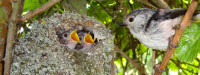
The Garden Nesting Survey involves collecting very simple information on birds breeding in gardens. By telling us what you have breeding in your garden each week, and what stage it is at, we can build up a picture of national nesting patterns. The survey can be done online or on paper recording forms and all participants receive a free wall chart guide to nests and eggs. Find out more...

Skill level & time commitment iconsParticipants are asked to check their garden each week to determine which birds are nesting. The online version also asks you to note the stage that the nesting attempt has reached, for example by noting the presence of eggs or chicks.

Heron Survey

Heronries Census

Time commitment & skill level

The aim of the Heronries Census is to collect annual nest counts of Grey Herons from as many sites as possible in the United Kingdom. Volunteer observers make counts of apparently occupied nests at heron colonies each year. Egrets are also fully included, whether nesting alongside Grey Herons or on their own. Find out more...

Skill level & time commitment iconsVolunteer observers make counts of apparently occupied nests at heron colonies each year.

Nest Record Scheme logo

Nest Record Scheme

Time commitment & skill level

Since 1939, volunteer nest recorders have been counting the eggs and chicks in any nests that they find and sending their observations to the BTO's Nest Record Scheme (NRS). These vital data allow us to investigate changes in breeding success over time. Participants can submit records for any species in any habitat, from gardens to mature woodlands. Find out more...

Skill level & time commitment iconsNest recording is one of the simplest BTO projects to take part in. You can choose whether to monitor a single garden nestbox or to carry out a larger study.

Ringing Scheme

Ringing Scheme

Time commitment & skill level

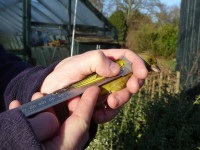
Marking birds with individually numbered metal rings allows us to follow many aspects of their lives. By analysing subsequent reports of ringed birds, we can map migration routes and wintering/breeding areas, and also identify the life stage changes that might drive declines and increases in populations. Find out more...

Skill level & time commitment iconsTraining to ring requires time and dedication, and to reach the level to ring independently with mist nets, you will need to train for at least 18 months. Restricted permits will take less training time. Basic bird identification skills and a reasonable level of dexterity are advantageous.

Waterways Breeding Bird Survey

Waterways Breeding Bird Survey

Time commitment & skill level

The Waterways Breeding Bird Survey (WBBS) measures change in breeding bird populations along rivers and canals. It is exactly like the Breeding Bird Survey (BBS) but the transects follow a waterway, and transect sections are longer (500 m). Results supplement BBS monitoring, especially for water birds. Find out more...

Skill level & time commitment iconsAble to identify birds by sight, song and call.

3 site visits between April and June:
1 'recce' visit to set up counting routes and describe habitat details
2 morning visits to record bird numbers. The average visit takes approximately an hour and a half to complete.

Wetland Bird Survey logo

Wetland Bird Survey

Time commitment & skill level

The Wetland Bird Survey (WeBS) monitors the UK's internationally important non-breeding waterbirds. Following a tradition begun as long ago as 1947, wetland sites are counted once per month by volunteers and the data allow the population estimates and trends in abundance and distribution to be calculated. The network of sites legally protected for their importance to wintering waterbirds depends fundamentally on the WeBS counts. Find out more...

Skill level & time commitment iconsAbility to recognise all species of waterbird at selected site. For larger sites, ability to be able to estimate numbers accurately.

One visit per month, ideally at least September to March, but summer counts are also welcome. Duration of visit varies depending upon size of site but averages about an hour per visit.

Bird Atlas logo

Bird Atlas 2007-11

Time commitment & skill level

Bird Atlas ran from 2007-11 and has succeeded in mapping the distribution and relative abundance of all the birds of Britain and Ireland in winter and the breeding season. Although fieldwork for the national atlas is now complete, there are a number of local atlases continuing and need help.

Find out about local surveys still running, and consider contributing to Birdtrack or the Breeding Bird Survey as well.

  Go to more surveys