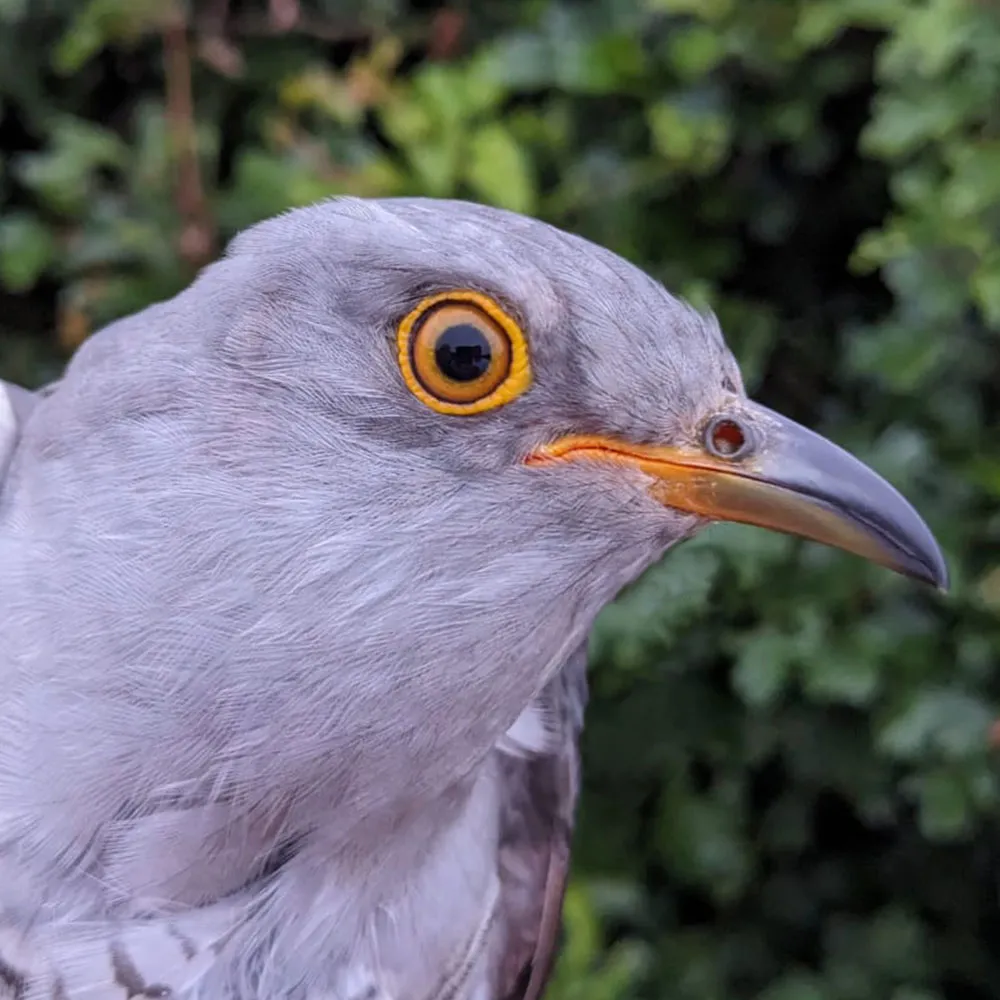
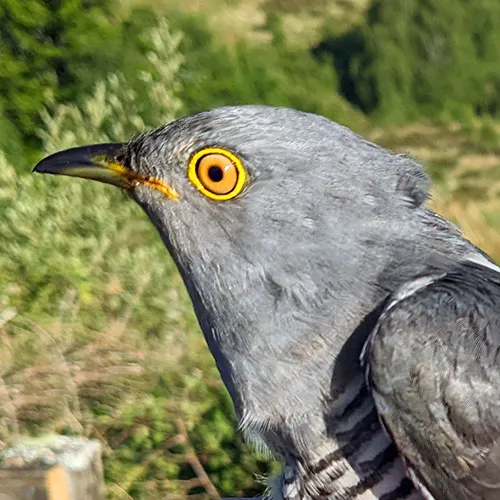
Help us track Cuckoos and watch the current cohort's epic migration on our Cuckoo migration map. Read the latest updates on how our cuckoos are managing their amazing migration from Britain and Ireland to Africa and back again.

Time, skill and support
Spend as much time as you like following each Cuckoo's migration and reading the updates about their movements.
No technical skills are required to support the Cuckoo Tracking project - just a love of Cuckoos.
Learn more on our Cuckoo BirdFacts page and how to identify them and their call in our Cuckoo ID video.
About the project
We’ve been satellite-tracking Cuckoos since 2011. We’ve learned lots of vital information, such as how the different migration routes are linked to declines, and some of the pressures Cuckoos face whilst on migration, but there is still much more to discover.
- We have been able to share our expertise around tracking Cuckoos with other international studies, such as the Beijing Cuckoo Project.
- Read more about our Cuckoo Tracking Project.
- Explore the Cuckoo BirdFacts page to learn more about this iconic species.
An important aspect of this project is how it helps us improve our understanding of why Cuckoos are in decline:
- Since 1995, the number of Cuckoos has decreased by over 30%.
- The Cuckoo is currently Red-listed as a Bird of Conservation Concern in the UK.
What’s next
We now need to look more closely at how dependent Cuckoos are on, and how much their migration is linked to, the drought-busting rains of the weather frontal system known as the Inter Tropical Convergence Zone (ITCZ) as they move out of the Congo rainforest and begin to head back to the UK via West Africa.
Learn more
- What have the Cuckoos taught us? (2022)
- Cuckoo's clocks can't adjust to climate change - now we know why (2023)
- Our Cuckoo tracking journey (2024)
- Learn more about Cuckoos (facts, figures, trends)
- Learn how to identify them and their call in our Cuckoo ID video
- More about bird tracking technology (GPS, PTTs, Geolocators)
Support the project
- Help us continue our vital research by sponsoring a Cuckoo.
Cuckoo migration map
Each Cuckoo’s tag sends us location data approximately every day, so we can follow them and learn more about their migration.
Cuckoo movements from 1st May 2025 to 23rd March 2026
Latest updates
Famous five in Côte d'Ivoire
Five of our tagged Cuckoos are temporarily settled in Côte d'Ivoire (Ivory Coast).
We now know, as a direct result of this tagging project, that this is a key staging area for this species at this time of year. Their arrival in this region of West Africa coincides with a period of annual rainfall, which ensures that there is plenty of invertebrate food for the birds to feed up on before making their epic flights north.
Joe and Jim are little more than 20 km (12 miles) from each other, while Cleeve is just 50 km (31 miles) to their north. Arthur is the furthest north, and Sayaan the furthest east, having recently crossed the border from Ghana. Given that these five tagged birds are in such a relatively small area right now, it is quite mind-boggling to think how many other (untagged) Cuckoos there must be in that region currently!
It is likely, looking at previous years’ data, that these birds will remain here into April, before setting off through Mali and then crossing the expansive Sahara Desert.
Sayaan joins the West Africa Cuckoo party
When we last reported his whereabouts nine days ago, we could see that Sayaan was still heading slowly through Cameroon.
Since then, he has flown a distance of around 1,860 km (1,155 miles) west, taking him through southern Nigeria, Benin and Togo. He has crossed much of Ghana and is now close to the border with Côte d'Ivoire (Ivory Coast), placing him less than 190 km (118 miles) from Cuckoos Cleeve and Joe! Sayaan is the fifth of our tagged Cuckoos to reach this vital staging area so far this spring.
Cleeve weaves west
Since arriving in the Congo back in November, Cleeve’s signal has been intermittent, as we would expect. We last heard from him in mid-Feb when he was still firmly in his wintering area. Now, after a period of ‘radio silence,’ he has suddenly reappeared, having made a considerable move west.
Covering over 2,000 km (1,242 miles), as the Cuckoo flies, Cleeve arrived in southern Ghana on Saturday, and by this morning had flown a further 390 km (242 miles) into Côte d'Ivoire (Ivory Coast). He is now close to his Cuckoo cohorts Joe and Jim.
These birds’ arrival in this area is timed to coincide with seasonal rains which create a spike in invertebrate food availability. They will now remain in this region, fattening up and getting into shape before heading off on the next part of their remarkable journey!
Current Cuckoos
Each year, we follow a cohort of newly tagged Cuckoos as they migrate along the Afro-Palearctic flyway. We also watch Cuckoos tagged in previous years, if their tag is still transmitting data to us. Together, these are our 'Current Cuckoos'.