

|
Training to Ring
your questions answered
What is bird ringing?
| Bird ringing involves the fitting
of small, uniquely numbered metal rings on the legs of birds.
By identifying these birds as individuals, we can start to
understand changes in the survival and movements of bird populations.
In Britain and Ireland, the ringing scheme is run by the BTO
and primarily relies on the work of dedicated volunteers,
of which there are currently over 2,000. Each year, these
volunteers ring over 800,000 birds, around 12,000 of which
are subsequently reported. |
|
Who rings and what do sessions involve?
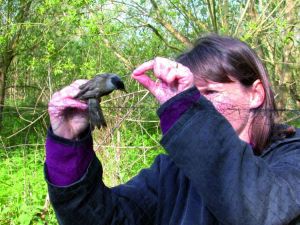
| Bird ringers come in many guises, from individuals
working in urban areas, to large groups working in a wide
geographic area. So depending where you are, you could get
involved with ringing seabirds on Scottish islands, owl chicks
in nest boxes or catch a huge variety of passage migrants
on the coast. Most of your ringing though may involve ringing
tits on winter mornings or warblers in the breeding season.
Most ringers catch birds when they’re at their most
active, which is often early in the morning, so sessions
starting at 5am are commonplace. A good morning’s
ringing may take you through to lunchtime, but there’s
always the possibility of catching birds coming to roost
or even catching at night. You’ll no doubt find that
ringing is a very satisfying activity. Not only will you
be adding to nearly 100 years of data used directly by conservationists,
but enjoying the experience of seeing birds close up. Whether
you want to train to ring birds in nest boxes, to ring your
garden birds, or to ring everything at your local gravel
pit, your contribution is vital.
The ringing process involves much more than you might imagine,
preparation and planning to catch and ring birds is essential.
Habitat management at ringing sites, mainenance of equipment
and stocking winter feeding stations are all essential jobs.
Most trainers and groups share chores with everyone getting
involved.
|
Do I need to be a bird expert?
Though you definitely don’t need to be a bird expert to ring,
it does help if you have some prior bird knowledge. There’s
a lot to take in when you first start training, so having to learn
the difference between a Siskin and a Greenfinch when you start
to ring can be taxing, but is still possible.
How can I start ringing?
 |
|
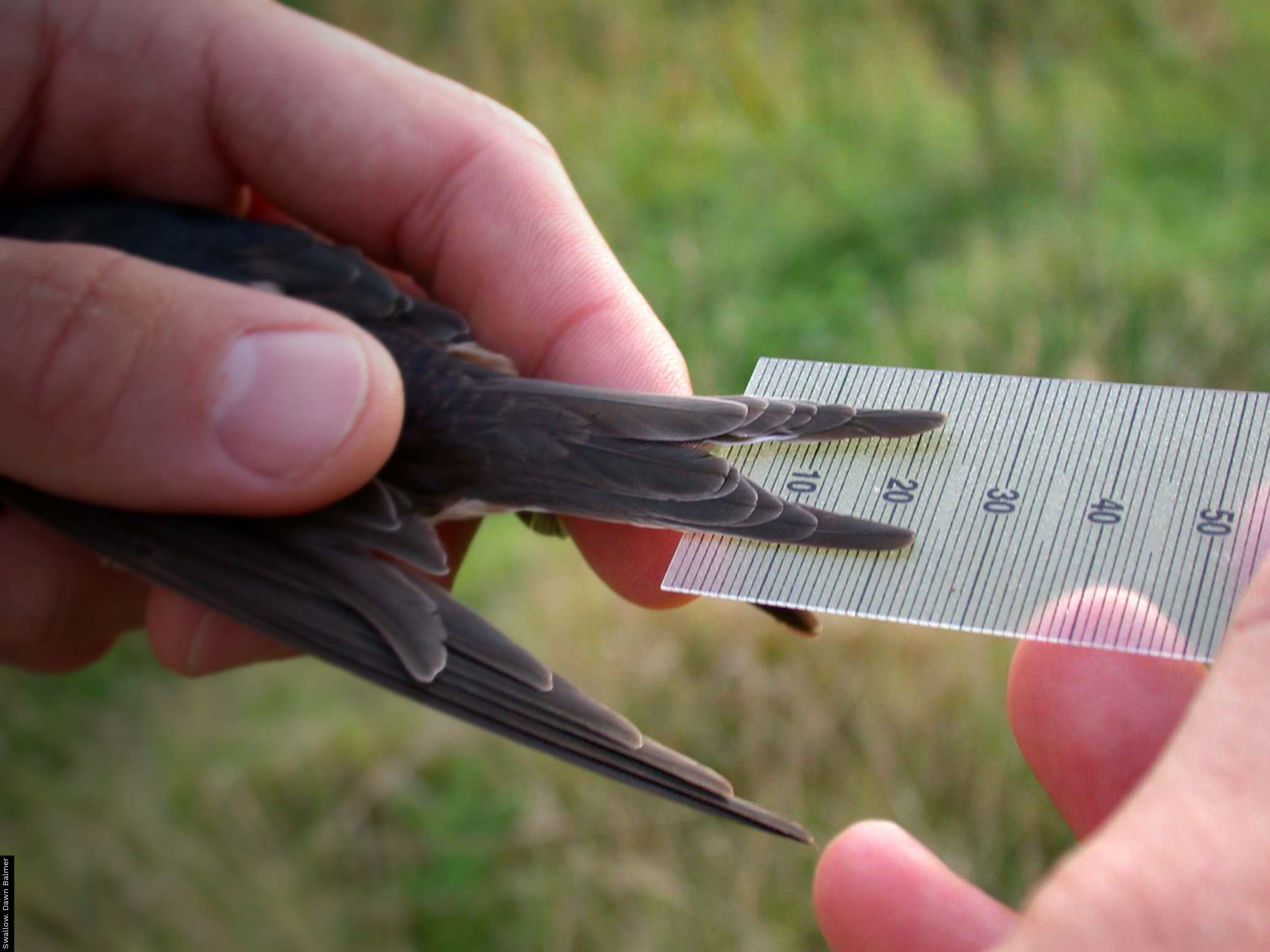
By its nature, ringing is a practical
activity, and can’t be learned from a book. Anyone training
to ring will need to gain field experience with a qualified
trainer. At this stage, all you’ll really need is a trainer,
suitable outdoor clothing and an alarm clock! The ringing group
or trainer will have all the other necessary equipment. However,
as your training progresses you will want to buy pliers, rulers
and other equipment. Initially, you can attend sessions as a
helper, just to see if ringing is for you. |
How do I get my first permit?
If, after a few sessions, you’re keen to carry on training,
you will need to register as a trainee. All you have to do is fill
out a registration form (available from BTO HQ) and get your trainer
to sign it. Your initial permit payment will also include your copy
of Ringers’ Manual, which is the guide to all aspects
of the Ringing Scheme. At this stage, you can also subscribe to
Ringing & Migration, the Ringing Scheme’s journal.
The cost for 2008 is £22.50 for your permit plus Ringing
& Migration or £16.50 without the journal.
How long does training take?
| The length of time you’ll spend as a trainee
depends on what you would like to ring and how much time you
have to spend ringing. Are you able to go out once a week or
once a month? Do you want a full permit or a restricted permit?
If you’re just interested in ringing one species in the
nest, then a couple of months training leading to a restricted
permit may be sufficient, but for other activities and species,
you will train for at least a year, and generally longer. It
is then up to your trainer to recommend you for your ‘C’
permit, which allows you to work alone, but under the remote
supervision of your trainer. |
 |
What do I need to do now?
The best way to get in touch with a ringing group or ringing trainer
local to you is through the BTO
. We can find someone in your area who has the time to train you
and send you their contact details. All you then need to do is drop
them an email or letter and see what activities you can join in
with.
Back to Ringing Info
|