Making Your Own Nest Box

Making your own nest box is easy and rewarding! There are a variety of nest box designs suitable for a range of species. Two designs that are most commonly used in gardens are:

  • the small-hole nest box which is commonly occupied by tit species
  • the small open fronted box which gets readily used by robins.


For further information on which birds use which boxes please click here.

If you’d like to have a go at making your own, the illustrations below give the suggested dimensions for both small-hole and open-fronted boxes. The designs and dimensions of other types of boxes can be found in the BTO Nest Box Guide

Small-hole box

How to make a small-hole nestbox - from the BTO nestbox guide


Materials

Open-fronted box

How to make an open-fronted nestbox - from the BTO Nestbox guide

It is important that the inside of the box doesn’t get too cold or warm and that the box is durable.

  • Nest boxes should be made from wood (Woodcrete - a unique combination of sawdust and concrete is often used for commercial boxes). Metal and plastic are unsuitable materials as they may cause the contents of the nest to overheat or allow condensation to build up inside the box, wetting eggs and chicks. 
  • The type of wood used is not critical but hardwoods, such as oak and beech, will outlive soft wood, such as pine.
  • Rather more critical is the thickness of the wood, which should be at least 15mm to provide sufficient insulation and to prevent warping.
  • It is better to nail your box together rather than gluing it (remember to use galvanized/stainless steal nails to stop rust) as this allows water to drain.
  • Make sure you drill a couple of holes in the base of your box to ensure that any rain that does get in can drain out quickly.
  • Do not put a perch on the front of the nest box as this is not necessary and may aid access to a predator!


Hole sizes

Different size holes are suitable for different species:

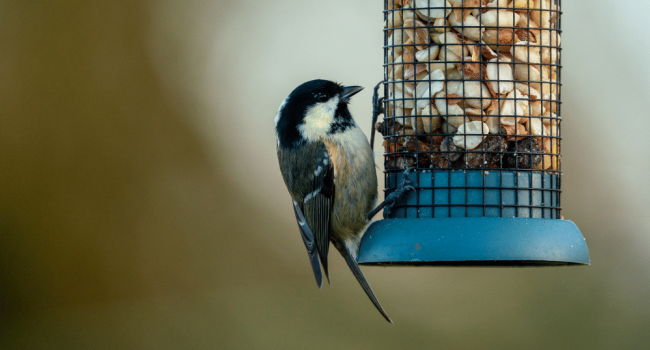
  • 25mm or larger for Blue, Coal and Marsh Tit;
  • 28mm or larger for Great Tit and Tree Sparrow;
  • 32mm for House Sparrow.


Access for inspection and cleaning

Nest boxes should have a means of easy access for both inspection and cleaning. This can be achieved by attaching a waterproof hinge to the roof of the box, so that it can be lifted easily but won’t fall off. Car inner tubes or Butyl rubber are ideal waterproof materials to use. Cut the rubber to the width of the box, and then nail the rubber along the back of the box and to the roof.