Breeding Birds in the Wider Countryside:
their conservation status 2003
Trends
in numbers and breeding performance for UK birds
H Q P Crick, J H Marchant, D G Noble, S R Baillie,
D E Balmer, L P Beaven, R H Coombes,
I S Downie, S N Freeman, A C Joys, D I Leech, M J Raven, R A Robinson
and R M Thewlis
This website is a "one-stop-shop" for information
about the population status of our common terrestrial birds. With
one page per species, users can quickly find all the key information
about trends in population size and breeding performance over the
period 1967-2002 as measured by BTO monitoring schemes.
For each species, we provide:
- General information concerning species' conservation listings
- A brief summary of observed changes in the size of the
population and information concerning the possible causes
of these changes
- A series of graphs and tables showing the trends and changes
in population size and breeding performance over the past
33 years
- Trends calculated from BTO/JNCC/RSPB Breeding Bird Survey
(BBS) data, not only for the UK as a whole but also for
each of its constituent countries (England, Scotland, Wales
and Northern Ireland)
- A system of Alerts that highlight population declines
in any census scheme of greater than 25% or greater than
50% that have occurred over the past 5 years, 10 years,
25 years and 33 years.
|
 |
The website covers the majority of British breeding
birds, over 100 species in total, but excludes colonial seabirds,
which are well covered by the JNCC's Seabird Monitoring Programme
(Mavor et al.
2003 ), and those species that are already covered by the
Rare Breeding Birds Panel (Ogilvie
& RBBP 2003). Most wintering populations of waterfowl
are well covered by the Wetland Bird Survey annual reports (e.g.
Pollitt et al.
2003).
 |
The following species exhibit rapid declines (of over 50%)
or moderate declines (between 25 and 49%) over the 33-year
period 1967-2000 as measured by a combination of the Common
Birds Census (CBC) and the BBS:
- Rapid declines:
17 species: Grey Partridge,
Turtle Dove, Skylark,
Tree Pipit, Song
Thrush, Whitethroat,
Spotted Flycatcher, Yellow
Wagtail, Marsh Tit,
Willow Tit, Starling,
Tree Sparrow, Linnet,
Lesser Redpoll, Yellowhammer,
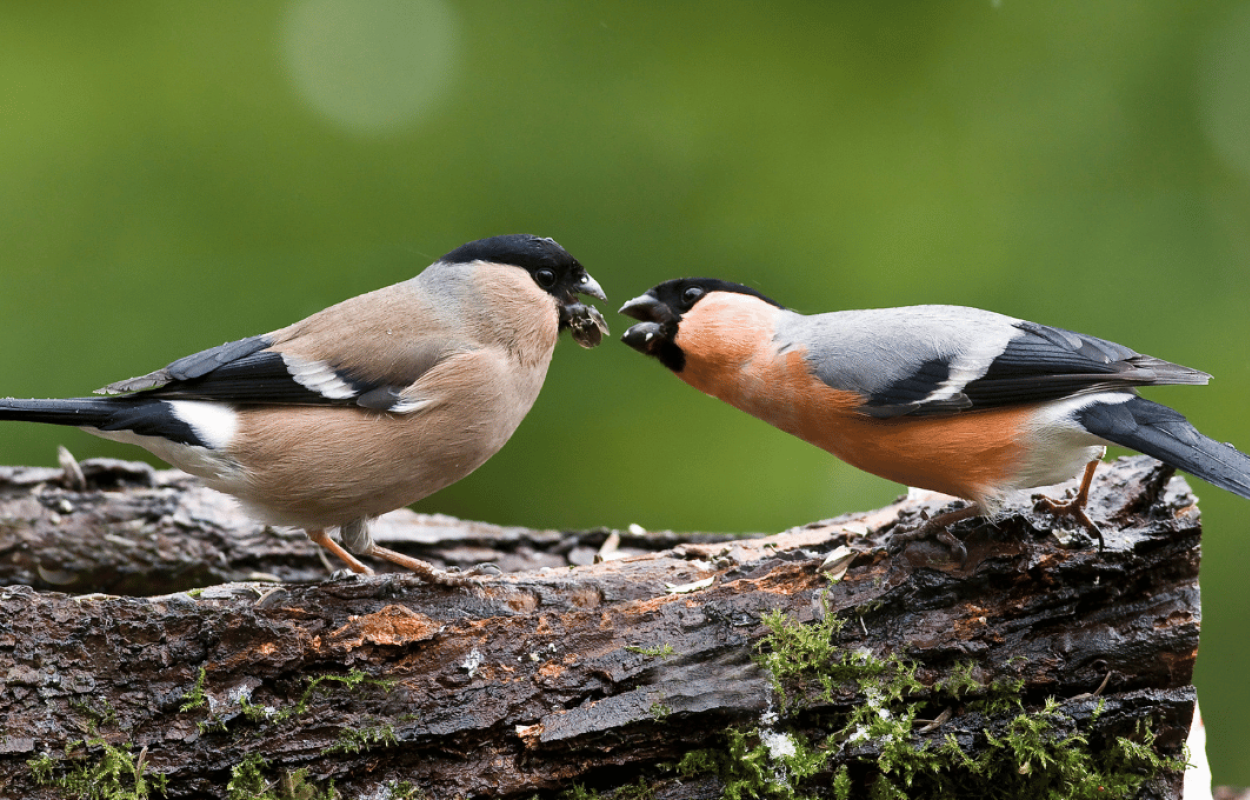
Corn Bunting and Bullfinch
- Moderate declines:
6 species: Cuckoo,
Dunnock, Mistle
Thrush, Willow Warbler,
Meadow Pipit and Reed
Bunting
|
The following species (not listed above) exhibit rapid declines
(of over 50%) over shorter time periods. Two species (Lesser
Spotted Woodpecker and Woodcock)
are no longer monitored in sufficient numbers by the BBS and are
listed on the basis of declines >50% on the CBC between 1968
and 1999.
It should be noted that CBC plots are concentrated in lowland areas,
and as such may not cover a major proportion of the UK population
of species associated with alternative habitats. Reported trends
for these species may be restricted to England.
The following species show rapid declines (of over 50%)
or moderate declines (between 25 and 49%) over the 25-year
period 1975-2000, as measured by the Waterways Bird Survey
(WBS):
|
 |
In addition, Lesser Whitethroat
has shown a decline of 52% on Constant Effort Sites (CES) since
1984, together with a 30% decline on CBC/BBS plots in England since
1975).
A number of species have undergone substantial population increases,
more than doubling, over the same time period:
- CBC/BBS trend:
Mute Swan, Mallard,
Coot, Buzzard,
Stock Dove, Collared
Dove, Woodpigeon, Green
Woodpecker, Great Spotted Woodpecker,
Nuthatch, Reed
Warbler, Blackcap, Magpie,
Carrion Crow
- WBS:
Mallard, Oystercatcher
There are a
number of species for which declines in breeding performance are
likely to be driving the population declines (Linnet
and Lapwing) or helping to
inhibit recovery (possibly Reed Bunting). The
importance of decreases in breeding performance for declining Willow
Warbler, Lesser Redpoll,
Ringed Plover, Dunnock,
Bullfinch, Yellowhammer,
Grey Wagtail and Yellow
Wagtail populations and for farmland
Moorhen populations is, as yet,
undetermined.
Increasing breeding
performance may be helping to drive population expansion of a number
of species: the predatory Grey Heron,
Sparrowhawk and Buzzard;
the corvids Jackdaw, Magpie,
Jay, Carrion
Crow and Rook; the seed-eaters
Collared Dove, Stock
Dove and Woodlark; and
the insectivores Pied Wagtail,
Robin, Redstart,
Wren, Reed Warbler,
Nuthatch, Great
Tit, Blue Tit and Long-tailed
Tit.
For a few species
for which long-term population data are not available, changes in
breeding performance from the Nest Record Scheme may provide a potential
warning of population declines, because they are the result of density-dependent
changes (Stonechat, Wheatear,
Tawny Owl
and Ring Ouzel). The importance
of the substantial declines in productivity of Greenfinch,
Blue Tit, Sedge
Warbler and Garden Warbler
is unclear at the moment, but warrants close attention.

Next page - Contents
|