






Wetland Bird Survey
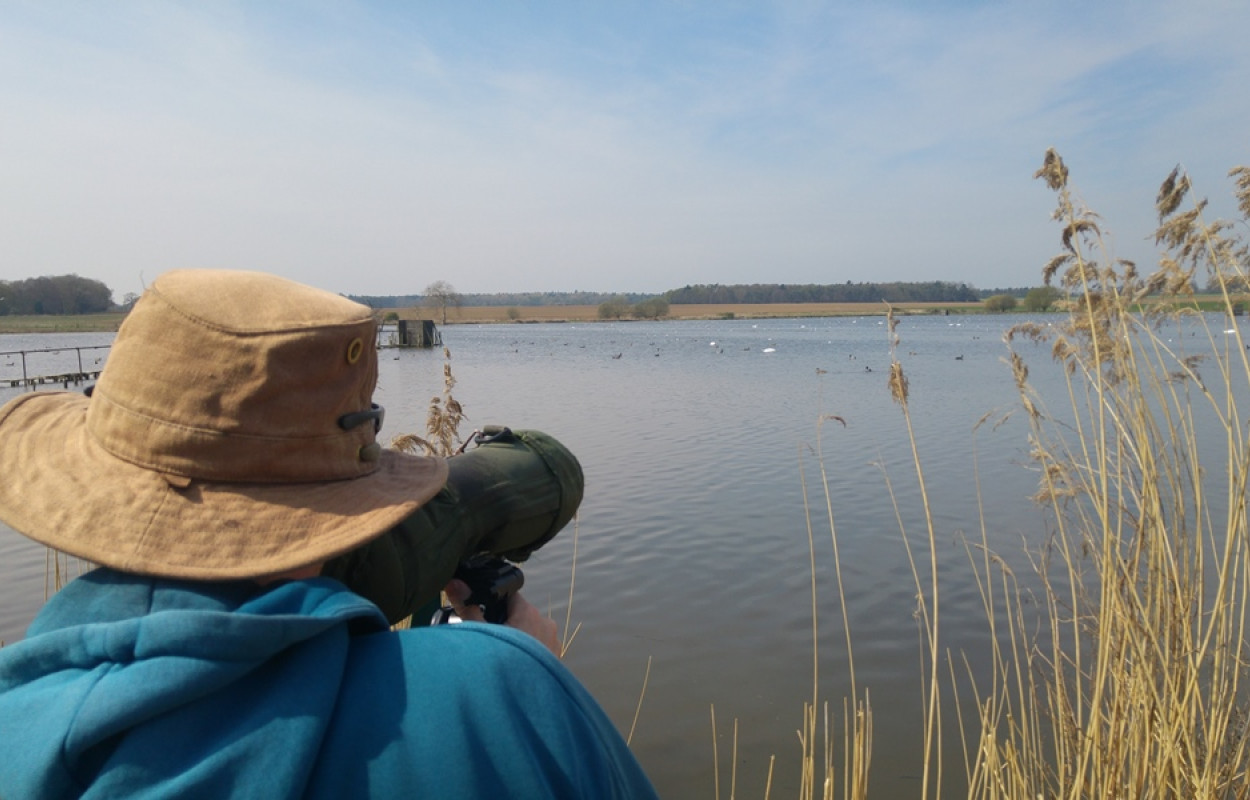
The Wetland Bird Survey (WeBS) monitors non-breeding waterbirds in the UK.
WeBS surveyors monitor the UK's internationally important non-breeding waterbirds. Following a tradition begun in 1947, wetland sites are counted once per month, providing data for population and trends in abundance and distribution. The network of sites legally protected for their importance to wintering waterbirds depends fundamentally on the WeBS counts. "Waterbirds" includes wildfowl (ducks, geese and swans), waders, rails, divers, grebes, cormorants and herons. Gulls and terns are optionally included. In a typical year over 220 waterbird species, races or populations are counted in WeBS, including non-native, feral and vagrant species. National trends are produced for the most numerous 110 of these.
Over 3,000 volunteer counters contribute to the Core Counts survey, making over 40,000 visits each year to 2,800 sites. Each counter adopts a place to count monthly. Non-breeding waterbird numbers peak in different numbers for different species, so counting is done year-round where possible and reported on WeBS years running from July to June, although the core counting season is September to March. As non-breeding waterbirds can be very mobile, the Counts are nationally synchronised, with counters requested to visit during the day on priority Core Count dates (Sundays) if at all possible. At coastal locations, counting is done at high tide. At large sites, several counters will be working as a team. Each counter surveys the whole of their defined count area, known as a WeBS sector, identifying all the waterbird species present and counting the number of individuals of each species. Counters can also add supplementary data, such as evening roost counts of gulls, or casual counts of notable numbers of passage species that are higher than those present on their Core Count visits. There is also a Low Tide Counts scheme where extra counts at low tide are occasionally made on estuaries.
Waterbird indices and trends are produced every year for the annual report, "Waterbirds in the UK". All of these can be viewed on the WeBS Report Online application, with a wealth of other information including the total number of birds recorded at each site, and the peak numbers of each species per year. Results of the Low Tide Counts are also published here, where extra counts are made at Low Tide at certain estuaries each year. For more specialised information, for example for site management, research or environmental impact assessments, there is a bespoke WeBS data request service.
If you are interested in taking part as a counter, the first step is to use the WeBS Vacant Sites tool to see if there are any sites in need of help near you. You need to be able to confidently identify and count all the waterbirds at the site - this might be a few common species at a small lake or river, or it might be a wide range of species at a coastal site with many habitats present. Filling out the online form will put you in touch with your volunteer Local Organiser. There are 140 of these, each covering a region such as a county or estuary. If there are no vacant sites near you but you are keen to get involved, contact the relevant Local Organiser who may be able to set up a new site for you or add you to an existing team.
When you have been assigned a site as a new counter you will receive a new starter pack with more details of the methods. After registering for the WeBS Online data entry system you will be set up for your count sector by your Local Organiser and be able to add your counts each month and see all the previous data for the site. All counters receive a summary annual report and an annual newsletter by post each year and are contributing to the understanding and conservation of our internationally important waterbird populations.
Time / skill required


Project timeline, contributions & findings
Project timeline
- 1947/48 Start of national wildfowl counting
- 1966/67 Year from which all counts have been computerised
- 1969/70 Start of the Birds of Estuaries Enquiry
- 1993/94 Wildfowl and Estuary counts brought together in the Wetland Bird Survey (WeBS)
- 2006 WeBS Online data entry is launched
- 2014 WeBS Report Online interactive reporting system is launched
- 2020 Age/Sex recording feature added to WeBS online
Contributions & findings
- 3.75 million waterbirds are counted for WeBS each year.
- WeBS produces annual indices for 110 waterbird species or populations
- Species totals published annually for over 2,700 sites as open data on the WeBS Report Online
View the latest WeBS report
Waterbirds in the UK presents the results of the annual WeBS report. It provides a single, comprehensive source of information on the current status and distribution of waterbirds in the UK for those interested in the conservation of the populations of these species and the wetland sites they use.
Related Content

Share this page